

City prioritizes moving buses through downtown faster, easing rush-hour congestion

Advertisement
Read this article for free:
or
Already have an account? Log in here »
To continue reading, please subscribe:

Digital Subscription
One year of digital access for only $205*
- Enjoy unlimited reading on winnipegfreepress.com
- Read the E-Edition, our digital replica newspaper
- Access News Break, our award-winning app
- Play interactive puzzles
*First annual payment billed as $205.00 + GST for one year. This annual subscription will automatically renew at $233.00 + GST every 52 weeks (10% off the regular annual price of $259.35). Offer available to new and qualified returning subscribers only. Cancel any time.
To continue reading, please subscribe:
Add Free Press access to your Brandon Sun subscription for only an additional
$1 for the first 4 weeks*
- Enjoy unlimited reading on winnipegfreepress.com
- Read the E-Edition, our digital replica newspaper
- Access News Break, our award-winning app
- Play interactive puzzles
*Your next Brandon Sun subscription payment will increase by $1.00 and you will be charged $17.95 plus GST for four weeks. After four weeks, your payment will increase to $24.95 plus GST every four weeks.
Read unlimited articles for free today:
or
Already have an account? Log in here »
Hey there, time traveller!
This article was published 13/10/2020 (2119 days ago), so information in it may no longer be current.
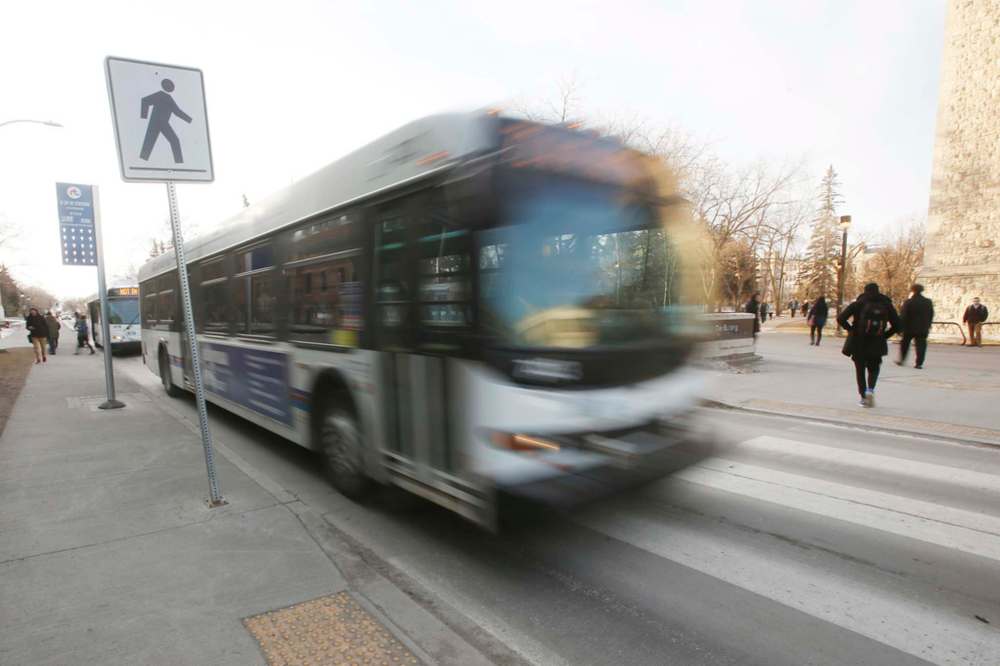
Getting buses through the downtown more quickly is now set to become the city’s top rapid-transit priority, which would also be expected to cut congestion for other vehicles.
New rapid-transit documents list Downtown Transitways as “Priority 1.” They would include a proposed route from Main Street at Higgins Avenue in the north to St. Mary’s Road at Taché Avenue in the south. Another route would stretch from Portage Avenue at the University of Winnipeg to Westbrook Street in the east.
A proposed elevated transitway would go through Union Station, from William Stephenson Way to Harkness Station.
The document notes Union Station would serve as a central hub for all rapid-transit lines.
Mayor Brian Bowman said the new strategy to include some existing infrastructure should cost much less than dedicated corridors such as the Southwest Rapid Transitway, the second phase of which was recently completed for $467 million.
“This is absolutely trying to make do with the resources that we have available to us, current infrastructure assets, as well as available supports from the provincial and federal budget,” said Bowman.
The mayor said the new focus on downtown routes should also help cut commute times.
“The area of the city in which the congestion is the greatest, of course, is really downtown during rush hour. So (having) opportunities to really efficiently move people in and out of and through downtown during those times, using a lot of existing infrastructure, is helpful,” said Bowman.
The documents don’t state a timeline or cost for the changes, which will soon head to a public consultation process. The mayor expects the city would require financial support from senior governments to implement the plan.
The proposal notes the city could add diamond lanes, install short transit-only paths and use priority traffic signals to ensure buses can bypass any congestion.
In a model projected to 2044, city staff predict the changes would ensure the average person travelling downtown by car or bus would save three minutes on each afternoon rush-hour commute.
“Getting buses out of the way of cars is as much a benefit to car drivers as it is to transit passengers and so it’s really a win-win proposal here that can save people a lot of time,” said Kevin Sturgeon, a senior planner with Winnipeg Transit.
Sturgeon said a report with more specific rapid-transit recommendations for council to consider is expected in the spring.
More separated, bus-only infrastructure could be added to the rapid transportation network over time, which the city says could be converted to serve light-rail vehicles in the future.
While Winnipeg began to plan an Eastern Rapid Transit Corridor years ago, that construction is now ranked alongside a West Transitway in the city’s fourth, or lowest, priority rapid-transit plans.
Coun. Brian Mayes (St. Vital) said it makes sense to switch the focus to a Main Street route.
“It’s shorter, it’s cheaper, it would service more people,” said Mayes.
Coun. Sherri Rollins (Fort Rouge-East Fort Garry) said she expects the new plan would improve bus travel in her ward, which includes part of the downtown.
“(This offers) routes in the ward that we critically need,” said Rollins.
Under the current proposal, a North Transitway and extensions to the Southwest Transitway are listed in the Priority 2 tier. Priority 3 initiatives would create Grant and Southeast priority corridors, as well as a North Transitway extension.

A survey to gather feedback on the plan will be posted at winnipeg.ca/transitmasterplan until Nov. 6, 2020.
Joyanne.pursaga@freepress.mb.ca
Twitter: @joyanne_pursaga
Winnipeg Transit Network Plan (2020-08-21)
Joyanne is city hall reporter for the Winnipeg Free Press. A reporter since 2004, she began covering politics exclusively in 2012, writing on city hall and the Manitoba Legislature for the Winnipeg Sun before joining the Free Press in early 2020. Read more about Joyanne.
Every piece of reporting Joyanne produces is reviewed by an editing team before it is posted online or published in print — part of the Free Press‘s tradition, since 1872, of producing reliable independent journalism. Read more about Free Press’s history and mandate, and learn how our newsroom operates.
Our newsroom depends on a growing audience of readers to power our journalism. If you are not a paid reader, please consider becoming a subscriber.
Our newsroom depends on its audience of readers to power our journalism. Thank you for your support.
Joyanne is city hall reporter for the Winnipeg Free Press. A reporter since 2004, she began covering politics exclusively in 2012, writing on city hall and the Manitoba Legislature for the Winnipeg Sun before joining the Free Press in early 2020. Read more about Joyanne.
Every piece of reporting Joyanne produces is reviewed by an editing team before it is posted online or published in print — part of the Free Press‘s tradition, since 1872, of producing reliable independent journalism. Read more about Free Press’s history and mandate, and learn how our newsroom operates.
Our newsroom depends on a growing audience of readers to power our journalism. If you are not a paid reader, please consider becoming a subscriber.
Our newsroom depends on its audience of readers to power our journalism. Thank you for your support.
Advertisement Advertise With Us
Advertisement Advertise With Us