

Province turning its attention to grave issue
Unlicensed cemeteries to be included in review

Advertisement
Read this article for free:
or
Already have an account? Log in here »
To continue reading, please subscribe:
Digital Subscription
One year of digital access for only $1.44 a week*
- Enjoy unlimited reading on winnipegfreepress.com
- Read the E-Edition, our digital replica newspaper
- Access News Break, our award-winning app
- Play interactive puzzles
*Billed as $5.77 plus GST every four weeks. After 52 weeks, price increases to the regular rate of $19.95 plus GST every four weeks. Offer available to new and qualified returning subscribers only. Cancel any time.
To continue reading, please subscribe:
Add Free Press access to your Brandon Sun subscription for only an additional
$1 for the first 4 weeks*
- Enjoy unlimited reading on winnipegfreepress.com
- Read the E-Edition, our digital replica newspaper
- Access News Break, our award-winning app
- Play interactive puzzles
*Your next Brandon Sun subscription payment will increase by $1.00 and you will be charged $17.95 plus GST for four weeks. After four weeks, your payment will increase to $24.95 plus GST every four weeks.
Read unlimited articles for free today:
or
Already have an account? Log in here »
Hey there, time traveller!
This article was published 20/07/2021 (1918 days ago), so information in it may no longer be current.
The provincial government will include the issue of unlicensed cemeteries in its review of the Cemeteries Act.
It comes as welcome news to one Manitoban who now needs permission to visit the grave of his father for the first time in seven decades, because there is now no access road to the site, located in the middle of a farmer’s field.
“That’s good,” Joe Thiessen said. “There should be something in the regulations. My children and grandchildren need to be protected so they can go there.
“There needs to be respect for the people who made you.”
Thiessen recently spoke to the Free Press about how, for the first time since his father died in 1950, he was told he couldn’t drive to the cemetery near Altona where his dad was buried, along with several other community members.
The North Neuhoffnung Cemetery was never licensed by the province, and wasn’t a municipal- or church-run cemetery. A RCMP spokeswoman said officers investigated and found the landowner, who didn’t want anyone driving in the field until the crop is harvested, was willing to allow access on foot.
However, Thiessen said most people who would want to access the cemetery are seniors and can’t walk a quarter of a kilometre on foot.
A spokesman for the province said the Cemeteries Act does not currently contain provisions related to the responsibilities of unlicensed cemeteries, but that could change.
“In Manitoba, the legislation that the board (Funeral Board of Manitoba) administers is currently under review,” said the spokesman.
“The issues noted will be brought forward during the review process as Manitoba looks for ways in which to modernize and further develop the bereavement legislation.”
Another Manitoban who has family buried in a rural cemetery said protections are needed.
Ardith Davidson said community members acted fast about three decades ago, when they heard a new farmer in the area was pulling out headstones and starting to plow the McKenzie Cemetery, located about halfway between La Rivière and Snowflake.
At the time, the cemetery in a field off the main road had been neglected for years, with almost a metre of debris, dirt and weeds covering the plots and markers.
“Fortunately, some people from the area, including my father, heard about what was done and were able to save some of the headstones,” said Davidson. “The ones they were able to save have been aligned on a concrete slab in a couple of rows and is now surrounded by a barbed wire fence.”
Davidson said her father and other community members later decided to renovate the cemetery. She has photographs from the time which show what the site looked like before the renovation and after.
“Some of the headstones had been destroyed, but the ones they could were put up again,” she said. “My dad was quite upset at the time — it was his grandparents who were (buried) there.”
Even today, the cemetery is not easy to access, however, Davidson said.
“There is a road allowance off the main road, but it does not go all the way to the cemetery,” she said. “The road allowance is extremely rough and is best accessed using a truck.
“When the road allowance ends, you have to drive across a field or walk the remaining distance. Out of respect for the farmer, this usually means that the area is only accessible in the early spring before seeding starts or in late fall after the crops have been harvested,” Davidson said.
“Cemeteries like this should be protected. There should be a law. It’s sad somebody could come and plow it all up and desecrate a headstone.”
Gordon Goldsborough, president of the Manitoba Historical Society, said he also hopes the province does something to protect such sites in legislation because there are hundreds of them.
“It doesn’t matter if they are formal or not — I think it is fundamentally disrespectful,” said Goldsborough. “These places should be honoured.
“It doesn’t matter if they are neglected. If there has been a burial there, you have to give them recognition.”
Goldsborough said the Municipality of Roblin’s community foundation recently created an abandoned cemetery fund to look after area sites.
“I’d like to see other municipalities follow their lead.”
kevin.rollason@freepress.mb.ca
Kevin Rollason
Reporter
Kevin Rollason was a general assignment reporter at the Free Press.
Our newsroom depends on a growing audience of readers to power our journalism. If you are not a paid reader, please consider becoming a subscriber.
Our newsroom depends on its audience of readers to power our journalism. Thank you for your support.
Kevin Rollason
Reporter
Kevin Rollason was a general assignment reporter at the Free Press.
Our newsroom depends on a growing audience of readers to power our journalism. If you are not a paid reader, please consider becoming a subscriber.
Our newsroom depends on its audience of readers to power our journalism. Thank you for your support.
Related Articles
Historic cemeteries stranded in farmers' fields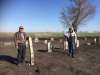
Advertisement Advertise With Us
Advertisement Advertise With Us
History
Updated on Tuesday, July 20, 2021 10:26 AM CDT: Removes photo of incorrect cemetery.