

Number living unsheltered in Winnipeg spiked during pandemic: report

Advertisement
Read this article for free:
or
Already have an account? Log in here »
To continue reading, please subscribe:

Digital Subscription
One year of digital access for only $205*
- Enjoy unlimited reading on winnipegfreepress.com
- Read the E-Edition, our digital replica newspaper
- Access News Break, our award-winning app
- Play interactive puzzles
*First annual payment billed as $205.00 + GST for one year. This annual subscription will automatically renew at $233.00 + GST every 52 weeks (10% off the regular annual price of $259.35). Offer available to new and qualified returning subscribers only. Cancel any time.
To continue reading, please subscribe:
Add Free Press access to your Brandon Sun subscription for only an additional
$1 for the first 4 weeks*
- Enjoy unlimited reading on winnipegfreepress.com
- Read the E-Edition, our digital replica newspaper
- Access News Break, our award-winning app
- Play interactive puzzles
*Your next Brandon Sun subscription payment will increase by $1.00 and you will be charged $17.95 plus GST for four weeks. After four weeks, your payment will increase to $24.95 plus GST every four weeks.
Read unlimited articles for free today:
or
Already have an account? Log in here »
Hey there, time traveller!
This article was published 23/07/2021 (1873 days ago), so information in it may no longer be current.
Jay Craig lost the roof over his head for the fourth time when the COVID-19 pandemic began.
The 31-year-old now lives in a small camp on the banks of the Assiniboine River in Osborne Village, almost directly across from the Manitoba Legislative Building.
He tries to make cash here and there flying a sign (panhandling), but that doesn’t amount to much.
“It’s getting better now that the vaccinations are all out,” Craig said of the money made on street corners and traffic medians.
He used to do clothing alterations and design, Craig said while standing under the shade of the Osborne Bridge, where a slight breeze cooled the small encampment he was visiting Friday afternoon.
“It’s been rough,” he said of living on the street during the pandemic.
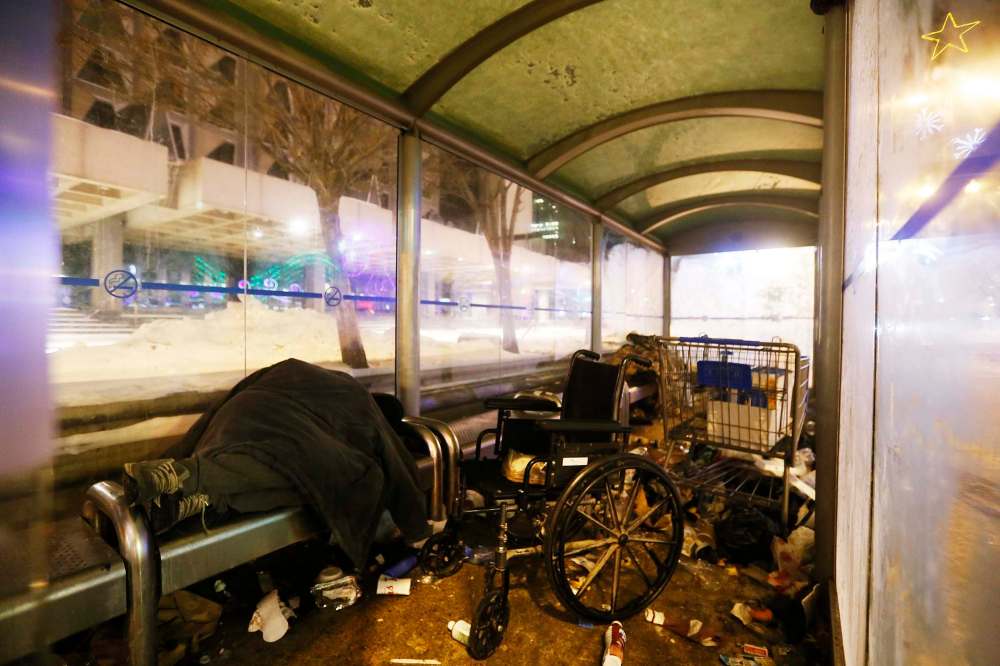
More people are now living on Winnipeg’s streets than before the COVID-19 pandemic, says a new report released this week for service agency Resource Assistance for Youth’s outreach team.
The agency studied the impacts of the pandemic on the marginalized people it serves in Winnipeg’s inner city, while some services provided by organizations like it and others were cut back out of public health concerns and people already living precariously or below the poverty line faced an increased risk of homelessness.
“The outreach was still there but drop-in was pretty much limited to a bag lunch, and it’s not exactly adequate — (not) enough to get by on,” Craig said of services offered. “A lot of people have been losing everything.”
The report found drastically more people living outdoors compared to those using homeless shelters, couch surfing or living in long-term housing prior to the pandemic.
In 2019-20, the street outreach team found 893 of their contacts were staying in emergency shelters. In 2020-21, that number dropped to 464. In the same time period, the number of people living unsheltered jumped to 4,774 from 4,145.
(Craig said he isn’t one for shelters, adding most services are concentrated on the Main Street strip, an area full of problems and hassles.)
The report also found a significant increase in the number of Indigenous people seeking services — to 1,154 in 2020-21 from 557 in 2019-20.
The outreach team discovered a shift in the kind of illicit drugs used among the city’s street population because of supply-chain disruptions, from the stimulant methamphetamine that’s long been the drug of choice to illicit opioids (depressants).
That poses a risk to street drug users — meth overdoses can lead to erratic behaviour, psychosis and long-term health problems. But overdosing on opioids, such as heroin, can be deadly.

Overdose deaths increased in Winnipeg from 2019 and 2020 by 87 per cent, to 372 deaths total — 354 of which were from opioids, the report shows.
As for Craig, he had been staying in a sober living facility in the city’s West End, but a dispute with an ex-romantic partner in the early months of 2020 forced them out, losing thousands of dollars in equipment he’d been using for his clothing business in the process.
In November, he contracted COVID-19 and stayed in isolation in a shelter set up specifically for the homeless population.
Since then, he’s been on the street full-time, losing his provincial Employment and Income Assistance. Now, he’s in need of basic necessities such as shelter, food and water — and help in the long term.
erik.pindera@freepress.mb.ca
Erik Pindera is a reporter for the Free Press, mostly focusing on crime and justice. The born-and-bred Winnipegger attended Red River College Polytechnic, wrote for the community newspaper in Kenora, Ont. and reported on television and radio in Winnipeg before joining the Free Press in 2020. Read more about Erik.
Every piece of reporting Erik produces is reviewed by an editing team before it is posted online or published in print — part of the Free Press‘s tradition, since 1872, of producing reliable independent journalism. Read more about Free Press’s history and mandate, and learn how our newsroom operates.
Our newsroom depends on a growing audience of readers to power our journalism. If you are not a paid reader, please consider becoming a subscriber.
Our newsroom depends on its audience of readers to power our journalism. Thank you for your support.
Erik Pindera is a reporter for the Free Press, mostly focusing on crime and justice. The born-and-bred Winnipegger attended Red River College Polytechnic, wrote for the community newspaper in Kenora, Ont. and reported on television and radio in Winnipeg before joining the Free Press in 2020. Read more about Erik.
Every piece of reporting Erik produces is reviewed by an editing team before it is posted online or published in print — part of the Free Press‘s tradition, since 1872, of producing reliable independent journalism. Read more about Free Press’s history and mandate, and learn how our newsroom operates.
Our newsroom depends on a growing audience of readers to power our journalism. If you are not a paid reader, please consider becoming a subscriber.
Our newsroom depends on its audience of readers to power our journalism. Thank you for your support.
Related Articles
Bridges no-go zones for shelters, fires: city
Advertisement Advertise With Us
Advertisement Advertise With Us