

Preparing for remote learning a mad dash
Parents, teachers, students ready themselves for temporary move to online education

Advertisement
Read this article for free:
or
Already have an account? Log in here »
To continue reading, please subscribe:
Digital Subscription
One year of digital access for only $1.44 a week*
- Enjoy unlimited reading on winnipegfreepress.com
- Read the E-Edition, our digital replica newspaper
- Access News Break, our award-winning app
- Play interactive puzzles
*Billed as $5.77 plus GST every four weeks. After 52 weeks, price increases to the regular rate of $19.95 plus GST every four weeks. Offer available to new and qualified returning subscribers only. Cancel any time.
To continue reading, please subscribe:
Add Free Press access to your Brandon Sun subscription for only an additional
$1 for the first 4 weeks*
- Enjoy unlimited reading on winnipegfreepress.com
- Read the E-Edition, our digital replica newspaper
- Access News Break, our award-winning app
- Play interactive puzzles
*Your next Brandon Sun subscription payment will increase by $1.00 and you will be charged $17.95 plus GST for four weeks. After four weeks, your payment will increase to $24.95 plus GST every four weeks.
Read unlimited articles for free today:
or
Already have an account? Log in here »
Hey there, time traveller!
This article was published 06/01/2022 (1628 days ago), so information in it may no longer be current.
A temporary stint of remote learning in early 2022 seemed inevitable to many Manitoba parents who have been paying attention to surging COVID-19 cases — but 22 months into the pandemic, readjusting plans for such a move remains as stressful as ever.
Amy Hoover, a mother of three elementary students, describes previous remote learning periods in her Oakbank home, where she operates a licensed daycare, as “nearly impossible.”
“We basically did (the) bare minimum. We read, did activities, and took days off from learning because we just didn’t have enough devices,” said Hoover.
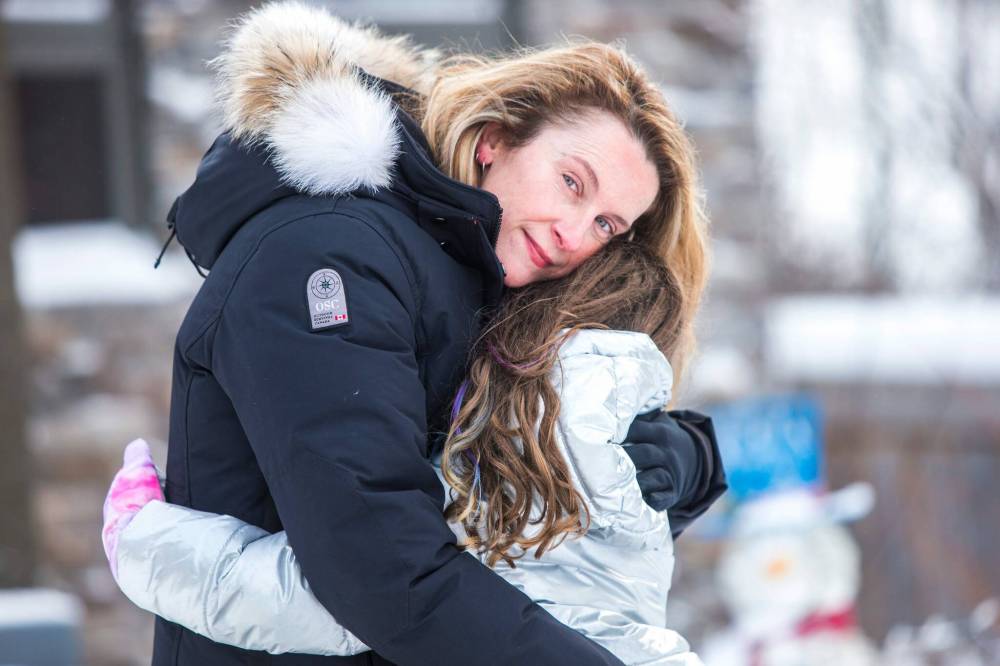
This time around, she must again prioritize her job and request her kids work independently, until she can help after 5 p.m. Like many parents, Hoover is awaiting details about how her division will welcome students back.
Provincial officials have announced most K-12 students will learning from home next week so schools can tweak safety protocols for a widespread return to in-class learning on Jan. 17.
Officials indicated the buffer period will allow educators to increase physical distancing and plan for increased staff absenteeism, given concerns about the highly infectious Omicron variant. The phased-in approach will also ensure more medical masks and rapid tests can be delivered to schools, per the province.
Dr. Marni Hanna, a community pediatrician at the Manitoba Clinic, said she is frustrated those steps were not taken earlier so face-to-face instruction could immediately resume for all students, including her Grade 3 daughter.
“We all saw this coming; they had modelling,” said Hanna, president of the Manitoba Pediatric Society.
In mid-December, the province’s top doctor indicated new daily cases could surpass 1,000 in the new year.
Hanna said she and her colleagues continue to see troubling trends among youth, including a growing number of youth with anxiety and depression, as well as eating disorders, obesity, suicidal ideation and addiction to electronic devices.
Disruptions to school, the main place where students socialize, cannot be underestimated, she said.
“Schools are essential. They’re not something that should be an option to close. We can’t do that with hospitals, we can’t do that with medical clinics, grocery stores stay open, pharmacies stay open.”
When the premier was asked why remote learning is happening if officials have insisted schools should be the last thing to close, she said the latest move is a delay rather than a closure.
Premier Heather Stefanson also repeatedly indicated Tuesday that stakeholders asked for preparation time.
Teachers are planning how to simultaneously educate both the children of essential workers in-person and the rest of their classes online.
Alain Laberge, superintendent of the Division scolaire franco-manitobaine, is asking educators to prepare for a minimum of three weeks of online education, as a “worst-case scenario.”
At the same time, school leaders are figuring out who needs to attend school, transportation, and device distribution.
“It’s a lot of little details. Our staff are resilient, our students are resilient, and we’re ready for it — but I just think that overall, the population is just tired,” said Laberge.
Spreading out a class into two rooms, outdoor phys-ed and alternating in-person days are all possibilities as leaders reorganize buildings to increase physical distancing to the greatest extent possible before students return.
Gymnasiums and music rooms will be converted into classrooms and many specialty educators may be asked to teach outside or with travelling carts.
“(Music) is just a great outlet for kids, a little bit of stress release, especially during this time of adversity so I do think it’s very essential to have music and arts programming continuing,” said Jordan Laidlaw, an early years music teacher in Winnipeg, who is hopeful singing and instrument-playing will continue.
Throughout the remote period, Laidlaw plans to engage students in beat-making using online music programs.

Grade 11 student Marco Soares said self-discipline will continue to be a key challenge for many high schoolers next week.
For visual and social learners such as himself, a return to in-person classes cannot come soon enough.
“We’ve been seeing school spirit come back up,” added Soares, president of the student council at Collège Sturgeon Heights Collegiate, “but we need to be back in person to make sure that trend doesn’t start declining.”
maggie.macintosh@freepress.mb.ca
Twitter: @macintoshmaggie
Maggie Macintosh
Education reporter
Maggie Macintosh reports on education for the Free Press. Originally from Hamilton, Ont., she first reported for the Free Press in 2017. Read more about Maggie.
Funding for the Free Press education reporter comes from the Government of Canada through the Local Journalism Initiative.
Every piece of reporting Maggie produces is reviewed by an editing team before it is posted online or published in print — part of the Free Press‘s tradition, since 1872, of producing reliable independent journalism. Read more about Free Press’s history and mandate, and learn how our newsroom operates.
Our newsroom depends on a growing audience of readers to power our journalism. If you are not a paid reader, please consider becoming a subscriber.
Our newsroom depends on its audience of readers to power our journalism. Thank you for your support.
$120-M salary shortfall
MANITOBA has earmarked $80 million to cover teacher salary settlements — a figure that is $40 million shy of the school board association’s estimated cost of necessary back-pay and cost of living adjustments.
The province announced Tuesday an additional $80 million will be distributed to school divisions in 2021-22 “to help address wage agreements for teachers and other cost pressures.”
The announcement is not nearly enough to foot the bill for recent contract negotiations for teachers — let alone for other school employees, said Alan Campbell, president of the Manitoba School Boards Association.
“Public education in this province is in a crisis when it comes to funding. It has been since before COVID,” said Campbell.
“We’re looking at $120 million-plus in terms of a shortfall.”
Throughout 2021, school divisions settled four-year collective agreements with local teachers associations in line with a February ruling in Pembina Trails, which overturned the province’s controversial wage freeze legislation — the now-obsolete Public Services Sustainability Act (Bill 28).
The arbitration board concluded teacher salaries should have been raised by 1.6 per cent during 2018-19, followed by annual hikes of 1.4 per cent, 0.5 per cent and a cost of living adjustment for 2021-22. Many divisions have since settled similar terms for other school employees.
Maggie Macintosh
Education reporter
Maggie Macintosh reports on education for the Free Press. Originally from Hamilton, Ont., she first reported for the Free Press in 2017. Read more about Maggie.
Funding for the Free Press education reporter comes from the Government of Canada through the Local Journalism Initiative.
Every piece of reporting Maggie produces is reviewed by an editing team before it is posted online or published in print — part of the Free Press‘s tradition, since 1872, of producing reliable independent journalism. Read more about Free Press’s history and mandate, and learn how our newsroom operates.
Our newsroom depends on a growing audience of readers to power our journalism. If you are not a paid reader, please consider becoming a subscriber.
Our newsroom depends on its audience of readers to power our journalism. Thank you for your support.
Advertisement Advertise With Us
Advertisement Advertise With Us
History
Updated on Thursday, January 6, 2022 7:03 AM CST: Tweaks cutline