

Province doubles funding for student nutrition council

Advertisement
Read this article for free:
or
Already have an account? Log in here »
To continue reading, please subscribe:

Digital Subscription
One year of digital access for only $205*
- Enjoy unlimited reading on winnipegfreepress.com
- Read the E-Edition, our digital replica newspaper
- Access News Break, our award-winning app
- Play interactive puzzles
*First annual payment billed as $205.00 + GST for one year. This annual subscription will automatically renew at $233.00 + GST every 52 weeks (10% off the regular annual price of $259.35). Offer available to new and qualified returning subscribers only. Cancel any time.
To continue reading, please subscribe:
Add Free Press access to your Brandon Sun subscription for only an additional
$1 for the first 4 weeks*
- Enjoy unlimited reading on winnipegfreepress.com
- Read the E-Edition, our digital replica newspaper
- Access News Break, our award-winning app
- Play interactive puzzles
*Your next Brandon Sun subscription payment will increase by $1.00 and you will be charged $17.95 plus GST for four weeks. After four weeks, your payment will increase to $24.95 plus GST every four weeks.
Read unlimited articles for free today:
or
Already have an account? Log in here »
Hey there, time traveller!
This article was published 01/09/2022 (1502 days ago), so information in it may no longer be current.
The Child Nutrition Council of Manitoba will be able to clear its wait list of schools so they can clear grocery store shelves and feed more hungry students this fall, owing to the province doubling annual funding for the organization.
Provincial officials announced Thursday an increase of $1.3 million for the council, which has provided application-based grants for K-12 breakfast, lunch and snack programs since 2001. It will now receive $2.5 million to subsidize healthy meals throughout the school year.
In the spring of 2020, a sudden surge in applications from school leaders prompted the council to create a wait list — the first in its history.
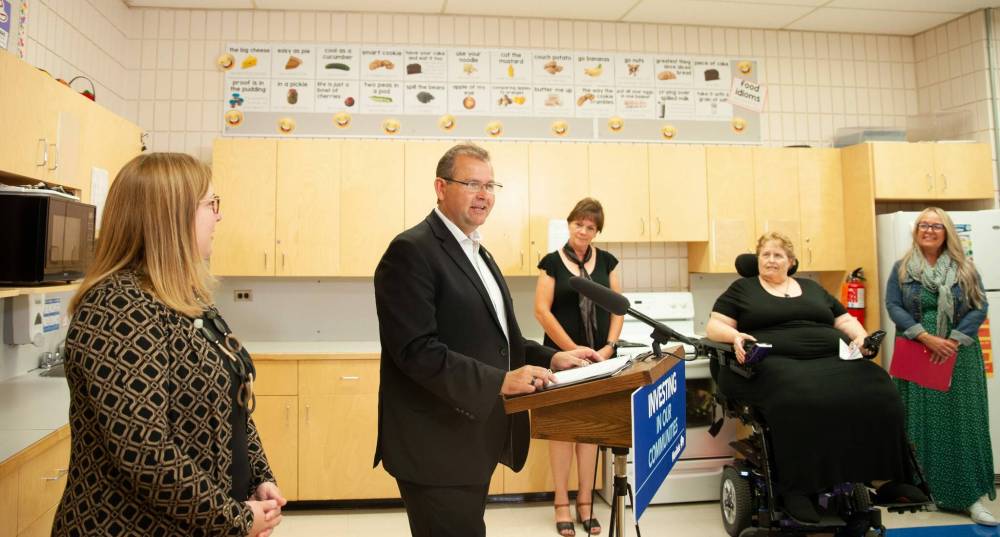
ETHAN CAIRNS / WINNIPEG FREE PRESS
(Left to right) Ministers Sarah Guilemard, Wayne Ewasko, as well as Janice Morley-Lecomte, Wendy Bloomfield and teacher Patricia Pawluk attend an announcement for student nutrition in Winnipeg schools.
“We were stuck with a decision: do we reduce funding to all schools in order to get the new applicants on or do we create a wait list? And that was a really tough decision for our board,” said Wendy Bloomfield, chairwoman of the council that assists in serving nearly 40,000 students on a daily basis.
“We did not want to say no to students that need support, but we also didn’t want to jeopardize the existing programs.”
Not only will all 22 schools on standby be supported now, but Bloomfield said the new allotment will allow the council to increase dollars for existing programs.
The organization aims to provide its roughly 300 recipients with 20 per cent of each of their calculated food costs. In recent years, it has been able to foot less than 10 per cent of applicants’ bills due to rising inflation and COVID-19-related costs.
Education Minister Wayne Ewasko and MLA Sarah Guillemard, minister overseeing the mental health and community wellness department, announced the additional funding during a news conference in a kitchen located inside Acadia Junior High School in south Winnipeg.
The Tory MLAs spoke about the importance of fuelling learners with nutritious food so they can focus on learning rather than rumbling stomachs.
“Many families have struggled to access healthy and affordable food throughout the COVID-19 pandemic. As children and their families prepare for the start of another busy school year, it is vital that Manitoba children have reliable access to nourishing food, not only for the academic performances, but for optimal development and overall well-being,” Guillemard told reporters.
Children come to class hungry for a variety of reasons, ranging from limited access to food at home to early drop-offs, lengthy commutes to hectic mornings, Ewasko said.
The education minister noted research shows hunger and poor nutrition is linked to challenges with achievement and attendance.
No. 45 of the K-12 commission’s 75 recommendations to better schooling in Manitoba called on the province to “improve access to nutritious food” and “expand health-promoting meal programs.”
The Manitoba Teachers’ Society has long advocated for a universal meal program across public schools. There are more than 700 K-12 buildings.
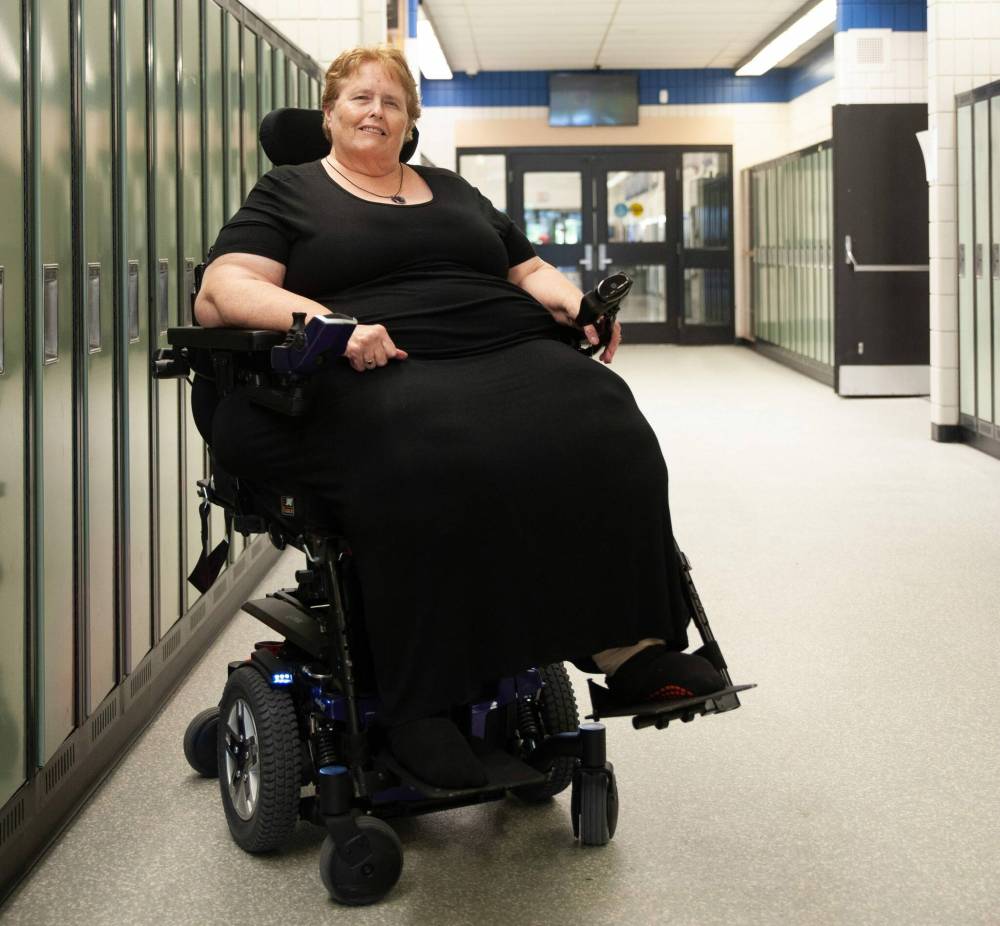
ETHAN CAIRNS / WINNIPEG FREE PRESS
Not only will all 22 schools on standby be supported now, the new allotment will also allow the council to increase dollars for existing programs, said Wendy Bloomfield, chairperson for Child Nutrition Council of Manitoba.
Union vice-president Nathan Martindale called the new money “a step in the right direction,” but indicated teachers are reporting a growing number of tired and hungry pupils.
“Nutrition programs are cobbled together through donations and grants, such as this one — but, at MTS, we strongly believe that they need to fund all of these programs so that it isn’t up to an application process and every child is getting a healthy start to their school day,” he said.
If there was a universal program, educators and parent council volunteers would not have to complete the time-intensive process of gathering donations or applying for a limited number of nutrition grants, Martindale added.

Bloomfield said the council could always use more funding, but the latest announcement “will go a long way.”
Home economics teacher Patricia Pawluk said tiredness and behaviour challenges among students can be connected to hunger.
Additional funding from the nutrition council will allow Acadia to offer more “substantial meals,” including sandwiches, soups and stews — and, in turn, address the above issues, Pawluk said.
maggie.macintosh@freepress.mb.ca
Twitter: @macintoshmaggie
Maggie Macintosh
Education reporter
Maggie Macintosh reports on education for the Free Press. Originally from Hamilton, Ont., she first reported for the Free Press in 2017. Read more about Maggie.
Funding for the Free Press education reporter comes from the Government of Canada through the Local Journalism Initiative.
Every piece of reporting Maggie produces is reviewed by an editing team before it is posted online or published in print — part of the Free Press‘s tradition, since 1872, of producing reliable independent journalism. Read more about Free Press’s history and mandate, and learn how our newsroom operates.
Our newsroom depends on a growing audience of readers to power our journalism. If you are not a paid reader, please consider becoming a subscriber.
Our newsroom depends on its audience of readers to power our journalism. Thank you for your support.
Maggie Macintosh
Education reporter
Maggie Macintosh reports on education for the Free Press. Originally from Hamilton, Ont., she first reported for the Free Press in 2017. Read more about Maggie.
Funding for the Free Press education reporter comes from the Government of Canada through the Local Journalism Initiative.
Every piece of reporting Maggie produces is reviewed by an editing team before it is posted online or published in print — part of the Free Press‘s tradition, since 1872, of producing reliable independent journalism. Read more about Free Press’s history and mandate, and learn how our newsroom operates.
Our newsroom depends on a growing audience of readers to power our journalism. If you are not a paid reader, please consider becoming a subscriber.
Our newsroom depends on its audience of readers to power our journalism. Thank you for your support.
Advertisement Advertise With Us
Advertisement Advertise With Us