

E-vehicles suitable for some city operations: report

Advertisement
Read this article for free:
or
Already have an account? Log in here »
To continue reading, please subscribe:

Digital Subscription
One year of digital access for only $205*
- Enjoy unlimited reading on winnipegfreepress.com
- Read the E-Edition, our digital replica newspaper
- Access News Break, our award-winning app
- Play interactive puzzles
*First annual payment billed as $205.00 + GST for one year. This annual subscription will automatically renew at $233.00 + GST every 52 weeks (10% off the regular annual price of $259.35). Offer available to new and qualified returning subscribers only. Cancel any time.
To continue reading, please subscribe:
Add Free Press access to your Brandon Sun subscription for only an additional
$1 for the first 4 weeks*
- Enjoy unlimited reading on winnipegfreepress.com
- Read the E-Edition, our digital replica newspaper
- Access News Break, our award-winning app
- Play interactive puzzles
*Your next Brandon Sun subscription payment will increase by $1.00 and you will be charged $17.95 plus GST for four weeks. After four weeks, your payment will increase to $24.95 plus GST every four weeks.
Read unlimited articles for free today:
or
Already have an account? Log in here »
Hey there, time traveller!
This article was published 12/09/2022 (1462 days ago), so information in it may no longer be current.
Electric vehicles are up to the task of providing many City of Winnipeg services, but further study is needed to determine if their full price makes sense for taxpayers, a new report says.
The report is based on a recent pilot program that tested two all-electric Chevrolet Bolts and two Level 3 (fastest possible) charging stations for use by the Winnipeg Parking Authority and the water and waste department. It ran from Jan. 1, 2020, to Dec. 31, 2021, and cost the city $200,000.
While the results show the green vehicles “can be operationally feasible” for many city tasks, the report doesn’t recommend any action to expand the electric fleet. That’s partly because electric vehicles are more expensive than hybrids and gas models, and the city hasn’t yet studied the cost of installing charging stations to handle a larger fleet.
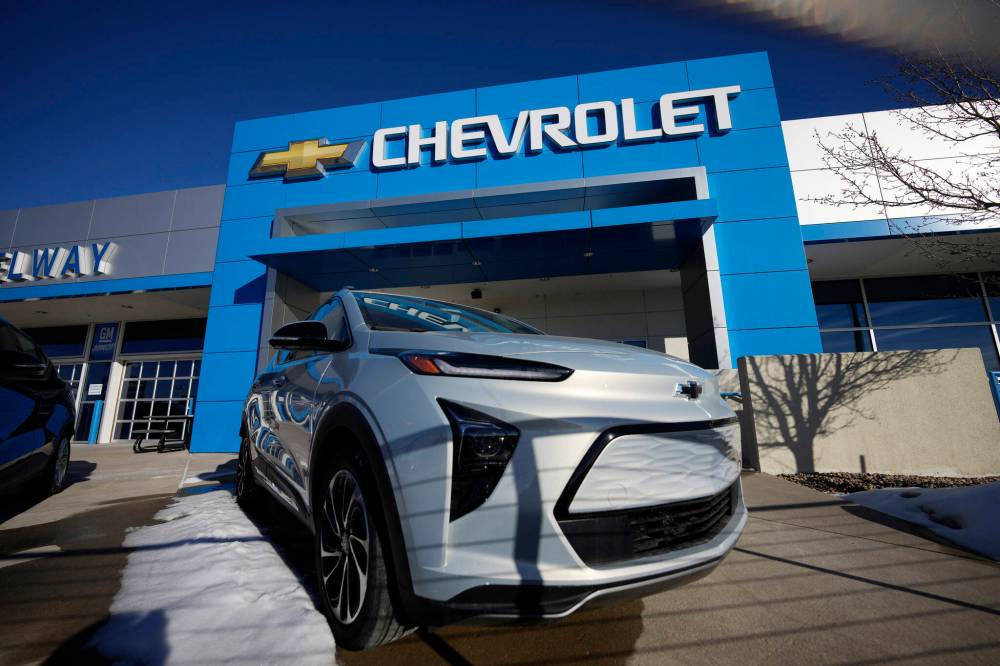
DAVID ZALUBOWSKI / ASSOCIATED PRESS FILES
The report is based on a recent pilot program that tested two all-electric Chevrolet Bolts and two Level 3 (fastest possible) charging stations for use by the Winnipeg Parking Authority and the water and waste department.
Thanks to volatile gasoline and vehicle prices, the financial impact of switching to electric could change soon, officials say.
“Several factors may change, which will enable an all-electric vehicle to achieve positive financial savings relative to a hybrid vehicle, including lower purchase costs and higher gas prices. The city will continue to monitor the cost and performance of the two all-electric vehicles in its fleet and respond to changes in return on investment and break-even point, as well as technology, prior to making any recommendations on transitioning the entire fleet to all-electric,” spokesman Adam Campbell said in an emailed statement.
Due to a higher initial price tag, each electric vehicle is expected to cost about $4,195 more than each hybrid vehicle in the city’s light-duty fleet after seven years of use, when energy savings are factored in, the report said. The comparison does not include the cost of charging stations.
Throughout the pilot project, the electric vehicles cost an average of three cents per kilometre to drive, compared to an average of 19 cents/km for an equivalent gas or hybrid model. The average price of gas was about $1.03 per litre at the time.
The report notes rebates and high gas prices could make the electric models a better deal. For example, in years when the average gas price exceeds $1.74/L or more, they would be expected to produce savings.
That finding comes as another city report notes Winnipeg spent $11 million on fuel during the first four months of this year, after the price of gasoline soared beyond that level for weeks.
Coun. Markus Chambers, head of council’s innovation committee, said he supports an ultimate to shift to electric vehicles as an environmental investment, but agrees more study is needed.
“It does require a little bit more study as the technology improves before we make that wholesale change in going to a fleet of electric vehicles,” said Chambers. “That is certainly something that we need to look at when these fluctuations in gas prices do happen.”
He said the impact on taxpayers must be a key factor in the decision.
The report says the city would need to borrow $20.7 million to electrify its entire light-duty fleet of 768 vehicles (based on life-cycle costs), but would save $17.5 million in operating costs over seven years, eventually reducing the tab to $3.2 million more.

“Because it is the public dollar, I think we have to consider that, but… the other factors (also) start to tip the scale in terms of our decision to invest in electric vehicles so that we have a better outcome for our climate and our environment,” said Chambers.
The report found electric vehicles worked well when used for eight-hour shifts, though finding time to charge them could be more challenging for 24-hour operations such as police services. It also found the travel range an electric vehicle battery provides dropped by an average of 37 per cent in colder months, falling 60 per cent on extremely cold days.
Winnipeg’s fleet management agency plans to study the city’s electrical infrastructure, including charging stations, to determine the next steps forward.
joyanne.pursaga@freepress.mb.ca
Twitter: @joyanne_pursaga
Joyanne is city hall reporter for the Winnipeg Free Press. A reporter since 2004, she began covering politics exclusively in 2012, writing on city hall and the Manitoba Legislature for the Winnipeg Sun before joining the Free Press in early 2020. Read more about Joyanne.
Every piece of reporting Joyanne produces is reviewed by an editing team before it is posted online or published in print — part of the Free Press‘s tradition, since 1872, of producing reliable independent journalism. Read more about Free Press’s history and mandate, and learn how our newsroom operates.
Our newsroom depends on a growing audience of readers to power our journalism. If you are not a paid reader, please consider becoming a subscriber.
Our newsroom depends on its audience of readers to power our journalism. Thank you for your support.
Joyanne is city hall reporter for the Winnipeg Free Press. A reporter since 2004, she began covering politics exclusively in 2012, writing on city hall and the Manitoba Legislature for the Winnipeg Sun before joining the Free Press in early 2020. Read more about Joyanne.
Every piece of reporting Joyanne produces is reviewed by an editing team before it is posted online or published in print — part of the Free Press‘s tradition, since 1872, of producing reliable independent journalism. Read more about Free Press’s history and mandate, and learn how our newsroom operates.
Our newsroom depends on a growing audience of readers to power our journalism. If you are not a paid reader, please consider becoming a subscriber.
Our newsroom depends on its audience of readers to power our journalism. Thank you for your support.
Advertisement Advertise With Us
Advertisement Advertise With Us