

U of M students vote to quit national advocacy federation

Advertisement
Read this article for free:
or
Already have an account? Log in here »
To continue reading, please subscribe:

Digital Subscription
One year of digital access for only $205*
- Enjoy unlimited reading on winnipegfreepress.com
- Read the E-Edition, our digital replica newspaper
- Access News Break, our award-winning app
- Play interactive puzzles
*First annual payment billed as $205.00 + GST for one year. This annual subscription will automatically renew at $233.00 + GST every 52 weeks (10% off the regular annual price of $259.35). Offer available to new and qualified returning subscribers only. Cancel any time.
To continue reading, please subscribe:
Add Free Press access to your Brandon Sun subscription for only an additional
$1 for the first 4 weeks*
- Enjoy unlimited reading on winnipegfreepress.com
- Read the E-Edition, our digital replica newspaper
- Access News Break, our award-winning app
- Play interactive puzzles
*Your next Brandon Sun subscription payment will increase by $1.00 and you will be charged $17.95 plus GST for four weeks. After four weeks, your payment will increase to $24.95 plus GST every four weeks.
Read unlimited articles for free today:
or
Already have an account? Log in here »
Hey there, time traveller!
This article was published 12/01/2023 (1364 days ago), so information in it may no longer be current.
Local and national student leaders are at odds about the legitimacy of a recent University of Manitoba Students’ Union referendum that concluded its members want to cut ties with a federation that advocates for free tuition across the country.
Thousands of learners at Manitoba’s largest university cast virtual ballots last semester in a controversial vote to determine whether they should continue to affiliate themselves with and pay fees to the Canadian Federation of Students.
Against the backdrop of an ongoing lawsuit between the two parties, CFS unsuccessfully applied for a court injunction to stop the plebiscite altogether in mid-October.
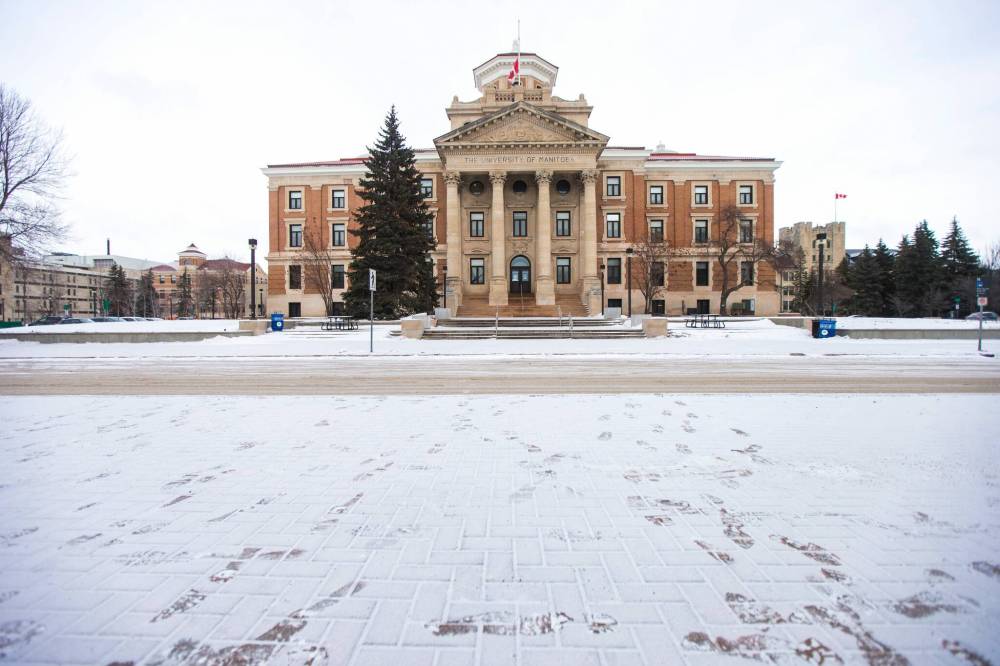
The request was thrown out by a provincial judge who dismissed claims it would cause “irreparable harm” to the federation, although it did result in a brief pause in campaigning on the Fort Garry campus.
Between Oct. 27 and 28, 5,747 voters or about a quarter of U of M’s undergraduate student body participated in the democratic process.
The referendum, the second one on this particular subject in five years — during the winter 2018 term, students expressed satisfaction with the status quo — ended up passing. Fifty-five per cent of student voters indicated they were in favour of officially ending the relationship this time around.
“Our student body is getting a really bad return on investment when it comes to this partnership,” said UMSU president Jaron Rykiss, who represents more than 25,000 undergraduate learners.
“We find that our advocacy is better suited working through MAPS, which is the Manitoba Alliance of Post-Secondary Students, as well as CASA: the Canadian Alliance of Student Associations. MAPS is free and CASA costs us a (fraction) of what we pay CFS,” Rykiss said, noting the federation charges the union about $415,000 annually.
UMSU and CFS, a post-secondary advocacy group with about 65 university and college campus affiliates across Canada, have been in a stalemate over the former’s membership status since 2018-19.
The national entity brought the dispute to the Court of King’s Bench at the end of the summer. Its executives allege the Winnipeg-based union has breached its contractual obligations as an ongoing CFS member and is suing UMSU for more than $1 million in outstanding fees and damages.
Winnipeg students started paying regular fees to CFS in the early 2000s, after UMSU joined the federation and began supporting the collective’s campaigns and lobbying efforts to introduce student-friendly policies countrywide.
The UMSU board of directors has formally voted to support de-federation several times since 2018-19. Executives have been following subsequent internal protocols, which are enshrined in the provincial UMSU Act, to do so since.
At the same time, the union has stopped paying fees to the federation, although it continues to collect them.
Court documents show there is disagreement between the parties over what regulations UMSU needs to follow in order to end their relationship.
“(UMSU) is and continues to be a member of the Canadian Federation of Students… and continues to be bound by the bylaws of the CFS,” states an excerpt from the federation’s amended statement of claim dated Oct. 28.
Despite the outcome of the recent referendum, CFS spokeswoman Candice Pinto said the federation’s stance is that U of M students continue to benefit from the national organization’s work.
“The federation continues to call on UMSU decision-makers to remit the outstanding four years of collected student fees, now totalling over $1 million, to the national and provincial student movement so that we can continue our meaningful outreach and advocacy work with — and for — students,” the public relations officer wrote in an email.
Outsiders may see this as a bizarre conflict, but it comes down to differing ideologies between Canada’s major student advocacy groups: CFS and CASA, said David Camfield, an associate professor of labour studies at U of M.

CFS has historically leaned in a social democratic direction, taken positions on social issues of all kinds, and been at the forefront of advocating for progressive changes, Camfield said, noting CASA was founded as a centrist alternative that takes a less confrontational approach to advocacy.
“Students and other people should care about it if they care about the future of publicly funded postsecondary education because I don’t think CASA and MAPS are going to vigorously challenge the general direction (of the province at present),” said the labour researcher, who has observed local student politics over the last 20 years.
Camfield noted the percentage of university revenue that comes from the province has declined to “the barest, slimmest majority,” and there’s now a major reliance on tuition — a shift that CFS has opposed.
maggie.macintosh@freepress.mb.ca
Twitter: @macintoshmaggie
Maggie Macintosh
Education reporter
Maggie Macintosh reports on education for the Free Press. Originally from Hamilton, Ont., she first reported for the Free Press in 2017. Read more about Maggie.
Funding for the Free Press education reporter comes from the Government of Canada through the Local Journalism Initiative.
Every piece of reporting Maggie produces is reviewed by an editing team before it is posted online or published in print — part of the Free Press‘s tradition, since 1872, of producing reliable independent journalism. Read more about Free Press’s history and mandate, and learn how our newsroom operates.
Our newsroom depends on a growing audience of readers to power our journalism. If you are not a paid reader, please consider becoming a subscriber.
Our newsroom depends on its audience of readers to power our journalism. Thank you for your support.
Maggie Macintosh
Education reporter
Maggie Macintosh reports on education for the Free Press. Originally from Hamilton, Ont., she first reported for the Free Press in 2017. Read more about Maggie.
Funding for the Free Press education reporter comes from the Government of Canada through the Local Journalism Initiative.
Every piece of reporting Maggie produces is reviewed by an editing team before it is posted online or published in print — part of the Free Press‘s tradition, since 1872, of producing reliable independent journalism. Read more about Free Press’s history and mandate, and learn how our newsroom operates.
Our newsroom depends on a growing audience of readers to power our journalism. If you are not a paid reader, please consider becoming a subscriber.
Our newsroom depends on its audience of readers to power our journalism. Thank you for your support.
Related Articles
U of M students union hit with lawsuit
Advertisement Advertise With Us
Advertisement Advertise With Us
History
Updated on Thursday, January 12, 2023 10:35 AM CST: Changes descriptor of changes CFS has advocated for