

New rules for foreign waterfowl hunters seek ‘level playing field’

Advertisement
Read this article for free:
or
Already have an account? Log in here »
To continue reading, please subscribe:

Digital Subscription
One year of digital access for only $205*
- Enjoy unlimited reading on winnipegfreepress.com
- Read the E-Edition, our digital replica newspaper
- Access News Break, our award-winning app
- Play interactive puzzles
*First annual payment billed as $205.00 + GST for one year. This annual subscription will automatically renew at $233.00 + GST every 52 weeks (10% off the regular annual price of $259.35). Offer available to new and qualified returning subscribers only. Cancel any time.
To continue reading, please subscribe:
Add Free Press access to your Brandon Sun subscription for only an additional
$1 for the first 4 weeks*
- Enjoy unlimited reading on winnipegfreepress.com
- Read the E-Edition, our digital replica newspaper
- Access News Break, our award-winning app
- Play interactive puzzles
*Your next Brandon Sun subscription payment will increase by $1.00 and you will be charged $17.95 plus GST for four weeks. After four weeks, your payment will increase to $24.95 plus GST every four weeks.
Read unlimited articles for free today:
or
Already have an account? Log in here »
Hey there, time traveller!
This article was published 20/03/2023 (1295 days ago), so information in it may no longer be current.
Manitoba sportsmen are smiling — and American counterparts fuming — after the provincial government introduced new rules for private and public land accessibility for resident and foreign waterfowl hunters.
“These changes will reduce illegal outfitting, establish a cap on licensed outfitting operations and legacy hunting camps, with the goal of creating a higher-quality experience for resident waterfowl hunters, outfitted clients and visiting foreign resident freelance hunters in Manitoba,” says a guide issued to hunters by the province.
Starting this fall, foreign hunters (who are predominantly from the United States) can apply for a foreign resident migratory game bird licence, allowing them to hunt for seven days, by entering a draw process or by booking with a licensed outfitter.
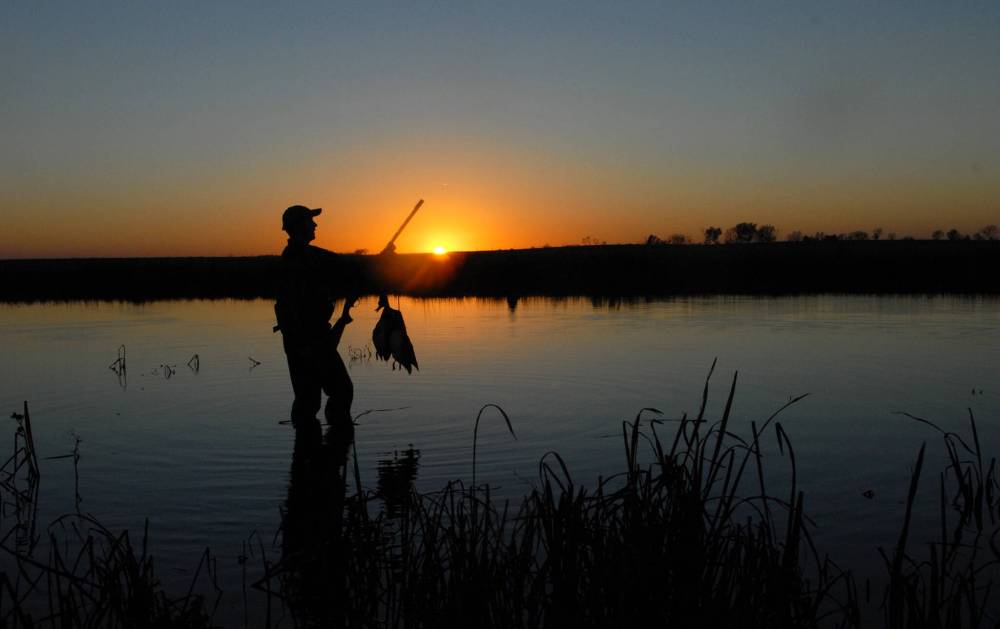
Starting this fall, foreign hunters can apply for a foreign resident migratory game bird licence, allowing them to hunt for seven days, by entering a draw process or by booking with a licensed outfitter. (Dennis Anderson/Minneapolis Star Tribune/MCT)
At the same time, the province has also created a foreign resident legacy migratory game bird licence, for foreign resident land owners and lessees of Crown land who held such property before Sept. 1, 2022 — and currently still hold it — and have hunted waterfowl within the previous five years.
“We are excited about these changes,” Chris Heald, executive director of the Manitoba Wildlife Federation, said Monday. “It has needed to be done for 15 years.
“Yeah, a few people are mad, but thank goodness the government is going ahead.”
Heald said the changes were pushed by numerous stakeholders — not just local hunters, but also hotels, restaurants and outfitters.
“In the United States, hunting has become completely commercialized,” he said. “The hunters came up here and they started buying farm houses. It was exactly what happened down there and they were doing it here.”
Heald said Americans would also buy up local land to hunt on or pay farmers and landowners to give them exclusive rights, making it harder and harder for Manitoba hunters to find accessible land.
Natural Resources and Northern Development Minister Greg Nesbitt said Manitoba is seeking to avoid the commercialization and privatization of waterfowl hunting seen across other parts of North America.
With seven-day hunting licences, it makes more sense for foriegn hunters to pay for hotel rooms, rental properties and restaurants, instead of owning private camps, he said.
“But it wasn’t so much about buying properties,” he said. “It was tying up land and many areas… it was becoming increasingly difficult to find places to hunt.
“We’re not trying to discriminate. We’re trying to get on a level playing field where there is an equal opportunity for everyone,” Nesbitt said. “We want to ensure this is fair to everybody.”
There are an estimated 10,000 Manitoba hunters and about 3,500 foreign hunters, mostly American, who visit the province annually.

Natural Resources and Northern Development Minister Greg Nesbitt said Manitoba is seeking to avoid the commercialization and privatization of waterfowl hunting seen across other parts of North America. (Winnipeg Free Press files)
Richard Carver is one of those Americans.
For 45 years, the Glencoe, Minn., resident and seven friends have hunted in the Delta Marsh area, after they bought a nearby camp from a group of hunters mostly from Thunder Bay, Ont.
Through the decades, the American group spent money improving the camp, including putting on a metal roof and renovating the 10 bedrooms and three bathrooms, and shopping for supplies in nearby St. Ambroise, Carver said.

Carver, the last of the eight living, now wonders what will happen to the property.
“Yes, we are grandfathered (under the new rules) but I can’t transfer the grandfathering if I sell it. There will be no buyers for it. All of a sudden, we’re undercut,” he said.
The new regulations mean his camp will be able to get three, seven-day licences, but can only write in four guests per licence.
“What if you have five grandchildren? You have to leave one off?” he said. “To me, this is a power play by the outfitters to get more control.”
kevin.rollason@freepress.mb.ca
Kevin Rollason
Reporter
Kevin Rollason was a general assignment reporter at the Free Press.
Our newsroom depends on a growing audience of readers to power our journalism. If you are not a paid reader, please consider becoming a subscriber.
Our newsroom depends on its audience of readers to power our journalism. Thank you for your support.
Kevin Rollason
Reporter
Kevin Rollason was a general assignment reporter at the Free Press.
Our newsroom depends on a growing audience of readers to power our journalism. If you are not a paid reader, please consider becoming a subscriber.
Our newsroom depends on its audience of readers to power our journalism. Thank you for your support.
Advertisement Advertise With Us
Advertisement Advertise With Us