

City’s rainy-day fund can’t cover entire $27M projected deficit

Advertisement
Read this article for free:
or
Already have an account? Log in here »
To continue reading, please subscribe:

Digital Subscription
One year of digital access for only $205*
- Enjoy unlimited reading on winnipegfreepress.com
- Read the E-Edition, our digital replica newspaper
- Access News Break, our award-winning app
- Play interactive puzzles
*First annual payment billed as $205.00 + GST for one year. This annual subscription will automatically renew at $233.00 + GST every 52 weeks (10% off the regular annual price of $259.35). Offer available to new and qualified returning subscribers only. Cancel any time.
To continue reading, please subscribe:
Add Free Press access to your Brandon Sun subscription for only an additional
$1 for the first 4 weeks*
- Enjoy unlimited reading on winnipegfreepress.com
- Read the E-Edition, our digital replica newspaper
- Access News Break, our award-winning app
- Play interactive puzzles
*Your next Brandon Sun subscription payment will increase by $1.00 and you will be charged $17.95 plus GST for four weeks. After four weeks, your payment will increase to $24.95 plus GST every four weeks.
Read unlimited articles for free today:
or
Already have an account? Log in here »
Hey there, time traveller!
This article was published 29/05/2023 (1216 days ago), so information in it may no longer be current.
The City of Winnipeg expects to finish 2023 with a $27 million deficit, roughly $7.5 million more than its rainy-day fund can cover.
The financial stabilization reserve can be used to pay for up to $19.5 million of those potential losses, if the city can’t eliminate the deficit by the end of the year, according to a new report based on finance data up to March 31.
An action plan to find $7.5 million of savings to offset the remaining shortfall prediction will be shared with council’s finance committee on June 30.
Mike Deal / Winnipeg Free Press Files
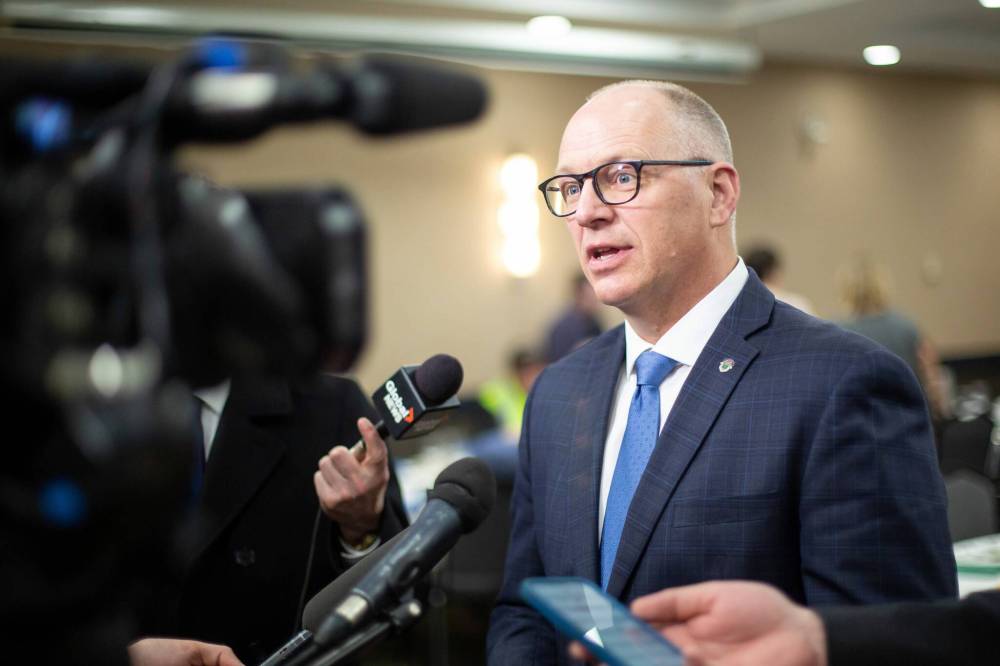
When asked if he expects council will have to cut services or lay off staff to bridge the financial gap, Mayor Scott Gillingham said that isn’t clear. “It’s too soon to really speculate on that.”
The report offers a stark warning about how the expected shortfall could affect city departments going forward.
“Until the forecasted deficit can be addressed, the city will be in a more difficult position to approve any over-expenditure requests, potentially causing some disruption to services,” states the report.
When asked if he expects council will have to cut services or lay off staff to bridge the financial gap, Mayor Scott Gillingham said that isn’t clear.
“It’s too soon to really speculate on that. Right now, what we’re looking at is every department, including the police service, focusing on managing their costs and controlling their expenses,” said Gillingham.
Most of the expected losses are linked to emergency services, including a projected $12.8 million deficit for the Winnipeg Police Service. The report blames that outlook on the service’s expectation it will not find $9.2 million of savings during the year, as council directed it to, as well as declining traffic-enforcement revenue.
Winnipeg Fire Paramedic Service expects to fall $7.4 million short, mostly due to firefighter overtime and workers’ compensation costs. Other city departments are also forecasting deficits, partly due to shortfalls in permit fees and higher-than-expected snow-clearing costs.
The mayor repeatedly noted city deficits often decline in later months of the year and were eliminated entirely during many years prior to the pandemic.
“It’s typical that the first-quarter report annually shows a projected deficit and then usually, most years, that improves over the course of the remainder of the year,” he said.
The mayor noted the city is also still experiencing “a little bit of COVID hangover” in its financial forecast. While the city budgeted $18.7 million to cover COVID costs and revenue losses in 2023, it now expects to spend an additional $1 million.
The report notes Winnipeg Transit expects to finish the year with a $2.5-million shortfall that will be covered by the service’s retained earnings, with Transit ridership still lagging about 17 per cent below pre-pandemic levels by the end of March.
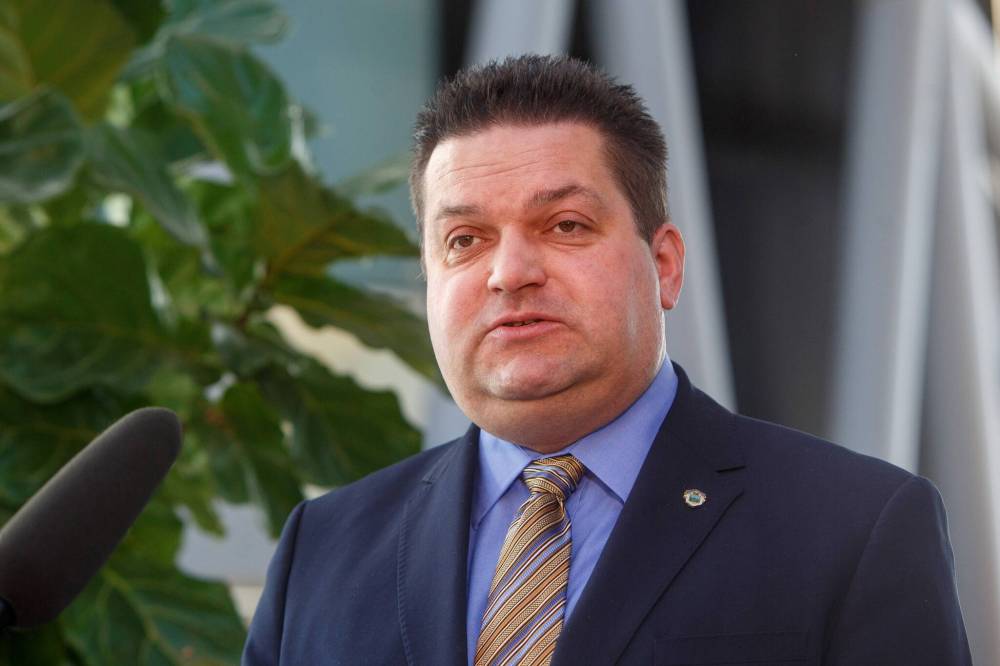
Coun. Jeff Browaty, city council’s finance chairman, is calling for changes to prevent such a large first-quarter deficit projection from being repeated.
“There are some things that we’re going to be doing and hopefully (we will) have less of this shock when we see first-quarter results (in the future),” said Browaty.
The councillor said the city should look at increasing its annual snow-clearing budget, which has hovered around $35 million to $36 million for several years. Last year, the budget to clear snow and ice was set at nearly $35 million but the actual cost soared to just over $87 million.
Mike Deal / Winnipeg Free Press Files
Coun. Jeff Browaty, city council’s finance chairman, is calling for changes to prevent such a large first-quarter deficit projection from being repeated.
“The point is we are now not budgeting nearly enough… I think it’s time that we revisit the base amount and make it more representative,” said Browaty.
As for the police budget, Browaty said he expects the service will find some savings. However, he said outdated photo traffic-enforcement technology is limiting police revenues and changes to provincial legislation would be needed to update it.
Winnipeg Police Service Chief Danny Smyth has warned legislation from 2002 restricts the program to very specific intersection safety-camera systems that are no longer supported by other technology and are deteriorating.
WPS did not respond to a request for comment by deadline on Monday.

Coun. Markus Chambers, chairman of the Winnipeg Police Board, said increased calls for police services could make it difficult for police to meet their multimillion-dollar savings target this year.
“There (are) so many demands on the service right now. While they will do everything they can to meet those targets, recognizing the (financial) crunch that the city’s in as well, we can’t turn off the lights when the money runs out,” said Chambers.
Council’s finance committee is set to discuss the latest outlook on June 2.
joyanne.pursaga@freepress.mb.ca
Twitter: @joyanne_pursaga
Joyanne is city hall reporter for the Winnipeg Free Press. A reporter since 2004, she began covering politics exclusively in 2012, writing on city hall and the Manitoba Legislature for the Winnipeg Sun before joining the Free Press in early 2020. Read more about Joyanne.
Every piece of reporting Joyanne produces is reviewed by an editing team before it is posted online or published in print — part of the Free Press‘s tradition, since 1872, of producing reliable independent journalism. Read more about Free Press’s history and mandate, and learn how our newsroom operates.
Our newsroom depends on a growing audience of readers to power our journalism. If you are not a paid reader, please consider becoming a subscriber.
Our newsroom depends on its audience of readers to power our journalism. Thank you for your support.
Joyanne is city hall reporter for the Winnipeg Free Press. A reporter since 2004, she began covering politics exclusively in 2012, writing on city hall and the Manitoba Legislature for the Winnipeg Sun before joining the Free Press in early 2020. Read more about Joyanne.
Every piece of reporting Joyanne produces is reviewed by an editing team before it is posted online or published in print — part of the Free Press‘s tradition, since 1872, of producing reliable independent journalism. Read more about Free Press’s history and mandate, and learn how our newsroom operates.
Our newsroom depends on a growing audience of readers to power our journalism. If you are not a paid reader, please consider becoming a subscriber.
Our newsroom depends on its audience of readers to power our journalism. Thank you for your support.
Advertisement Advertise With Us
Advertisement Advertise With Us