Federal inspectors shut down exotic butterfly biome at The Leaf
Read this article for free:
or
Already have an account? Log in here »
To continue reading, please subscribe:

Digital Subscription
One year of digital access for only $205*
- Enjoy unlimited reading on winnipegfreepress.com
- Read the E-Edition, our digital replica newspaper
- Access News Break, our award-winning app
- Play interactive puzzles
*First annual payment billed as $205.00 + GST for one year. This annual subscription will automatically renew at $233.00 + GST every 52 weeks (10% off the regular annual price of $259.35). Offer available to new and qualified returning subscribers only. Cancel any time.
To continue reading, please subscribe:
Add Free Press access to your Brandon Sun subscription for only an additional
$1 for the first 4 weeks*
- Enjoy unlimited reading on winnipegfreepress.com
- Read the E-Edition, our digital replica newspaper
- Access News Break, our award-winning app
- Play interactive puzzles
*Your next Brandon Sun subscription payment will increase by $1.00 and you will be charged $17.95 plus GST for four weeks. After four weeks, your payment will increase to $24.95 plus GST every four weeks.
Read unlimited articles for free today:
or
Already have an account? Log in here »
Hey there, time traveller!
This article was published 08/06/2023 (1209 days ago), so information in it may no longer be current.
The popular exotic butterfly exhibit at The Leaf was closed only after a federal government inspection, and not by the Assiniboine Park Conservancy, the Free Press has confirmed.
The action taken by the Canadian Food Inspection Agency, after “regulated plant pests” were found outside of their containment area, means all plants in the entire facility are considered contaminated and can only be removed from The Leaf if they are properly destroyed.
As a result, the Shirley Richardson Butterfly Garden has been closed.
A spokesman for the inspection agency said the closure took place after an inspection of The Leaf’s butterfly facility on May 30.
“During the inspection, it was observed that the requirements for the containment of regulated plant pests were no longer being met,” he said in a statement.
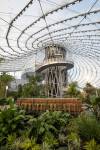
JOHN WOODS / WINNIPEG FREE PRESS The Shirley Richardson Butterfly Garden at The Leaf was closed after an inspection by the Canadian Food Inspection Agency on May 30. 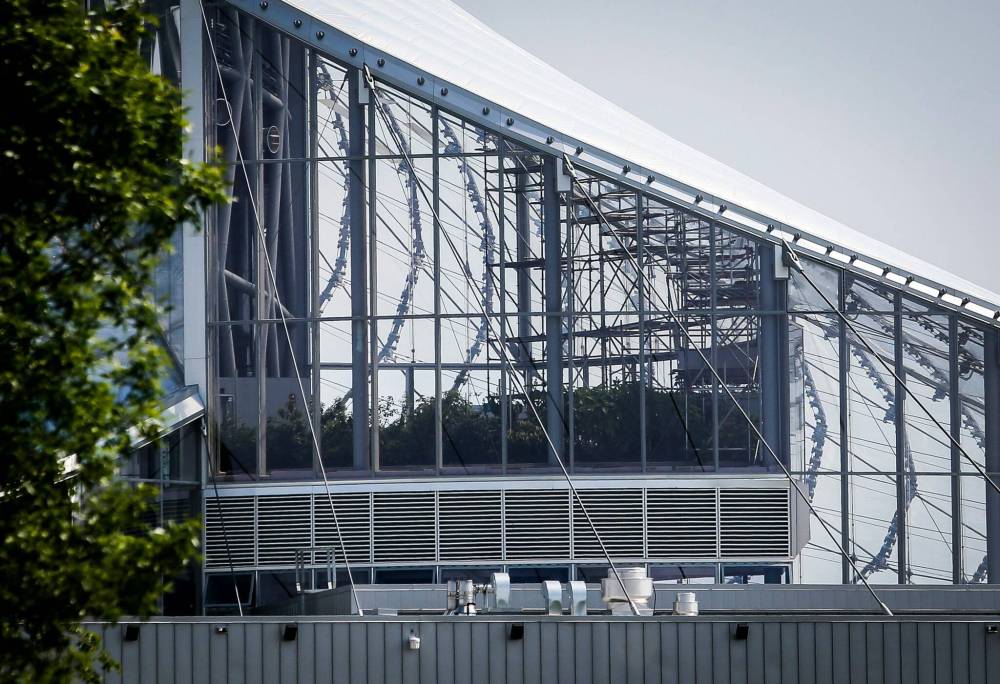
“As a result, the CFIA rescinded the import permit that granted the authority to operate a public display of exotic butterflies. All of the butterflies remaining in the facility had to be secured and contained immediately.”
The action occurred days before the $130-million horticultural structure, which opened in December after the three levels of government contributed $60 million for construction, was forced to close for three hours on Sunday. One of its heat sensors had shown a temperature of 43 C in one area of the tropical plant biome. At that time, Environment and Climate Change Canada reported Winnipeg’s temperature had reached 31.5 C with a humidex of 39.
The conservancy later said that after averaging out the heat sensors, it showed a peak average of 33.7 C. As a result, it said it was reviewing its heat closure protocols while looking at adjustments in managing temperatures in the building.
The federal agency said its employees also inspected the holding facility in the Assiniboine Park Zoo, to make sure it met the containment requirements, before allowing the exotic butterflies to be moved there.
“The plant pest containment program is in place to prevent the introduction or spread of imported butterflies into the environment.”–A spokesman for the inspection agency
CFIA inspectors scoured areas near the building, to see if any exotic butterflies had escaped and “no butterflies were detected.”
The CFIA said regulations that govern the display of exotic butterflies protect Canada’s plant resources and agricultural crops.
“The plant pest containment program is in place to prevent the introduction or spread of imported butterflies into the environment,” the spokesman said.
“As a potential pathway for these butterflies to spread, the plants within the facility are considered infested. This means that if the plants need to be removed from the facility, the removal and disposal must be done in an approved manner.”
The spokesman said the first inspection of the butterfly facility was in October 2022, two months before The Leaf opened and before the first exotic butterfly was imported to Winnipeg.
Daniel Crump / Winnipeg Free Press Files The butterfly facility at The Leaf will reopen on Friday but, instead of exotic butterflies, it will have domestic ones that do not require CFIA approval.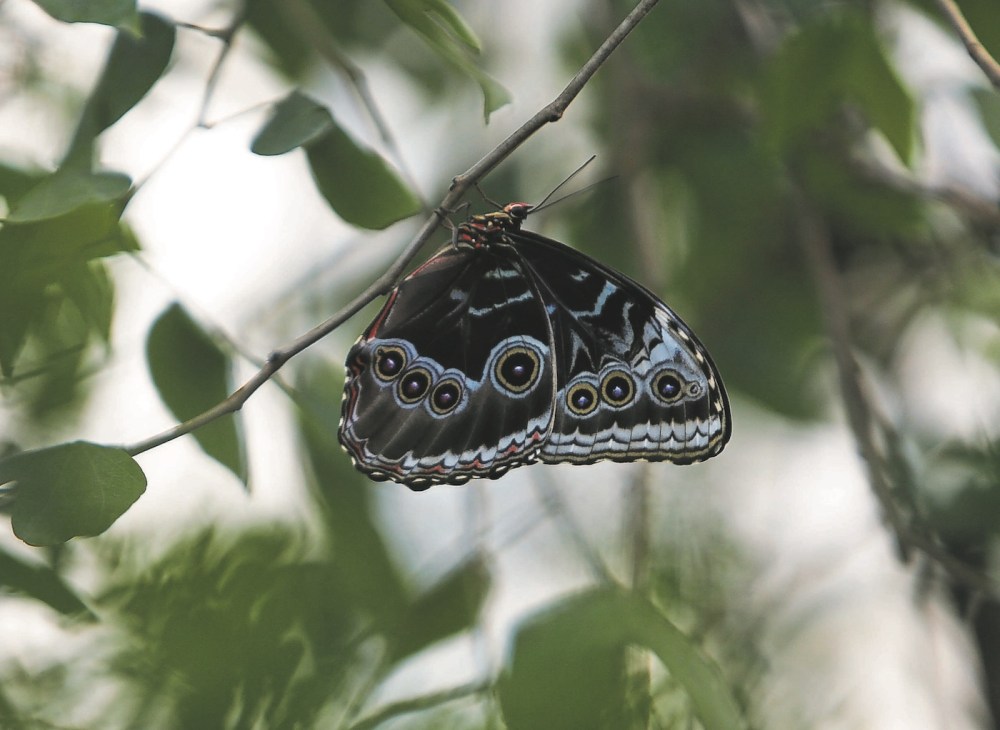
A second inspection was conducted in December, just before the facility opened, and, based on the results of the inspections, an import permit was granted to allow The Leaf to operate a public display of exotic butterflies.
The next inspection wasn’t until May 30 and that’s when the import permit was yanked.
The CFIA spokesman said no enforcement action is being taken at this time.
Laura Cabak, a spokeswoman for the conservancy, said the butterfly facility will reopen on Friday but, instead of exotic butterflies, it will have domestic ones that do not require CFIA approval.

“(It) will be a nice fit with our new pollinator-themed summer display in the Babs Asper Display House,” Cabak said.
“It is our intent to reintroduce tropical species with CFIA approval at a future date after the necessary repairs are completed.”
Meanwhile, Michelle Provaznik, CEO of the American Public Gardens Association, of which The Leaf is a member, said new facilities can be hit with heat problems in their first year of operation.
“The mechanical systems in conservatories include heating, cooling, air circulation, humidification, etc., that work in tandem to create the ideal climate for the plant collection in the house and for guest comfort,” Provaznik said.
“External weather impacts the balance and it can take a year of seasonal changes for conservatory managers to determine the optimum settings year-round.”
kevin.rollason@freepress.mb.ca

Kevin Rollason
Reporter
Kevin Rollason was a general assignment reporter at the Free Press.
Our newsroom depends on a growing audience of readers to power our journalism. If you are not a paid reader, please consider becoming a subscriber.
Our newsroom depends on its audience of readers to power our journalism. Thank you for your support.
History
Updated on Thursday, June 8, 2023 10:47 PM CDT: Fixes typo