Filipino festival welcomes return of popular parade
Advertisement
Read this article for free:
or
Already have an account? Log in here »
To continue reading, please subscribe:

Digital Subscription
One year of digital access for only $205*
- Enjoy unlimited reading on winnipegfreepress.com
- Read the E-Edition, our digital replica newspaper
- Access News Break, our award-winning app
- Play interactive puzzles
*First annual payment billed as $205.00 + GST for one year. This annual subscription will automatically renew at $233.00 + GST every 52 weeks (10% off the regular annual price of $259.35). Offer available to new and qualified returning subscribers only. Cancel any time.
To continue reading, please subscribe:
Add Free Press access to your Brandon Sun subscription for only an additional
$1 for the first 4 weeks*
- Enjoy unlimited reading on winnipegfreepress.com
- Read the E-Edition, our digital replica newspaper
- Access News Break, our award-winning app
- Play interactive puzzles
*Your next Brandon Sun subscription payment will increase by $1.00 and you will be charged $17.95 plus GST for four weeks. After four weeks, your payment will increase to $24.95 plus GST every four weeks.
Read unlimited articles for free today:
or
Already have an account? Log in here »
Hey there, time traveller!
This article was published 20/06/2023 (1198 days ago), so information in it may no longer be current.
A cold, landlocked city in Canada might not be the first place to expect a hot spot for migrants from a sun-splashed tropical island nation, but as all Winnipeggers know, the Manitoba capital has a vibrant Filipino community.
That community will be celebrating its longstanding presence with the annual Manitoba Filipino Street Festival, and the return of its opening-day parade, this weekend.
The festival has been ongoing since its inception in 2012. Its parade, however, had been on hold since 2019 because of the COVID-19 pandemic.
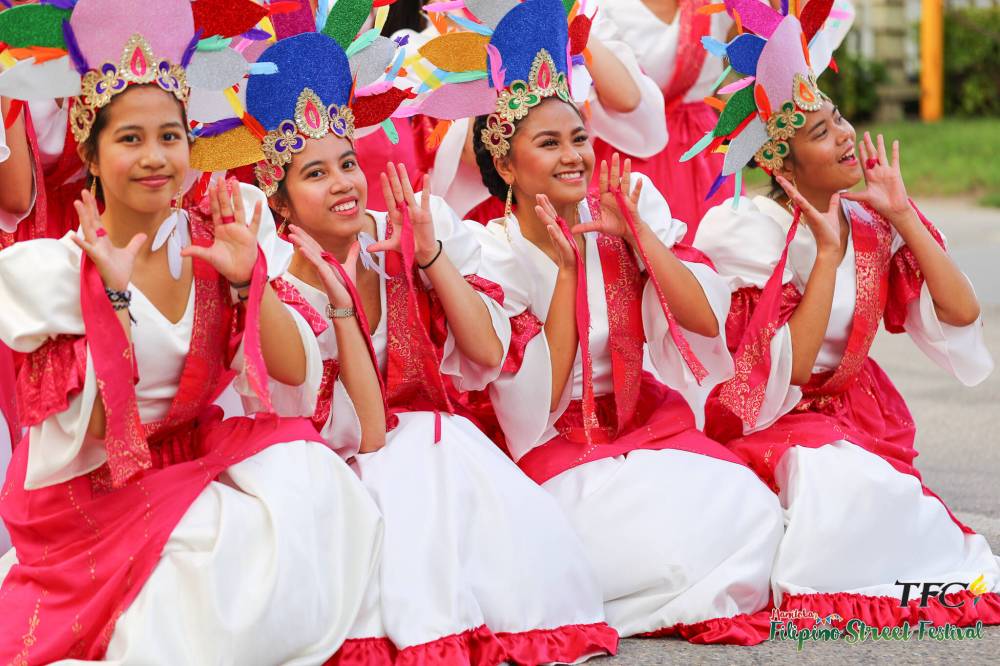
Supplied
The Filipino community will be celebrating its longstanding presence with the annual Manitoba Filipino Street Festival, and the return of its opening-day parade, this weekend (June 24-25).
The theme of this year’s festival is “Balik Kalye,” which means “back on the streets” in the standardized dialect of Tagalog, which serves as the official language of the Philippines (alongside English).
The parade will begin at 11 a.m. Saturday. The assembly point will be along Watson Street and Jefferson Avenue, and from there, participants will continue to the Maples Multiplex (434 Adsum Dr.).
The street festival serves to display the community’s diversity, organizers said.
“Anybody who is familiar with the Philippines, we have 7,100 islands, 80 provinces and we speak 100 dialects. A lot of Filipinos here in Manitoba, a lot of them speak a different dialect, they come from a different province, they celebrate different festivals,” said Ley Navarro, street festival chairman.
“That was the intent, we want to get all these people together and celebrate, showcasing their different dances, their different customs.”
Street food will be on offer and will include items difficult to find even at local Filipino restaurants, including barbecue chicken feet, chicken intestines, and even the famous balut (a fertilized duck embryo still unhatched in the egg).
The festival will also include diverse types of traditional dancing from the major island groups of the country.
Initially, the festival was not going to be an annual event, and was not heavily advertised at first. The inaugural festival drew 3,000 people.
“We started in the back of a mall in Garden City,” Navarro said. “We only had a handful of sponsors.”
In 2017, the festival was held in front of the Manitoba Legislature Building and 10,000 people showed up.
Organizers decided to expand from a one-day to a two-day event, and look for a larger venue.
In 2018, the Maples Multiplex became its home.
Manitoba has had a large, and growing, Filipino community for years.
“Even before the festival, there has been a steady growth of migrants here from the Philippines. When my family came here in 1996, we landed in Brandon. The population of the city was 30,000 and (there were) only six Filipino families, but today Brandon has over 500 families,” Navarro said.
Navarro attributes the growth to the success of the Provincial Nominee Program.
“It opened up a way for most professional Filipinos to come and apply. So you’re approved based on your qualifications, your merits. More nurses, more IT (professionals), more people in professional fields came.”
Winnipeg is home to the third-largest Filipino community in Canada (in absolute numbers), behind Vancouver and Toronto, with 83,305, according to Statistics Canada.
However, Winnipeg’s Filipino population is the largest in Canada per capita, with 11.3 per cent claiming heritage.
graham.mcdonald@freepress.mb.ca