

Rising sewage capacity issues threaten to swamp city-approved developments

Advertisement
Read this article for free:
or
Already have an account? Log in here »
To continue reading, please subscribe:

Digital Subscription
One year of digital access for only $205*
- Enjoy unlimited reading on winnipegfreepress.com
- Read the E-Edition, our digital replica newspaper
- Access News Break, our award-winning app
- Play interactive puzzles
*First annual payment billed as $205.00 + GST for one year. This annual subscription will automatically renew at $233.00 + GST every 52 weeks (10% off the regular annual price of $259.35). Offer available to new and qualified returning subscribers only. Cancel any time.
To continue reading, please subscribe:
Add Free Press access to your Brandon Sun subscription for only an additional
$1 for the first 4 weeks*
- Enjoy unlimited reading on winnipegfreepress.com
- Read the E-Edition, our digital replica newspaper
- Access News Break, our award-winning app
- Play interactive puzzles
*Your next Brandon Sun subscription payment will increase by $1.00 and you will be charged $17.95 plus GST for four weeks. After four weeks, your payment will increase to $24.95 plus GST every four weeks.
Read unlimited articles for free today:
or
Already have an account? Log in here »
Hey there, time traveller!
This article was published 14/07/2023 (1172 days ago), so information in it may no longer be current.
About three years after the City of Winnipeg approved a proposed 22-unit apartment complex for Pembina Highway, a lack of sewage capacity in the area is blocking progress, its builder says.
Others say the issue is becoming increasingly more common.
In April 2019, the Riel Community Committee approved a plan to add a three-storey mixed-used building, with a commercial space on its main floor, at 3555 Pembina Hwy.
In late 2022, the owner was informed sewage capacity is exhausted in the area, so major upgrades would be needed for it to proceed, said Nic Thiessen, president of Three Way Builders.
“There’s always an option from the city to pay to upgrade all of the city’s infrastructure at your own expense. It just isn’t economically feasible,” said Thiessen, noting a rough estimate predicted that work could cost around $3 million.
“It could (almost double) the cost (of the project)… It doesn’t work if we had to bear that ourselves, 100 per cent.”
The builder said the land was purchased with the expectation it could host a multi-family development, yet the city determined years later sewage capacity isn’t available to support such new construction.
“If you can’t even have assurance that in the time it takes you to do your drawings and your due diligence that your sewer capacity will be there, how do you develop?” Thiessen said, adding proponents now feel “stuck” with the land, since it could be difficult to sell due to the capacity concerns.
Coun. Markus Chambers (St. Norbert-Seine River) said at least four projects planned along Pembina Highway and approved by council, one of its committees or a city official, are now at risk of being cancelled or facing large new bills for sewage work.
“All of these developers now have been told that there’s no sewer capacity at all. If they were to build (without expanding capacity), basements in the St. Norbert area would be flooded,” said Chambers.
MIKAELA MACKENZIE / WINNIPEG FREE PRESS FILES Coun. Markus Chambers (St. Norbert-Seine River) said at least four projects planned along Pembina Highway and approved by council, one of its committees or a city official, are now at risk of being cancelled or facing large new bills for sewage work.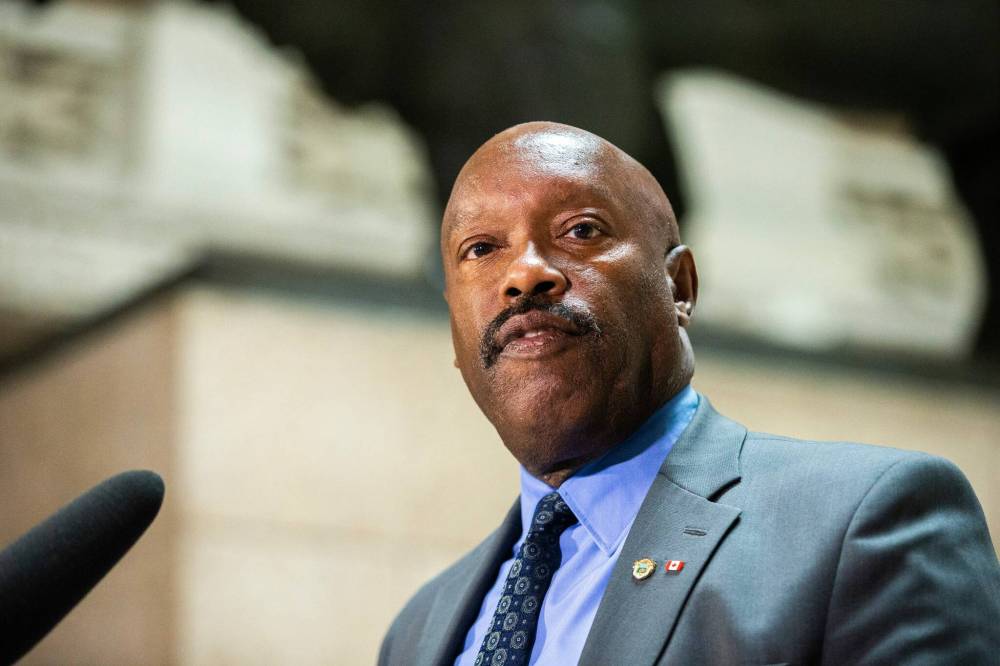
He believes the city should find a way to lessen the financial hit, such as sharing in sewage upgrade costs or offering a tax break to developers who pay for the work.
Chambers argues it would benefit Winnipeg in the long run. “Ultimately, the city is going to get new taxes and they’re going to have a brand-new piece of infrastructure in the ground.”
Last year, the councillor raised a successful motion to have city staff report on a potential tax break to reimburse developers whose projects could otherwise be scaled back or stalled due to limited sewage capacity. At the time, he suggested the city could waive a portion of annual property taxes over a 10-year period.
That report has not yet been released.
Coun. Brian Mayes, chairman of the water and waste committee, said the lack of sewage capacity is raised frequently at city hall, and affects several Winnipeg neighbourhoods.
“It’s a problem that’s really come in (during) the last 10 years or so.”
He said a recent goal to add more dense residential structures to existing neighbourhoods can sometimes clash with original designs for those areas, which were often completed decades earlier.
In some, sewage systems were prepared largely to handle single-family homes, said Mayes (St. Vital).
While he’s not sure developments would generate enough tax revenue to compensate the city for covering the price to expand sewage capacity, Mayes said he would like the city to better map out where sewage capacity is available — to help developers better select properties for their plans.
A request to interview a Winnipeg water and waste official was not granted Friday.
In an email, spokeswoman Lisa Marquardson noted local sewers (pipes that connect to properties) are maintained by the city, but property owners are responsible for any “upsizing” needed to intensify the system beyond its original design.
“The city does not reserve sewer capacity, so if new information comes to light or other development consumes capacity, then future developers may have to do additional works to accommodate intensification. This is to protect Winnipeggers from basement flooding and sewer overflows.”
Marquardson said building plans are not considered to have final approval until a permit is issued.
In May, the city awarded a contract to review its municipal water and sewer servicing, which will assess the development application process and communication about sewer constraints. The city expects that work will be completed by summer 2024.
joyanne.pursaga@freepress.mb.ca
Twitter: @joyanne_pursaga
Joyanne is city hall reporter for the Winnipeg Free Press. A reporter since 2004, she began covering politics exclusively in 2012, writing on city hall and the Manitoba Legislature for the Winnipeg Sun before joining the Free Press in early 2020. Read more about Joyanne.
Every piece of reporting Joyanne produces is reviewed by an editing team before it is posted online or published in print — part of the Free Press‘s tradition, since 1872, of producing reliable independent journalism. Read more about Free Press’s history and mandate, and learn how our newsroom operates.
Our newsroom depends on a growing audience of readers to power our journalism. If you are not a paid reader, please consider becoming a subscriber.
Our newsroom depends on its audience of readers to power our journalism. Thank you for your support.
Joyanne is city hall reporter for the Winnipeg Free Press. A reporter since 2004, she began covering politics exclusively in 2012, writing on city hall and the Manitoba Legislature for the Winnipeg Sun before joining the Free Press in early 2020. Read more about Joyanne.
Every piece of reporting Joyanne produces is reviewed by an editing team before it is posted online or published in print — part of the Free Press‘s tradition, since 1872, of producing reliable independent journalism. Read more about Free Press’s history and mandate, and learn how our newsroom operates.
Our newsroom depends on a growing audience of readers to power our journalism. If you are not a paid reader, please consider becoming a subscriber.
Our newsroom depends on its audience of readers to power our journalism. Thank you for your support.
Advertisement Advertise With Us
Advertisement Advertise With Us