

South Korea’s death toll from destructive rainstorm grows to 40 as workers search for survivors
Advertisement
Read this article for free:
or
Already have an account? Log in here »
To continue reading, please subscribe:

Digital Subscription
One year of digital access for only $205*
- Enjoy unlimited reading on winnipegfreepress.com
- Read the E-Edition, our digital replica newspaper
- Access News Break, our award-winning app
- Play interactive puzzles
*First annual payment billed as $205.00 + GST for one year. This annual subscription will automatically renew at $233.00 + GST every 52 weeks (10% off the regular annual price of $259.35). Offer available to new and qualified returning subscribers only. Cancel any time.
To continue reading, please subscribe:
Add Free Press access to your Brandon Sun subscription for only an additional
$1 for the first 4 weeks*
- Enjoy unlimited reading on winnipegfreepress.com
- Read the E-Edition, our digital replica newspaper
- Access News Break, our award-winning app
- Play interactive puzzles
*Your next Brandon Sun subscription payment will increase by $1.00 and you will be charged $17.95 plus GST for four weeks. After four weeks, your payment will increase to $24.95 plus GST every four weeks.
Read unlimited articles for free today:
or
Already have an account? Log in here »
Hey there, time traveller!
This article was published 16/07/2023 (1161 days ago), so information in it may no longer be current.
SEOUL, South Korea (AP) — Heavy downpours lashed South Korea for a ninth day on Monday as rescue workers struggled to search for survivors in landslides, buckled homes and swamped vehicles in the most destructive storm to hit the country this year.
At least 40 people have died, 34 others are injured and more than 10,000 people have had to evacuate from their homes since July 9, when heavy rain started pounding the country. The severest damage has been concentrated in South Korea’s central and southern regions.
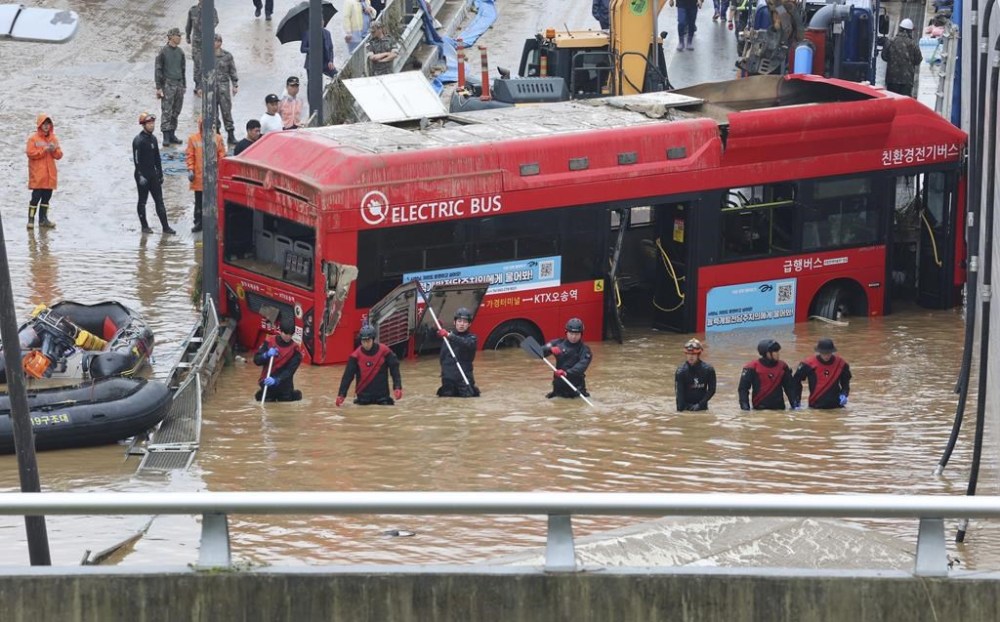
In the central city of Cheongju, hundreds of rescue workers, including divers, searched for survivors in a muddy tunnel where about 15 vehicles, including a bus, were trapped in a flash flood that may have filled up the passageway within minutes Saturday evening.
The government has deployed nearly 900 rescue workers to the tunnel who have so far pulled up 13 bodies and rescued nine people who were treated for injuries. It wasn’t immediately clear how many people were in the submerged cars.
As of Monday afternoon, rescuers had pumped out most of the water from the tunnel and were searching the site on foot, a day after they used rubber boats to move and transport bodies on stretchers.
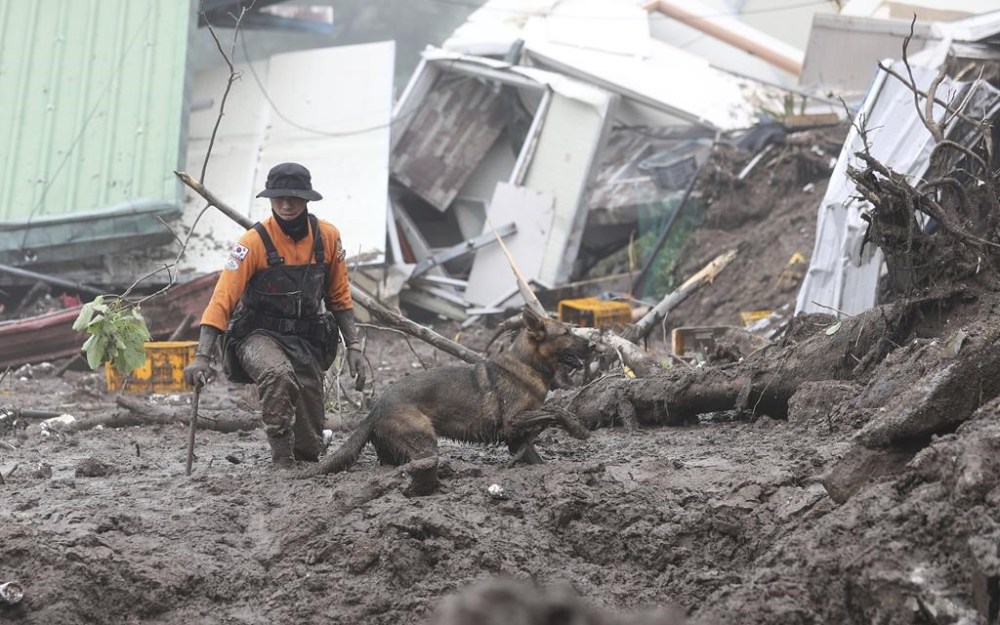
Hundreds of emergency workers, soldiers and police were also looking for any survivors in the southeastern town of Yecheon, where at least nine people were dead and eight others listed as missing after landslides destroyed homes and buckled roads, the county office said.
Photos from the scene showed fire and police officers using search dogs while wading through knee-high mud and debris from destroyed homes.
Nearly 200 homes and around 150 roads were damaged or destroyed across the country, while 28,607 people were without electricity over the past several days, the Ministry of the Interior and Safety said in a report.
Severe weather was also affecting many other places around the world. In the United States, An already saturated Northeast began drying out Monday after a second round of heavy rain in a week, including a flash flood in Pennsylvania that claimed at least five lives over the weekend.
Schools and the stock market were closed in Hong Kong on Monday as Typhoon Talim sideswiped the city and headed toward the Chinese mainland and the island province of Hainan.
This year has seen record-breaking stretches of high heat across large parts of China, South Korea and Japan. China’s National Meteorological Administration reported that temperatures in the oasis city of Turpan in the northwestern Xinjiang region hit a record 52.2 Celsius (125.9 Fahrenheit) on Sunday.
Italian health officials intensified heat warnings as southern Europe began a brutally hot week on Monday with temperatures expected to top 40 C — or 104 F — on a continent already overburdened by tourists. The third heatwave in a month was expected to affect much of the Mediterranean and last until Wednesday.
In South Korea, the Korea Meteorological Administration maintained heavy rain warnings across large swaths of the country. Torrential rains were dumping up to 3 centimeters (1.2 inches) per hour in some southern areas. The office said the central and southern regions could still get as much as 20 centimeters (7.9 inches) of additional rain through Tuesday.
Returning from a trip to Europe and Ukraine, South Korean President Yoon Suk Yeol held an emergency government meeting. He called for officials to designate the areas hit hardest as special disaster zones to help funnel more financial and logistical assistance into relief efforts.
Yoon later visited Yecheon where he was briefed on the search and rescue efforts.