

Kremlin says ‘deliberate wrongdoing’ is a possible cause of the plane crash that killed Wagner chief
Advertisement
Read this article for free:
or
Already have an account? Log in here »
To continue reading, please subscribe:

Digital Subscription
One year of digital access for only $205*
- Enjoy unlimited reading on winnipegfreepress.com
- Read the E-Edition, our digital replica newspaper
- Access News Break, our award-winning app
- Play interactive puzzles
*First annual payment billed as $205.00 + GST for one year. This annual subscription will automatically renew at $233.00 + GST every 52 weeks (10% off the regular annual price of $259.35). Offer available to new and qualified returning subscribers only. Cancel any time.
To continue reading, please subscribe:
Add Free Press access to your Brandon Sun subscription for only an additional
$1 for the first 4 weeks*
- Enjoy unlimited reading on winnipegfreepress.com
- Read the E-Edition, our digital replica newspaper
- Access News Break, our award-winning app
- Play interactive puzzles
*Your next Brandon Sun subscription payment will increase by $1.00 and you will be charged $17.95 plus GST for four weeks. After four weeks, your payment will increase to $24.95 plus GST every four weeks.
Read unlimited articles for free today:
or
Already have an account? Log in here »
Hey there, time traveller!
This article was published 30/08/2023 (1123 days ago), so information in it may no longer be current.
MOSCOW (AP) — “Deliberate wrongdoing” is among the possible causes of the plane crash that killed Russian mercenary leader Yevgeny Prigozhin last week, the Kremlin’s spokesperson said Wednesday.
Speaking to reporters during his daily conference call, presidential press secretary Dmitry Peskov said that “different versions” of what happened exist and “are being considered” by Russian investigators, including, “let’s put this way, deliberate wrongdoing.”
A business jet carrying Prigozhin, the founder and leader of the private military force Wagner, and his top lieutenants crashed halfway between Moscow and St. Petersburg a week ago, killing all seven passengers and three crew members.
The Interstate Aviation Committee, the Moscow-headquartered body that oversees civil aviation in most former Soviet republics, said in an online statement Wednesday that it was not currently investigating the crash, although the agency has an accident investigation division.
Peskov said there can’t be an international investigation into why the plane plummeted from the sky and he urged reporters to wait for the Russian Investigative Committee to complete its review. The committee said last week that it opened a criminal case to look into possible flight safety violations, a standard procedure in Russia when there is no immediate reason to suspect foul play.
The crash occurred exactly two months after Prigozhin mounted a short-lived armed rebellion against Russia’s military leadership, posing the biggest challenge to President Vladimir Putin’s authority in his 23-year rule. The Kremlin has denied involvement in the crash.
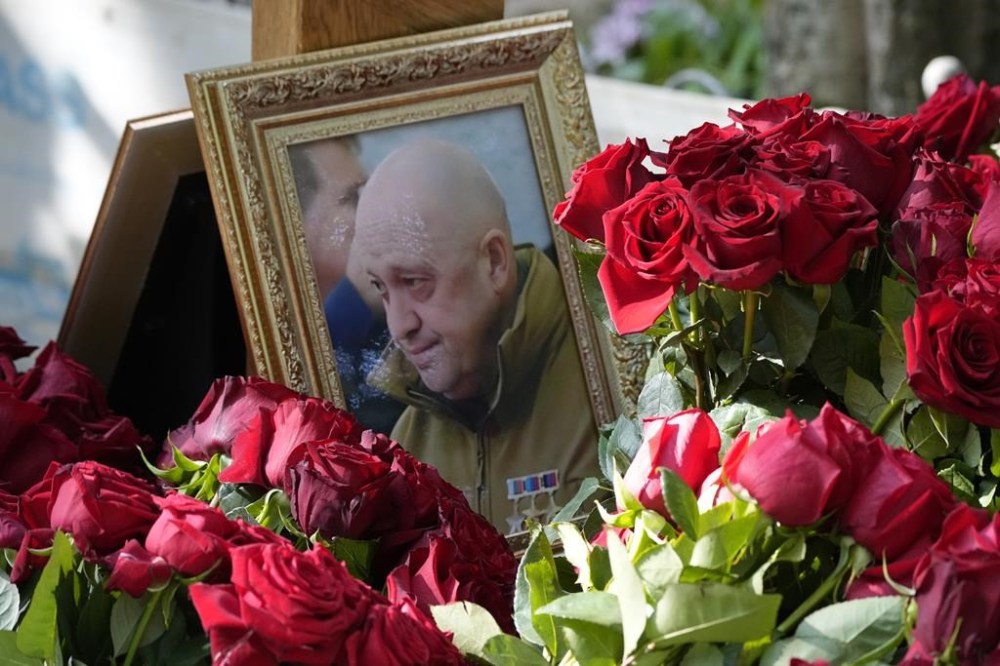
Prigozhin, 62, was buried in St. Petersburg, his hometown, in a private ceremony that was shrouded in secrecy until Tuesday evening, when his spokespeople revealed the location of his grave.
Western officials and analysts expect the private Wagner army to continue operating, particularly in the Sahel region of Africa, where Russian mercenaries have provided security against extremist organizations like al-Qaida and the Islamic State group.
“I am sure they’ll find a replacement” for Prigozhin, European Union foreign policy chief Josep Borrell said Wednesday after chairing talks among EU defense ministers.
“Wagner will continue to operate in the service of Putin in Africa, doing what they do, which is not contributing to peace in the Sahel or the defense of the rights of Saharan Africans,” Borrell said.
Africa is vitally important to Russia — economically and politically.
This summer, Wagner helped secure a national referendum in the Central African Republic that cemented presidential power; it is a key partner for Mali’s army in battling armed rebels; and it contacted the military junta in Niger that wants its services following a coup.
Expanding ties and undercutting Western influence in Africa is a top priority as the Kremlin seeks new allies during its war in Ukraine, where Wagner fighters helped Russia win a long and bloody battle for the city of Bakhmut.
Africa’s 54 nations are the largest voting bloc at the U.N., and Moscow has actively worked to rally their support for its invasion.