

‘Ensuring that we’re meeting their needs’: province puts student suspensions on notice

Advertisement
Read this article for free:
or
Already have an account? Log in here »
To continue reading, please subscribe:

Digital Subscription
One year of digital access for only $205*
- Enjoy unlimited reading on winnipegfreepress.com
- Read the E-Edition, our digital replica newspaper
- Access News Break, our award-winning app
- Play interactive puzzles
*First annual payment billed as $205.00 + GST for one year. This annual subscription will automatically renew at $233.00 + GST every 52 weeks (10% off the regular annual price of $259.35). Offer available to new and qualified returning subscribers only. Cancel any time.
To continue reading, please subscribe:
Add Free Press access to your Brandon Sun subscription for only an additional
$1 for the first 4 weeks*
- Enjoy unlimited reading on winnipegfreepress.com
- Read the E-Edition, our digital replica newspaper
- Access News Break, our award-winning app
- Play interactive puzzles
*Your next Brandon Sun subscription payment will increase by $1.00 and you will be charged $17.95 plus GST for four weeks. After four weeks, your payment will increase to $24.95 plus GST every four weeks.
Read unlimited articles for free today:
or
Already have an account? Log in here »
Hey there, time traveller!
This article was published 08/12/2023 (1028 days ago), so information in it may no longer be current.
Manitoba Education is urging school leaders to find alternatives to student suspensions, warning the disciplinary tool can “significantly alter the trajectory of one’s education and life — in some cases, with tragic consequences.”
The department has released a new policy directive and companion guide on minimizing the use of out-of-school suspensions in kindergarten to Grade 12 buildings.
“It’s easy to kick kids out,” Education Minister Nello Altomare told the Free Press. “I think we have to do a better job of ensuring that we’re meeting their needs.”
The provincial documents recommend in-school community service, behaviour contracts, mentoring, counselling referrals, peace circles, brainstorming sessions with involved parties, flexible learning schedules or continued education at an off-campus site.
MIKAELA MACKENZIE / WINNIPEG FREE PRESS FILES Education Minister Nello Altomare: “It’s easy to kick kids out.”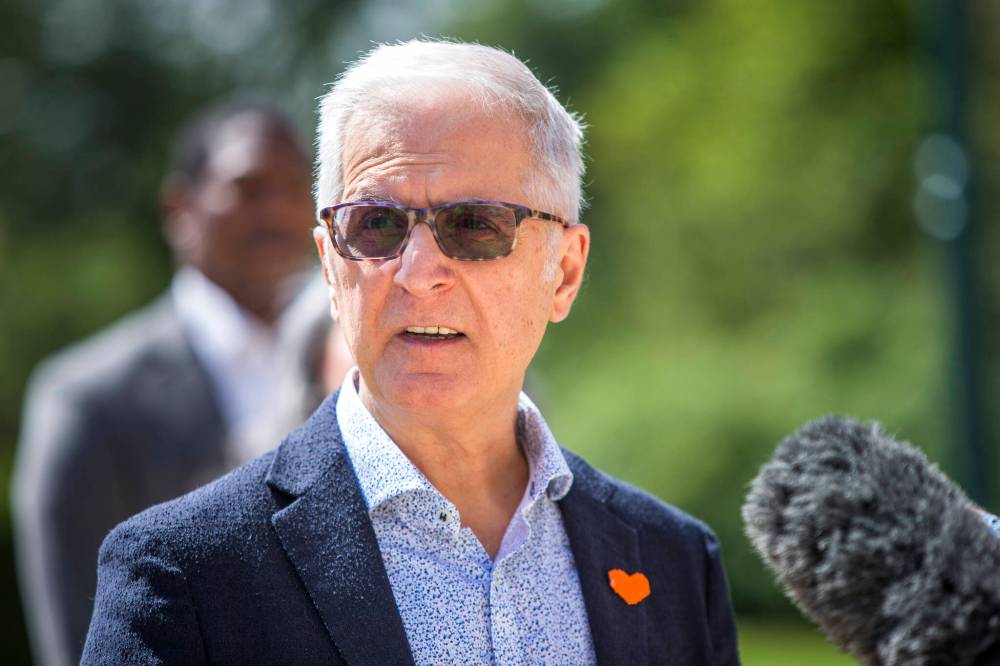
These “supportive strategies,” which focus on restorative practices, reframe misconduct as a learning opportunity, per the newly released guidelines.
School divisions are no longer allowed to use suspension as a response to absenteeism, increase the length of a student’s penalty based on the number of suspensions they have previously received or require schoolwork be completed as a condition of re-entry.
Altomare said the province continues to prioritize projects seeking to re-engage students and improve attendance in the wake of COVID-19 pandemic closures and e-learning stints.
“No one wants to suspend a kid. That’s always the very last resort. The very best schools are always connected to their kids and families — this is just an extension of that,” the former principal said.
The updates build on a long-standing trend of schools moving away from traditional disciplinary action. They also address the Manitoba advocate for children and youth’s repeated calls to phase out exclusionary practices, except in situations where there is an “imminent safety risk” to students or staff.
“I think we have to do a better job of ensuring that we’re meeting their needs.”–Nello Altomare
The watchdog has flagged out-of-school suspensions as a risk factor for dropout and other negative outcomes in three different heart-wrenching reports since 2018.
Indigenous students are greatly over-represented in temporary expulsions and far more likely to be suspended than their peers in Manitoba’s largest school division.
Children and youth who self-identify as First Nations, Métis or Inuit — 30 per cent of the K-12 population in the Winnipeg School Division — accounted for more than 55 per cent of its suspensions in 2021-22.
The percentage of Indigenous students who received suspensions that year was nearly double the overall WSD rate (2.7 and 1.4 per cent, respectively).
Jordan Bighorn likened the findings to “a lever and a knife.”
MIKE DEAL / WINNIPEG FREE PRESS FILES Jordan Bighorn, co-director of the Community Education Development Association (CEDA). 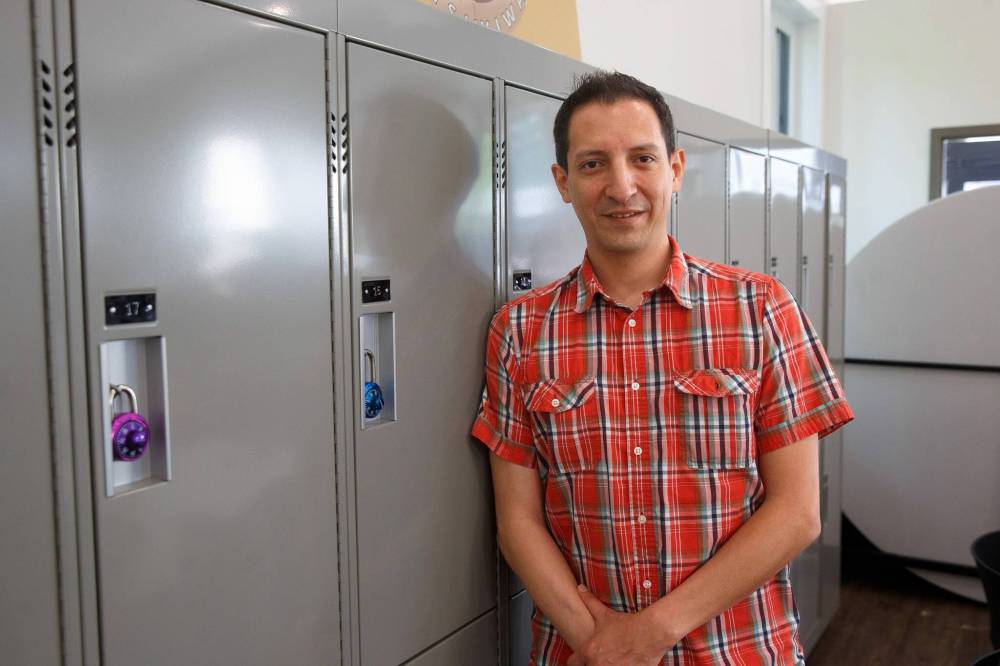
The data provide an opportunity to discuss the intergenerational traumas that students are bringing with them to school, but the numbers are also “a constant reminder of the racism inherent in the (public school system),” said Bighorn, executive director of the Community Education Development Association.
While he said reducing suspensions is a noble mission, the father noted new provincial guidance still places a significant burden on struggling students to make individual changes, regardless of their circumstances.
“The irony is the more that you’re going to open schools up (to decolonize and Indigenize programming), the more that we’re going to bring what we’re carrying,” he added.
The most common reason for a penalty in the division is the physical assault of a peer, followed by general misconduct and the use or possession of illegal drugs, alcohol and tobacco.
Earlier this year, the WSD board of trustees updated its restorative justice policy to renew its commitment to encouraging school administrators to promote dialogue, restore relationships and repair harm in lieu of traditional disciplinary action.

All public school divisions are required to update their suspension policies and bolster reporting on every incident to meet the province’s new standards.
WSD chief superintendent Matt Henderson said students should be given the opportunity to learn how to take accountability for their mistakes, much like adults do in the workforce.
There is a shift happening to focus on engagement rather than exclusion, said Henderson, who was appointed to oversee the operation of 82 schools in inner-city and central neighbourhoods at the start of the school year.
The division leader noted he and his colleagues are always asking themselves how to make schools “sticky” environments — places where children want to spend time, be it due to academics, extracurricular activities or relationships.
Over the last dozen years, the overall suspension rate in WSD has decreased 56 per cent.
maggie.macintosh@freepress.mb.ca
Maggie Macintosh
Education reporter
Maggie Macintosh reports on education for the Free Press. Originally from Hamilton, Ont., she first reported for the Free Press in 2017. Read more about Maggie.
Funding for the Free Press education reporter comes from the Government of Canada through the Local Journalism Initiative.
Every piece of reporting Maggie produces is reviewed by an editing team before it is posted online or published in print — part of the Free Press‘s tradition, since 1872, of producing reliable independent journalism. Read more about Free Press’s history and mandate, and learn how our newsroom operates.
Our newsroom depends on a growing audience of readers to power our journalism. If you are not a paid reader, please consider becoming a subscriber.
Our newsroom depends on its audience of readers to power our journalism. Thank you for your support.
Maggie Macintosh
Education reporter
Maggie Macintosh reports on education for the Free Press. Originally from Hamilton, Ont., she first reported for the Free Press in 2017. Read more about Maggie.
Funding for the Free Press education reporter comes from the Government of Canada through the Local Journalism Initiative.
Every piece of reporting Maggie produces is reviewed by an editing team before it is posted online or published in print — part of the Free Press‘s tradition, since 1872, of producing reliable independent journalism. Read more about Free Press’s history and mandate, and learn how our newsroom operates.
Our newsroom depends on a growing audience of readers to power our journalism. If you are not a paid reader, please consider becoming a subscriber.
Our newsroom depends on its audience of readers to power our journalism. Thank you for your support.
Advertisement Advertise With Us
Advertisement Advertise With Us