Extreme weather a growing risk to Canada’s electricity grid: experts
Advertisement
Read this article for free:
or
Already have an account? Log in here »
To continue reading, please subscribe:

Digital Subscription
One year of digital access for only $205*
- Enjoy unlimited reading on winnipegfreepress.com
- Read the E-Edition, our digital replica newspaper
- Access News Break, our award-winning app
- Play interactive puzzles
*First annual payment billed as $205.00 + GST for one year. This annual subscription will automatically renew at $233.00 + GST every 52 weeks (10% off the regular annual price of $259.35). Offer available to new and qualified returning subscribers only. Cancel any time.
To continue reading, please subscribe:
Add Free Press access to your Brandon Sun subscription for only an additional
$1 for the first 4 weeks*
- Enjoy unlimited reading on winnipegfreepress.com
- Read the E-Edition, our digital replica newspaper
- Access News Break, our award-winning app
- Play interactive puzzles
*Your next Brandon Sun subscription payment will increase by $1.00 and you will be charged $17.95 plus GST for four weeks. After four weeks, your payment will increase to $24.95 plus GST every four weeks.
Read unlimited articles for free today:
or
Already have an account? Log in here »
Hey there, time traveller!
This article was published 18/01/2024 (994 days ago), so information in it may no longer be current.
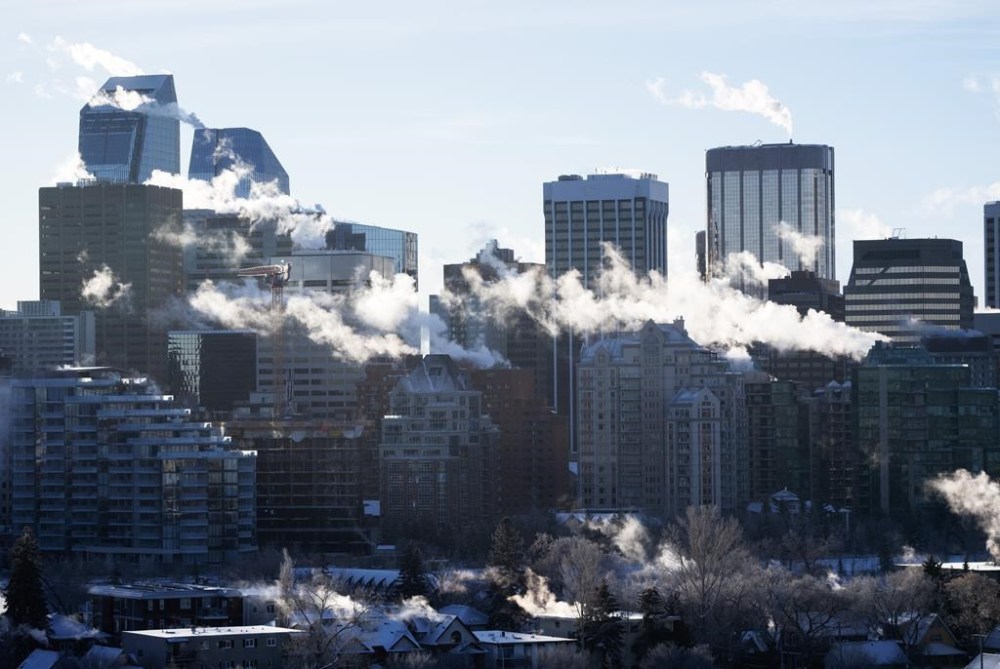
CALGARY – A series of electricity grid alerts in Alberta during the deep freeze last week made headlines across the country, but experts say power systems all across North America are increasingly at risk of being overloaded during severe weather.
Francis Bradley, CEO of the industry association Electricity Canada, said there is virtually nowhere the electricity grid isn’t vulnerable to the rising severity and duration of climate change-related extreme weather.
“Over the last two years or so, during these extremes of weather, we’ve seen new peaks hit in terms of electricity demand,” Bradley said in an interview.
“And it’s not just in Alberta. We saw new peak demands hit last summer in Ontario, we saw new peak demand hit last winter in Quebec, for example. In most regions of the country, the extremes are increasing.”
South of the border, electricity grids have suffered the strain in recent years. Winter storms led to blackouts in Texas in 2021 and blistering heat waves have forced California to declare repeated emergency grid alerts.
In Canada, Albertans were warned in an emergency alert issued by the provincial government last weekend to immediately reduce their power usage to avoid potential rotating blackouts as temperatures approached -40 C.
No blackouts were required, with the Alberta Electric System Operator noting electricity consumption dropped significantly within minutes of the alert being issued.
But the operator’s data shows grid alerts in Alberta during both heat waves and cold snaps are increasing in frequency. The electric system operator issued just four provincial grid alerts in the four-year period between 2017 and 2020, but has issued an additional 17 since 2021.
Electricity grid reliability has become a political issue in Alberta, where the phaseout of dispatchable coal-fired power plants combined with a dramatic increase in intermittent wind and solar capacity has sparked debate about the practicality of a rapid transition to green energy.
But Bradley said Alberta’s problems are not unique. All jurisdictions are facing rising demand for electricity, spurred in part by the increased demand for electric vehicles and other clean-energy innovations, and no single province has a perfect solution.
“Ontario, for example, has had concerns and has asked customers to reduce consumption during heat waves in the past,” he said.
“Yes, I’ve heard concerns expressed about the energy mix in Alberta, but you’ll also hear concerns about the energy mix if you happen to be in British Columbia or Manitoba right now because of drought. They’re extremely dependent on hydro, and that’s problematic in a low-water year.”
A report released in November from the North American Electric Reliability Corporation (NERC) warned that much of North America this winter is at an elevated risk of having “insufficient energy supplies” to meet demand in extreme operating conditions, such as “prolonged, wide-area cold snaps.”
While in general, U.S. jurisdictions are more vulnerable to potential winter grid interruptions because they are less prepared for cold weather, the report also flags parts of Canada as being vulnerable.
Saskatchewan, for example, is noted as being at “high” risk of electricity demand shortfalls this winter due to increased demand projections, the retirement of a natural-gas-fired power plant and planned generator maintenance.
Both Quebec and the Maritimes were noted to be at “elevated risk.”
Mark Olson, NERC’s manager of reliability assessments, said Alberta wasn’t even flagged as a potential area of risk by the report — a fact he said that demonstrates how difficult electricity demand forecasting has become as extreme weather intensifies. It is hard for electric system operators to predict or plan for climate events that are completely out of the range of normal.
“I know Alberta’s system operator there is evaluating things, but there’s early indication that the demand level was even higher than a normal peak winter demand event,” Olson said.
“It looks like it was more like a once-per-decade type of cold weather event.”
Rob Thornton, president and CEO of the International District Energy Association, said grid alerts are worrisome for the public but added it’s important to understand that the risk of a catastrophic grid failure remains exceptionally low.

“The grid in North America is really reliable, it really is. It’s an amazing engine and machine,” he said.
Still, he said events like those experienced in Alberta last weekend show the importance of developing policies that will ensure a resilient and reliable electricity system to 2050 and beyond. This will include finding the proper balance between dispatchable and intermittent sources of electricity, investing in additional capacity to meet growing demand, building more inter-jurisdictional connections and more.
“These events (grid alerts) cause, I don’t know if anxiety is the right word, but certainly awareness,” Thornton said.
“Mother Nature is showing some fangs from time to time.”
This report by The Canadian Press was first published Jan. 18, 2024.