

Top UK diplomat says Britain could recognize a Palestinian state before a peace deal with Israel
Advertisement
Read this article for free:
or
Already have an account? Log in here »
To continue reading, please subscribe:

Digital Subscription
One year of digital access for only $205*
- Enjoy unlimited reading on winnipegfreepress.com
- Read the E-Edition, our digital replica newspaper
- Access News Break, our award-winning app
- Play interactive puzzles
*First annual payment billed as $205.00 + GST for one year. This annual subscription will automatically renew at $233.00 + GST every 52 weeks (10% off the regular annual price of $259.35). Offer available to new and qualified returning subscribers only. Cancel any time.
To continue reading, please subscribe:
Add Free Press access to your Brandon Sun subscription for only an additional
$1 for the first 4 weeks*
- Enjoy unlimited reading on winnipegfreepress.com
- Read the E-Edition, our digital replica newspaper
- Access News Break, our award-winning app
- Play interactive puzzles
*Your next Brandon Sun subscription payment will increase by $1.00 and you will be charged $17.95 plus GST for four weeks. After four weeks, your payment will increase to $24.95 plus GST every four weeks.
Read unlimited articles for free today:
or
Already have an account? Log in here »
Hey there, time traveller!
This article was published 01/02/2024 (978 days ago), so information in it may no longer be current.
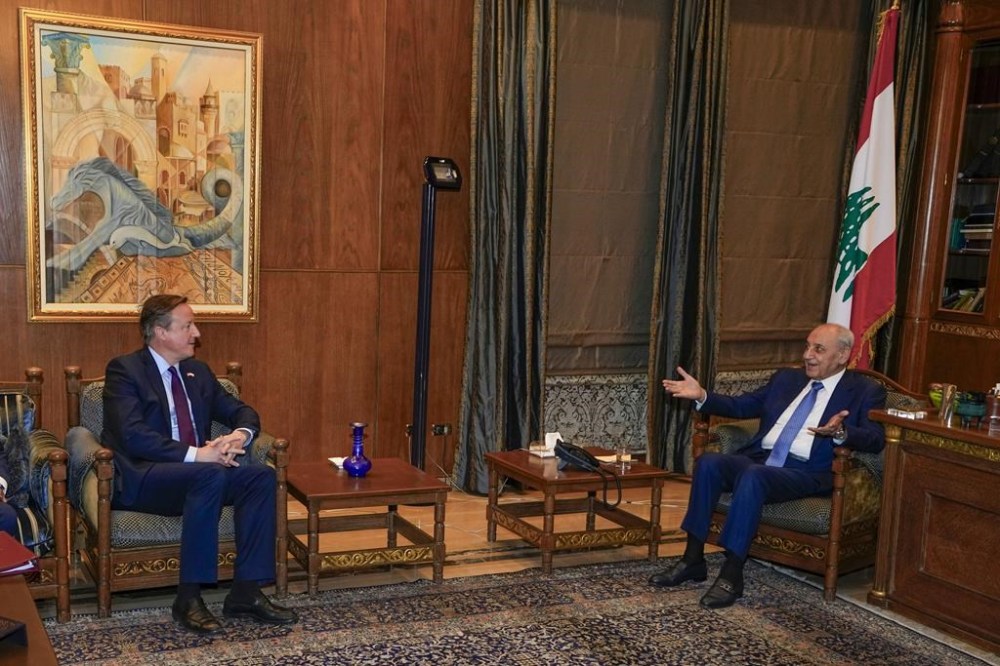
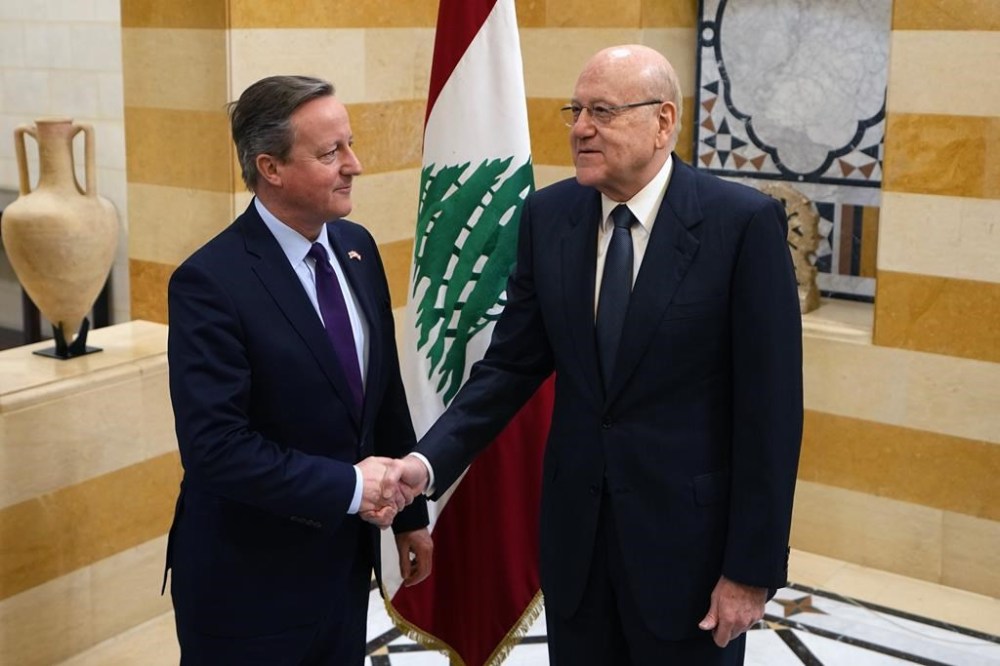
RIYAK, Lebanon (AP) — Britain’s top diplomat said Thursday that his country could officially recognize a Palestinian state after a cease-fire in Gaza without waiting for the outcome of what could be yearslong talks between Israel and the Palestinians on a two-state solution.
Foreign Secretary David Cameron, speaking to The Associated Press during a visit Thursday to Lebanon intended to tamp down regional tensions, said no recognition could come while Hamas remained in Gaza, but that it could take place while Israeli negotiations with Palestinian leaders were continuing.
U.K. recognition of an independent state of Palestine, including in the United Nations, “can’t come at the start of the process, but it doesn’t have to be the very end of the process,” said Cameron, a former British prime minister.
“It could be something that we consider as this process, as this advance to a solution, becomes more real,” Cameron said. “What we need to do is give the Palestinian people a horizon towards a better future, the future of having a state of their own.”
That prospect is “absolutely vital for the long-term peace and security of the region,” he said.
Britain, the U.S. and other Western countries have supported the idea of an independent Palestine existing alongside Israel as a solution to the region’s most intractable conflict, but have said Palestinian independence should come as part of a negotiated settlement. There have been no substantive negotiations since 2009.
Israeli Prime Minister Benjamin Netanyahu, for his part, has publicly rejected the creation of an independent Palestinian state after the war, and has even boasted in recent weeks that he was instrumental in preventing Palestinian statehood.
A move by some of Israel’s key allies to recognize a Palestinian state without Israel’s buy-in could isolate Israel and put pressure on it to come to the table.
Cameron said the first step must be a “pause in the fighting” in Gaza that would eventually turn into “a permanent, sustainable cease-fire.”
He added that in order for his country to recognize a Palestinian state, the leaders of the Hamas militant group would need to leave Gaza “because you can’t have a two state solution with Gaza still controlled by the people responsible for Oct. 7,” referring to the deadly Hamas attack on Israel that triggered the war in Gaza.
Hamas has so far taken the position that its leaders would not leave the enclave as part of a cease-fire deal.
Cameron said his country is also proposing a plan to deescalate tensions on the Lebanon-Israel border, where the Lebanese militant group Hezbollah and Israeli forces have been trading fire near-daily for the past four months, sparking fears of a wider war.
The plan would include Britain training Lebanese army forces to carry out more security work in the border region, he said.