

Land donation rich in natural resources to support provincial ecosystem

Advertisement
Read this article for free:
or
Already have an account? Log in here »
To continue reading, please subscribe:

Digital Subscription
One year of digital access for only $205*
- Enjoy unlimited reading on winnipegfreepress.com
- Read the E-Edition, our digital replica newspaper
- Access News Break, our award-winning app
- Play interactive puzzles
*First annual payment billed as $205.00 + GST for one year. This annual subscription will automatically renew at $233.00 + GST every 52 weeks (10% off the regular annual price of $259.35). Offer available to new and qualified returning subscribers only. Cancel any time.
To continue reading, please subscribe:
Add Free Press access to your Brandon Sun subscription for only an additional
$1 for the first 4 weeks*
- Enjoy unlimited reading on winnipegfreepress.com
- Read the E-Edition, our digital replica newspaper
- Access News Break, our award-winning app
- Play interactive puzzles
*Your next Brandon Sun subscription payment will increase by $1.00 and you will be charged $17.95 plus GST for four weeks. After four weeks, your payment will increase to $24.95 plus GST every four weeks.
Read unlimited articles for free today:
or
Already have an account? Log in here »
Hey there, time traveller!
This article was published 04/02/2024 (968 days ago), so information in it may no longer be current.
A Manitoba family is doing their part to support the provincial ecosystem, donating 193 acres of land to the Nature Conservancy of Canada in an effort to protect an area of critical wetlands that feeds into Lake Winnipeg.
“We have been canoeing, camping, mountain climbing and living in nature as much as we could our entire lives. We believe the Nature Conservancy does an amazing job of preserving wetlands and we believe this is very important for our country,” said Lewis Rosenberg, who facilitated the donation.
“When I signed over the land on behalf of the family, it was just a wonderful feeling. Like I did something meaningful. It just was the right thing to do.”
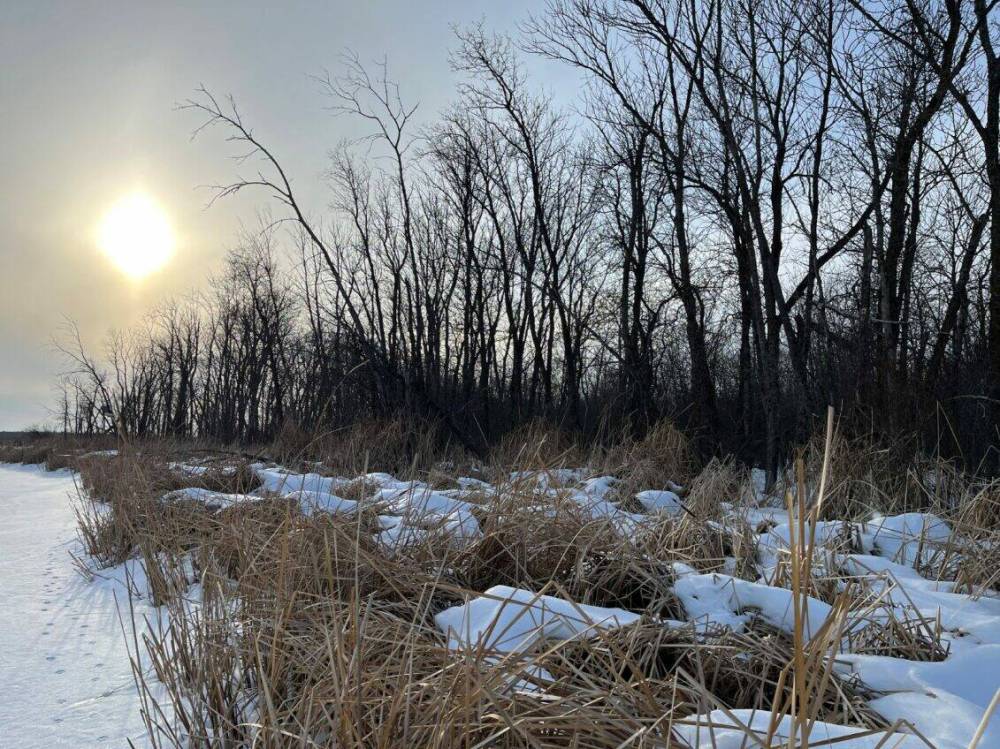
The plot is located near Ste. Rita, roughly 60 kilometres east of Winnipeg. It sits adjacent to the Agassiz Provincial Forest and features forested peatlands, mineral wetlands and a portion of the Hazel Creek and its floodplain areas.
The land is rich in natural resources, plants and animal life, said Tim Teetaert, a natural area manager with the Nature Conservancy.
“It’s a very interesting property that sits along this corridor of natural lands. It does contain what we say is a mosaic of habitats,” he said.
“We’re always very appreciative that people recognize us and entrust us to take over their property and maintain it to their wishes… We will protect it.”
Environmental experts consider wetlands critical resources in the fight against climate change, due to their natural capacity to filter water, store carbon, support wildlife and defend against spring floods and summer droughts, Teetaert said.
“The location and proximity of at-risk peatlands to Hazel Creek, which eventually drains into Lake Winnipeg, aligns with priorities to protect sensitive floodplain areas and water bodies, and mitigate upstream impacts on Lake Winnipeg,” the conservancy said in a news release.
“Like landscape-sized water treatment plants, they store and filter the water that we depend on.”
Teetaert noted the land is located in an area known for peat harvesting, so conserving the property will facilitate a balance between “people, economy and nature.”
Peat is a natural resource composed of decaying organic matter. It is used in agriculture and horticulture as an additive to make soil more fertile. It is also used as fuel to heat homes in some parts of the world.
The product is extremely slow growing, with more than 1000 years of decay required to generate a single metre of peat, Teetaert said.
While Teetaert could not reveal the property’s estimated value, he said it has been appraised by a third-party organization for tax purposes.

In addition to donating the land, the Rosenberg family contributed money to a stewardship endowment fund — a savings account that will support the long-term maintenance of the property. The Richardson Foundation also donated funds to support the project, he said.
Next summer, the Nature Conservancy intends to complete a “baseline inventory” to account for the plant and animal life, and other natural features of the property. Conservancy researchers will study the information and develop a long-term environmental maintenance plan for the region.
Canada is home to roughly one-quarter of the world’s wetlands, which cover around 15 per cent of the country. In Manitoba, 40 per cent of the province is covered by wetlands, Teetaert said.
The donation will contribute to the 83,275 acres of land the conservancy already protects in Manitoba. Of that, more than 25,000 acres include wetlands.
tyler.searle@freepress.mb.ca
Tyler Searle is a multimedia producer who writes for the Free Press’s city desk. A graduate of Red River College Polytechnic’s creative communications program, he wrote for the Stonewall Teulon Tribune, Selkirk Record and Express Weekly News before joining the paper in 2022. Read more about Tyler.
Every piece of reporting Tyler produces is reviewed by an editing team before it is posted online or published in print — part of the Free Press‘s tradition, since 1872, of producing reliable independent journalism. Read more about Free Press’s history and mandate, and learn how our newsroom operates.
Our newsroom depends on a growing audience of readers to power our journalism. If you are not a paid reader, please consider becoming a subscriber.
Our newsroom depends on its audience of readers to power our journalism. Thank you for your support.
Tyler Searle is a multimedia producer who writes for the Free Press’s city desk. A graduate of Red River College Polytechnic’s creative communications program, he wrote for the Stonewall Teulon Tribune, Selkirk Record and Express Weekly News before joining the paper in 2022. Read more about Tyler.
Every piece of reporting Tyler produces is reviewed by an editing team before it is posted online or published in print — part of the Free Press‘s tradition, since 1872, of producing reliable independent journalism. Read more about Free Press’s history and mandate, and learn how our newsroom operates.
Our newsroom depends on a growing audience of readers to power our journalism. If you are not a paid reader, please consider becoming a subscriber.
Our newsroom depends on its audience of readers to power our journalism. Thank you for your support.
Advertisement Advertise With Us
Advertisement Advertise With Us
History
Updated on Sunday, February 4, 2024 3:43 PM CST: Adds comments from Lewis Rosenberg