

UK court rules that extension of UK police powers to intervene in protests is unlawful
Advertisement
Read this article for free:
or
Already have an account? Log in here »
To continue reading, please subscribe:

Digital Subscription
One year of digital access for only $205*
- Enjoy unlimited reading on winnipegfreepress.com
- Read the E-Edition, our digital replica newspaper
- Access News Break, our award-winning app
- Play interactive puzzles
*First annual payment billed as $205.00 + GST for one year. This annual subscription will automatically renew at $233.00 + GST every 52 weeks (10% off the regular annual price of $259.35). Offer available to new and qualified returning subscribers only. Cancel any time.
To continue reading, please subscribe:
Add Free Press access to your Brandon Sun subscription for only an additional
$1 for the first 4 weeks*
- Enjoy unlimited reading on winnipegfreepress.com
- Read the E-Edition, our digital replica newspaper
- Access News Break, our award-winning app
- Play interactive puzzles
*Your next Brandon Sun subscription payment will increase by $1.00 and you will be charged $17.95 plus GST for four weeks. After four weeks, your payment will increase to $24.95 plus GST every four weeks.
Read unlimited articles for free today:
or
Already have an account? Log in here »
Hey there, time traveller!
This article was published 21/05/2024 (868 days ago), so information in it may no longer be current.
LONDON (AP) — Britain’s High Court ruled Tuesday that new regulations that gave U.K. police more powers to intervene in protests are unlawful.
Civil liberties campaign group Liberty brought legal action against the British government over a law passed last year that lowered the threshold for what is considered “serious disruption” to community life caused by a protest.
The 2023 Public Order Act broadened the definition of “serious disruption” from “significant” and “prolonged” disturbance to individuals or an organization to “more than minor.”
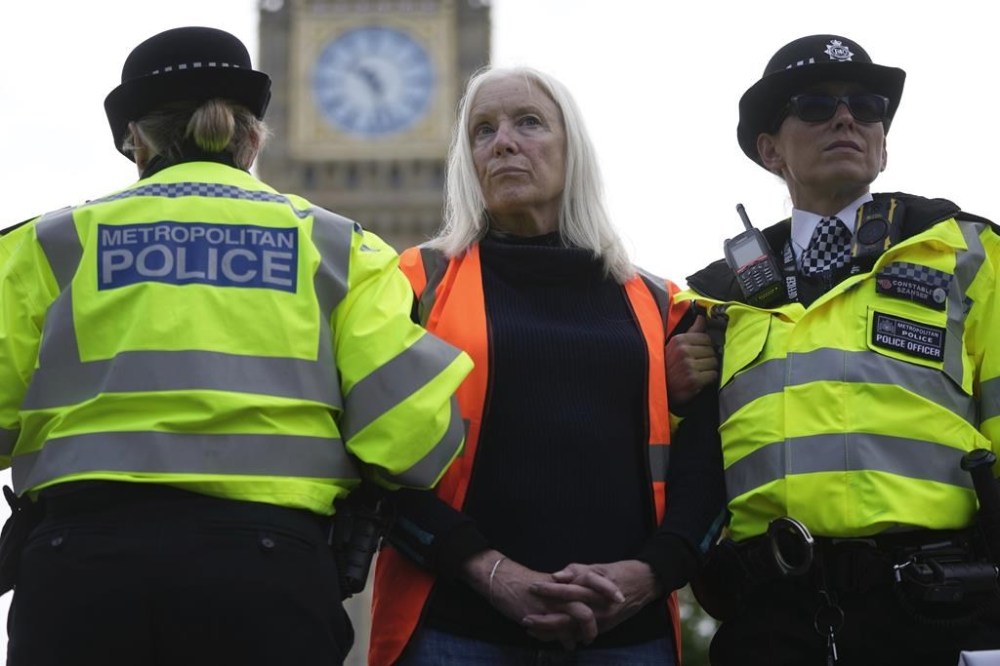
Authorities introduced the changes by a process called statutory instrument, which faces less scrutiny, after Parliament rejected them earlier. The measures targeted environmental activists who have staged disruptive protests in recent years on busy highways and roads in the U.K. and beyond to raise awareness about the urgency of climate change.
Suella Braverman, the home secretary at the time, told lawmakers last year that the measures would allow ordinary people to drive or get to work on time free from obstruction from a “selfish minority.”
Critics say the change was part of a worrying constriction of the right to protest in Britain.
Two judges ruled Tuesday that the Home Office acted outside of its powers and failed to carry out a fair consultation process.
Judges Nicholas Green and Timothy Kerr said “‘serious’ cannot, in the enabling legislation, mean ‘more than minor.’”
Akiko Hart, Liberty’s director, said the ruling was a “huge victory for democracy.”
“These dangerous powers were rejected by Parliament yet still sneaked through the back door with the clear intention of stopping protesters that the government did not personally agree with,” Hart said.
The government said it was disappointed with the ruling.
“We’ve said before that the right to protest is fundamental to democracy, but we simply will not tolerate intimidation or serious disruption of the law-abiding majority.,” said Prime Minister Rishi Sunak’s spokesman, Dave Pares.
“We will consider all options to keep this important power for police, including appealing the judgment if necessary.”