U of M apologizes for more than a century of collecting Indigenous remains, artifacts without permission
Read this article for free:
or
Already have an account? Log in here »
To continue reading, please subscribe:

Digital Subscription
One year of digital access for only $205*
- Enjoy unlimited reading on winnipegfreepress.com
- Read the E-Edition, our digital replica newspaper
- Access News Break, our award-winning app
- Play interactive puzzles
*First annual payment billed as $205.00 + GST for one year. This annual subscription will automatically renew at $233.00 + GST every 52 weeks (10% off the regular annual price of $259.35). Offer available to new and qualified returning subscribers only. Cancel any time.
To continue reading, please subscribe:
Add Free Press access to your Brandon Sun subscription for only an additional
$1 for the first 4 weeks*
- Enjoy unlimited reading on winnipegfreepress.com
- Read the E-Edition, our digital replica newspaper
- Access News Break, our award-winning app
- Play interactive puzzles
*Your next Brandon Sun subscription payment will increase by $1.00 and you will be charged $17.95 plus GST for four weeks. After four weeks, your payment will increase to $24.95 plus GST every four weeks.
Read unlimited articles for free today:
or
Already have an account? Log in here »
Hey there, time traveller!
This article was published 03/06/2024 (860 days ago), so information in it may no longer be current.
The University of Manitoba issued a formal apology Monday for collecting First Nations, Inuit and Métis remains without permission for more than a century.
The institution also promised to return them to their home communities.
JOHN WOODS / FREE PRESS University of Manitoba president Michael Benarroch. 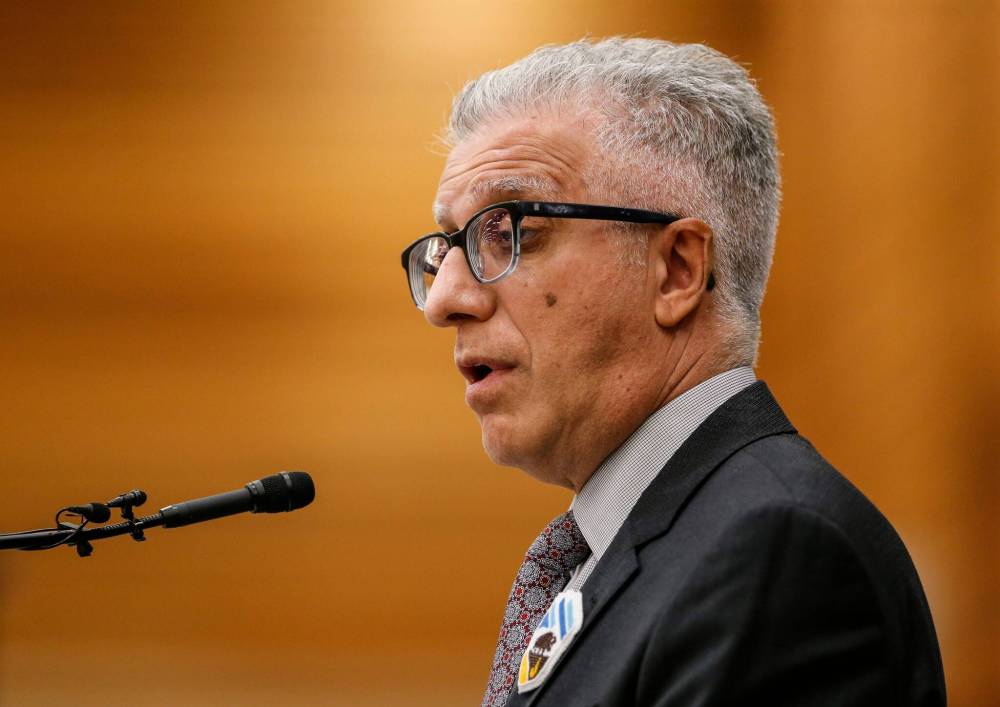
“It’s a really important day for the university and a really important day for us to move forward in a good way,” university president Michael Benarroch said after making the public apology on the Fort Garry campus.
“We have to acknowledge a terrible past that we have and I think the apology was a really important first step.”
The university began collecting and accepting remains in the late 19th century and continued until the 1980s. The institution’s anthropology department began work to repatriate the remains and artifacts in 2020.
Anthropology assistant professor Lara Rosenoff Gauvin said some remains were obtained by researchers, while others were dug up by residents and taken to the university.
The U of M formed a Respectful Rematriation and Repatriation Ceremony Council to work with Indigenous groups to ensure the remains are repatriated to their respective communities.
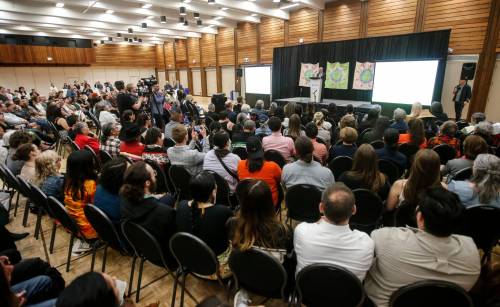
JOHN WOODS / FREE PRESS People attend a rematriation and repatriation apology event at the University of Manitoba Monday.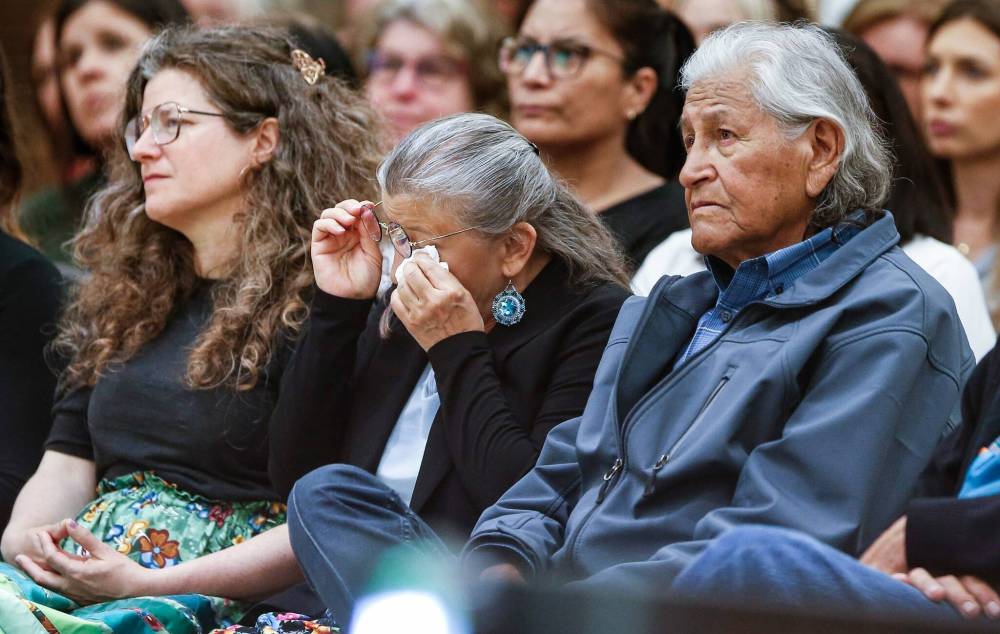
The university has also created a policy on repatriation and rematriation to consult going forward, Rosenoff Gauvin said.
“It took two years meeting monthly to go through line by line what the policy should entail to carefully honour Indigenous elders, and so, here we are after that two-year process,” she said.
A large portion of items held by the university were recovered through public works projects, including construction of the Grand Rapids Generating Station in the 1960s, said Rosenoff Gauvin.
Policy at the time dictated any discovered remains and artifacts be sent to the university. In most cases, nearby First Nations and Métis communities weren’t consulted.
JOHN WOODS / FREE PRESS Sakeeng First Nation Chief E.J. Fontaine spoke at the event.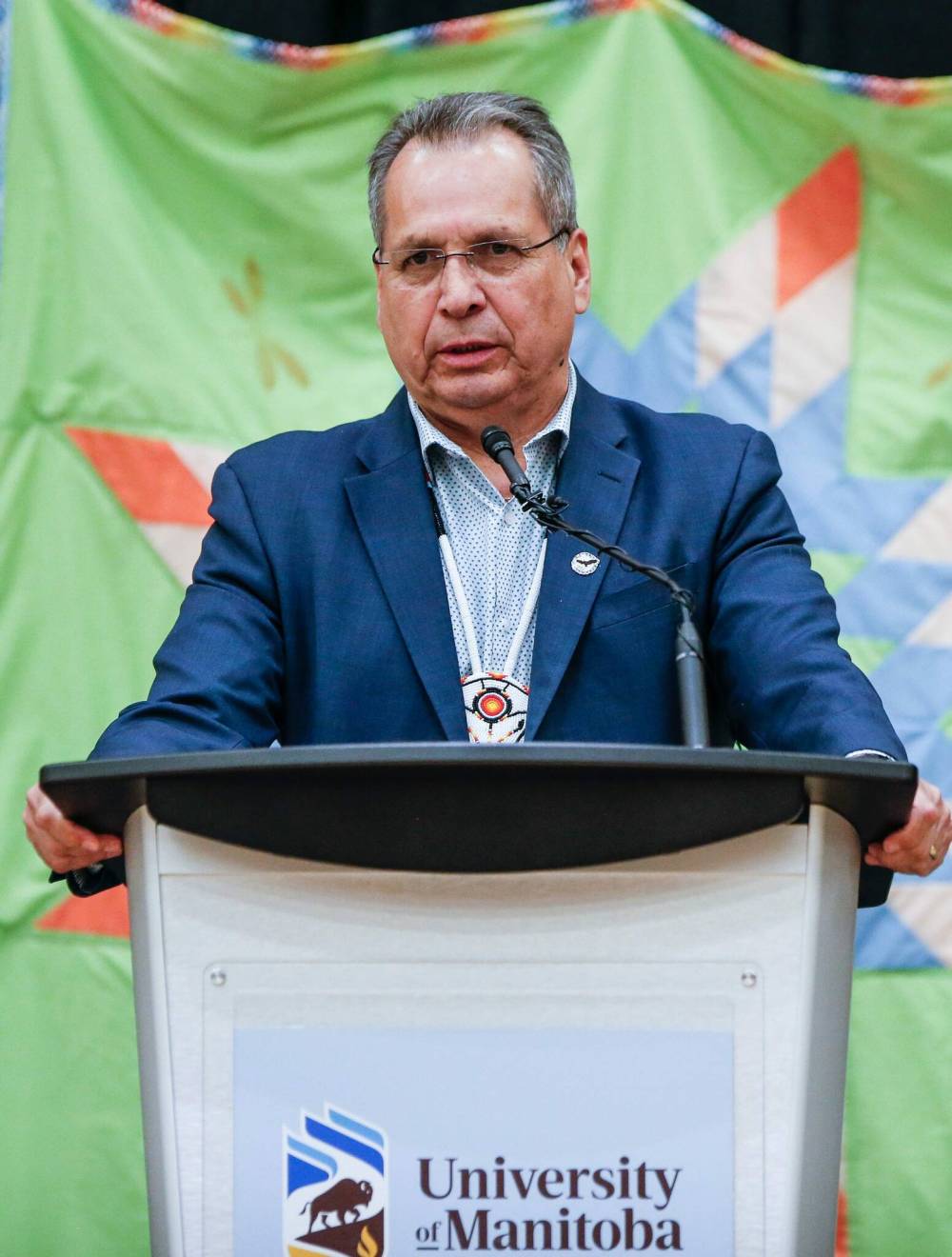
“Our peoples remains were taken without our permission … and it’s an unfortunate thing that happened because our children and our people learned that our people’s remains were not respected by the other side,” said Sakeeng First Nation Chief E.J. Fontaine. “And so we’re happy that the university is (giving) back these remains to our people.”
Nika Collison, who serves as co-chair of the B.C.-based Haida Repatriation Committee, which works to repatriate ancestral remains across the country, is taking four pieces of remains home to her community of Haida.
“To learn of our ancestors being in drawers, in paper bags, in stapled little baggies — it’s devastating,” she said.
Rosenoff Gauvin wouldn’t divulge how many sets of remains and artifacts the university is in possession of, citing privacy, but said the repatriation committee is reaching out to Indigenous communities to return the remains.
The university has received only two requests for remains to be returned since the early 2000s.
The National Centre for Truth and Reconciliation, which has a satellite office at the U of M Fort Garry Campus, worked with the repatriation committee to write the policy that went into effect Monday.
It details collaborating with Indigenous faculty, staff and elders to return the remains and artifacts, uphold the United Nations Declaration on the Rights of Indigenous Peoples and honour the calls to action set out by the NCTR.
The senior director of research and head of archives at the NCTR said the apology and new policy is a step in the right direction, but the road to reconciliation remains long.
“It’s a recognition that the relationship between academic academies and Indigenous communities was exploitative,” said Raymond Frogner. “It’s a resetting of a relationship that’s been profoundly colonial for a very long time.”
JOHN WOODS / FREE PRESS Manitoba Keewatinowi Okimakanak Grand Chief Garrison Settee said he wants to see legislation protecting ancestral burial lands.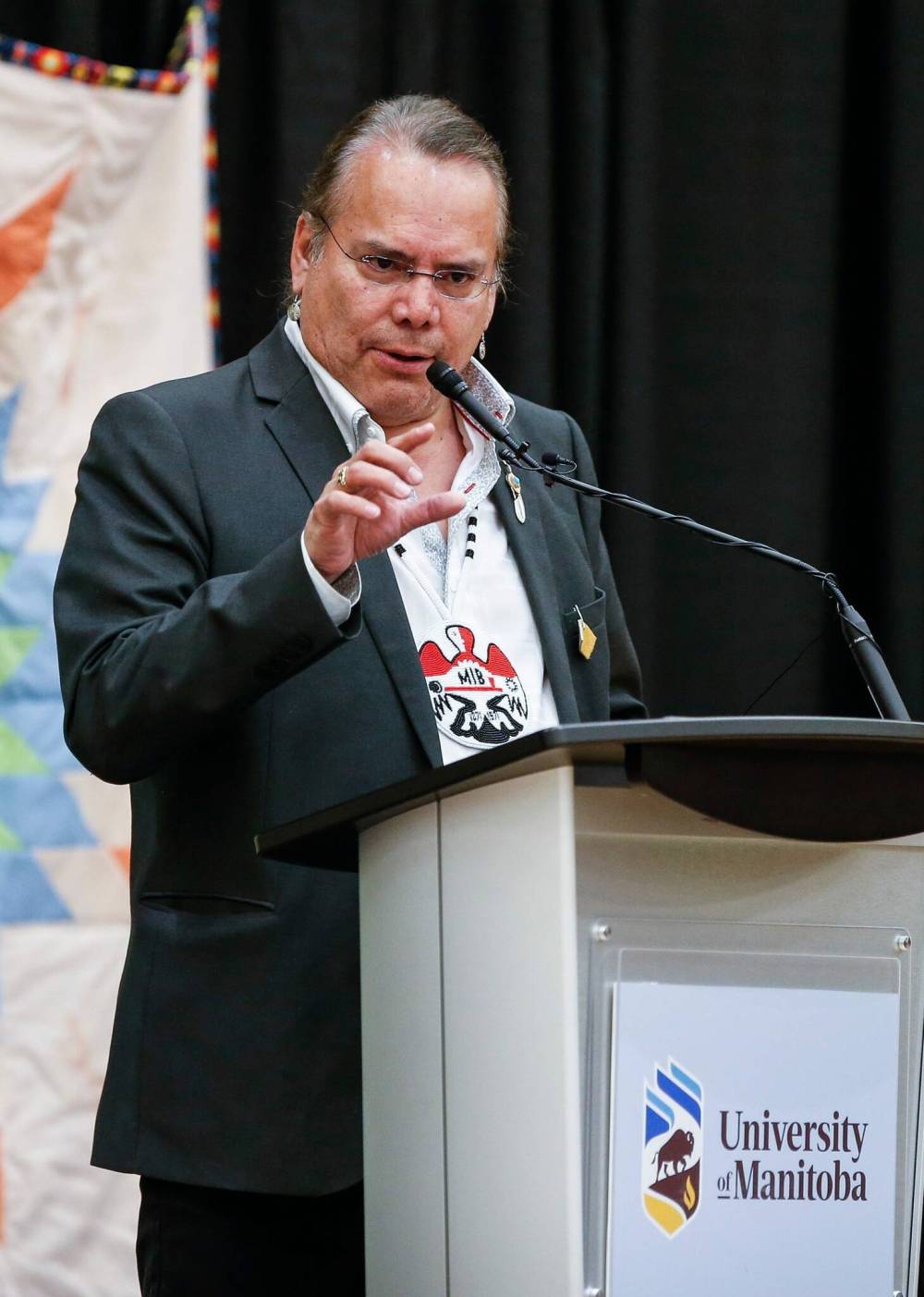
Manitoba Keewatinowi Okimakanak Grand Chief Garrison Settee said he wants to see legislation protecting ancestral burial lands, similar to a policy enacted in the United States.
“From this day forward, we’re going to see changes in the Indigenous communities,” he said. “We are going to see us thrive, we’re going to see us prospering because we’re beginning to heal and this is our time.”
In February Indigenous delegates, community members and advocates met in Winnipeg for a three-day Protecting Our Ancestors conference to address the need for legislation to protect ancestral burial sites across Canada.
In Canada, there are no federal laws to protect Indigenous burial grounds. Each province has different legislation for Indigenous heritage conservation, which means some provinces have less protection of sacred Indigenous sites than others.
In Manitoba, provincial laws say objects or remains that have been discovered must be reported to authorities and cannot be disturbed. If a developer happens upon such a site, the province can order the project to be paused or ended.
– with files from the Canadian Press
nicole.buffie@freepress.mb.ca

Nicole Buffie
Multimedia producer
Nicole Buffie is a reporter for the Free Press city desk. Born and bred in Winnipeg, Nicole graduated from Red River College’s Creative Communications program in 2020 and worked as a reporter throughout Manitoba before joining the Free Press newsroom as a multimedia producer in 2023. Read more about Nicole.
Every piece of reporting Nicole produces is reviewed by an editing team before it is posted online or published in print — part of the Free Press‘s tradition, since 1872, of producing reliable independent journalism. Read more about Free Press’s history and mandate, and learn how our newsroom operates.
Our newsroom depends on a growing audience of readers to power our journalism. If you are not a paid reader, please consider becoming a subscriber.
Our newsroom depends on its audience of readers to power our journalism. Thank you for your support.
History
Updated on Tuesday, June 4, 2024 9:08 AM CDT: Adds SEO headline