City looks to AI to get a jump on potholes

The City of Winnipeg will use artificial intelligence to pinpoint the locations and sizes of potholes, with the goal of speeding up that work.

Read this article for free:


or

Already have an account? Log in here »

To continue reading, please subscribe:

Subscribe and receive a limited-edition Free Press branded hat or tote.

Digital Subscription

One year of digital access for only $205*

  • Enjoy unlimited reading on winnipegfreepress.com
  • Read the E-Edition, our digital replica newspaper
  • Access News Break, our award-winning app
  • Play interactive puzzles

*First annual payment billed as $205.00 + GST for one year. This annual subscription will automatically renew at $233.00 + GST every 52 weeks (10% off the regular annual price of $259.35). Offer available to new and qualified returning subscribers only. Cancel any time.

To continue reading, please subscribe:

Add Free Press access to your Brandon Sun subscription for only an additional

$1 for the first 4 weeks*

  • Enjoy unlimited reading on winnipegfreepress.com
  • Read the E-Edition, our digital replica newspaper
  • Access News Break, our award-winning app
  • Play interactive puzzles
Start now

*Your next Brandon Sun subscription payment will increase by $1.00 and you will be charged $17.95 plus GST for four weeks. After four weeks, your payment will increase to $24.95 plus GST every four weeks.

Hey there, time traveller!
This article was published 08/07/2024 (789 days ago), so information in it may no longer be current.

The City of Winnipeg will use artificial intelligence to pinpoint the locations and sizes of potholes, with the goal of speeding up that work.

The pothole imaging pilot project is one of a few new AI efforts the city will test to try to improve services.

“The pilot project that we are planning to do takes video images from any camera that’s vehicle-mounted. We’re planning to do (this on) buses but it could also be other city vehicles. It takes that image and it runs the image through an artificial intelligence… It uses machine vision, essentially, to say, ‘is this a pothole first?’ …and then it classifies it (by size),” said Tyler Gooch, the city’s director of innovation and technology.

Gooch said the pilot is expected to start at the beginning of the 2025 pothole season, with the exact date depending on weather conditions. He said the city has started planning the details.

“The vision is that, eventually, when a pothole appears, a city vehicle passes by that pothole maybe (as soon as) the same day and now we’ve identified that that pothole exists. We’d basically get… faster information about where the potholes are and better information about where the large potholes are … It gives us that information faster without requiring a human to report it, which lets us prioritize the work and plan better,” he said.

Citizens and city crews are relied on to report cracks and craters in the road now.

As of July 1, the city filled 179,630 potholes this year, including some repeat repairs after heavy rain washed out filler material.

Meanwhile, some residents have complained about craters they believe were left in the road for weeks or months at a time.

Gooch said earlier detection alone wouldn’t increase resources for pothole crews, which affect when repairs are completed. But the AI system could make Winnipeg one of the municipal leaders in quicker pothole identification.

“We think we’ll be one of the earliest in North America to do this. There are other cities that are exploring this (but not yet using it) as well,” he said.

A Winnipegger concerned about a deep pothole on Campbell Street welcomed the idea of using technology to keep better track of deep cracks in the road.

MIKAELA MACKENZIE / FREE PRESS
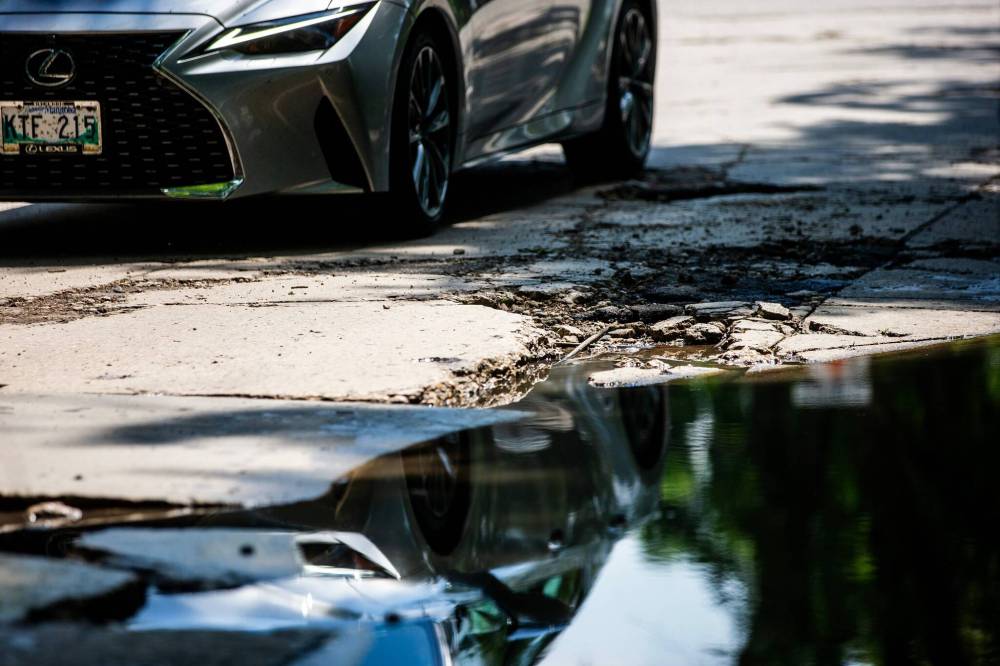
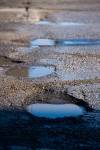
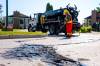
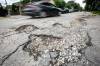
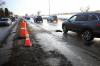
 As of July 1, the city filled 179,630 potholes this year, including some repeat repairs after heavy rain washed out filler material. A new pothole imaging project is one of the ways the city is using artificial intelligence.

MIKAELA MACKENZIE / FREE PRESS

As of July 1, the city filled 179,630 potholes this year, including some repeat repairs after heavy rain washed out filler material. A new pothole imaging project is one of the ways the city is using artificial intelligence.

“That’s a brilliant idea. What’s happening now with the potholes, it’s passive reporting. If someone calls the city or calls 311 or sends an email, (the city knows) there’s a pothole at Campbell. If nobody calls it in, (the city doesn’t) know… But if you’ve got buses (or) other city vehicles with cameras tracking potholes, then there’s an active surveillance as opposed to leaving it to the public. If you’ve got an active surveillance program, that’s how you get things done,” said John Embil.

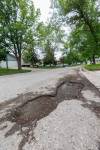
Embil said he and his wife first began asking the city to repair what he describes as a large and growing pothole on Campbell Street just north of Academy Road about two months ago. He doesn’t believe the crater has been repaired.

City of Winnipeg officials did not answer questions about how long that particular pothole has been in place, or whether any crews have tried to fix it, by deadline Monday.

Embil said he understands the city has budget constraints that can limit its road work. While he also doesn’t think potholes are the city’s most pressing issue, they still must be dealt with, he said.

MIKAELA MACKENZIE / FREE PRESS
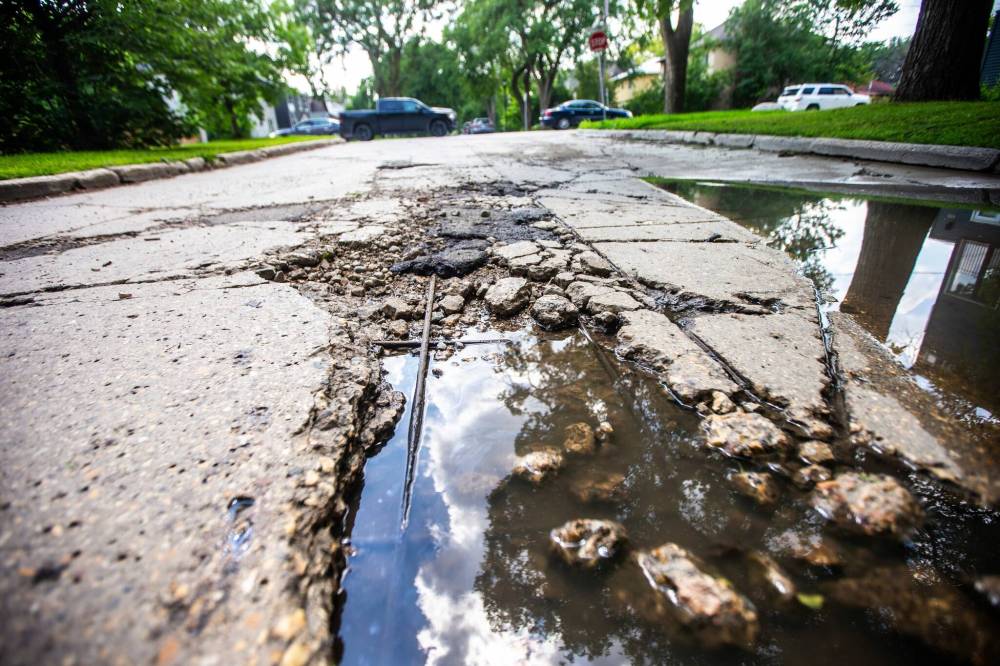
Residents notified the city about this pothole on Campbell Street between Academy Road and Wellington Crescent roughly two months ago. The hole is deep enough to expose the rebar beneath.

MIKAELA MACKENZIE / FREE PRESS

Residents notified the city about this pothole on Campbell Street between Academy Road and Wellington Crescent roughly two months ago. The hole is deep enough to expose the rebar beneath.

“You’ve got ratty edges, people drive on it … The rebar is sticking through. At some point, there will be an MPI claim,” he said.

The AI pilot project is expected to cost up to $75,000, while its results would help determine the cost to use the technology on a permanent basis.

Gooch said the cameras could also potentially spot other city infrastructure concerns such as damaged bus shelters or road signs.

joyanne.pursaga@freepress.mb.ca

X: @joyanne_pursaga

Joyanne Pursaga

Joyanne Pursaga
Reporter

Joyanne is city hall reporter for the Winnipeg Free Press. A reporter since 2004, she began covering politics exclusively in 2012, writing on city hall and the Manitoba Legislature for the Winnipeg Sun before joining the Free Press in early 2020. Read more about Joyanne.

Every piece of reporting Joyanne produces is reviewed by an editing team before it is posted online or published in print — part of the Free Press‘s tradition, since 1872, of producing reliable independent journalism. Read more about Free Press’s history and mandate, and learn how our newsroom operates.

Our newsroom depends on a growing audience of readers to power our journalism. If you are not a paid reader, please consider becoming a subscriber.

Our newsroom depends on its audience of readers to power our journalism. Thank you for your support.
Report Error Submit a Tip

More Stories

Mayoralty candidate Vogiatzakis decries war of words

Joyanne Pursaga 4 minute read Preview

Mayoralty candidate Vogiatzakis decries war of words

Joyanne Pursaga 4 minute read Yesterday at 5:28 PM CDT

A mayoral candidate took aim at personal insults among two of his competitors Friday, stressing the election campaign should focus on city issues instead.

“I’m really embarrassed by the mayoral candidates slinging mud at each other. We should be more professional … I don’t think we need to bring up people’s past or garbage that they’ve been involved in. I think this needs to be about the City of Winnipeg and what we’re going to do for the City of Winnipeg,” Mike Vogiatzakis said at a press conference Friday.

He confirmed he was referring specifically to skirmishes between Scott Gillingham, who is seeking re-election as mayor, and Kevin Klein, a former city councillor and provincial cabinet minister who registered for the race this week.

Within a few hours of Klein’s Tuesday announcement that he would enter the mayoral contest, Gillingham issued a statement labelling Klein “toxic,” a “Caribbean political fixer” for Peter Nygard and a supporter of U.S. President Donald Trump.

Read
Yesterday at 5:28 PM CDT

Class delayed a day after mould found in Tyndall Park school

Maggie Macintosh 6 minute read Preview

Class delayed a day after mould found in Tyndall Park school

Maggie Macintosh 6 minute read Thursday, Sep. 3, 2026

The first day of school has been postponed at École Stanley Knowles School after teachers discovered mould on chairs, rugs and other items when they were setting up their classrooms.

Families were alerted Thursday afternoon that an “HVAC malfunction” required extensive cleanup and, as a result, a one-day delay to the new year.

“I called it a couple weeks ago — it smelled really strong of mould,” said Amanda Bell, a mother who’s gone to the building regularly all summer to drop off and pick up her children from the on-site daycare.

Bell recalled she and her partner got a whiff of “wet mould” in a first-floor hallway near the library in mid-August and flagged it to an employee who told them they’d contact a custodian.

Read
Thursday, Sep. 3, 2026

St. Malo’s summer hot spot relies on dedicated community to make sure park-goers can kick back and relax

Melissa Martin 16 minute read Preview

St. Malo’s summer hot spot relies on dedicated community to make sure park-goers can kick back and relax

Melissa Martin 16 minute read Yesterday at 6:00 AM CDT

It’s shaping up to be a hot late-August Friday in southern Manitoba; the forecast warns of a thunderstorm in the late afternoon, but that won’t stop Manitobans from flocking to savour one of the last great beach days of the summer.

Read
Yesterday at 6:00 AM CDT

Smith’s pretzel logic confuses

Editorial 4 minute read Preview

Smith’s pretzel logic confuses

Editorial 4 minute read 2:01 AM CDT

Alberta Premier Danielle Smith had both sides of her mouth working overtime on Aug. 30, when she spoke at an event in Calgary to commemorate Alberta Day, the annual celebration of the province’s entry into Confederation in 1905 (officially Sept. 1, it was celebrated on the weekend).

Smith’s comments — and the things she did not say — revealed a lot about the political tightrope the premier is trying to walk over the challenges currently faced by her province. At the top of that list of challenges is a persistent campaign to separate Alberta from the aforementioned Confederation. A campaign that Smith appears to both support and oppose, depending on which day of the week it is.

Her Alberta Day remarks were an excellent case in point.

Smith has decided that on Oct. 19, Albertans will vote on a series of non-binding propositions in a province referendum. One of those questions will ask Albertans whether they want to hold a referendum on separation, thus making this fall’s vote a “referendum on whether to hold a referendum,” as some observers have dubbed it.

Read
2:01 AM CDT

Mayoral candidate Gillingham vows building boom; Vogiatzakis, Woodstock promise improved safety

Joyanne Pursaga 5 minute read Preview

Mayoral candidate Gillingham vows building boom; Vogiatzakis, Woodstock promise improved safety

Joyanne Pursaga 5 minute read Yesterday at 5:00 PM CDT

Scott Gillingham promised several new steps to help get more homes and businesses built in Winnipeg Friday, if re-elected as mayor, amid other pledges from his competition.

Read
Yesterday at 5:00 PM CDT

Art piece connects viewers to broader national landscape

Allison Gillmor 4 minute read Preview

Art piece connects viewers to broader national landscape

Allison Gillmor 4 minute read 2:01 AM CDT

WHAT IT IS: Copy Paperis a 2014 textile-based piece by Ontario-born, Winnipeg-based artist Kristin Nelson, currently on view at WAG-Qaumajuq as part of the exhibition Terra Cognita/Incognita.

Of the 125 works in the show — which uses historical and contemporary pieces from WAG-Qaumajuq’s permanent collection to explore how artists have represented the landscape over time and across cultures —probably the most attention-getting are the beautiful paintings of Canada’s lakes, plains, forests and mountains.

So, how does this seemingly modest, somewhat enigmatic work connect to Terra Cognita/Incognita’s larger themes?

WHAT IT’S ABOUT: In the middle of the exhibition, an antique desk holds several objects of beauty and utility, and this is where Copy Paper sneaks in, as something both “cognita and incognita,” known and unknown.

Read
2:01 AM CDT