

Human remains believed to be hundreds of years old found on shores of Minnesota lake
Advertisement
Read this article for free:
or
Already have an account? Log in here »
To continue reading, please subscribe:
Monthly Digital Subscription
$0 for the first 4 weeks*
- Enjoy unlimited reading on winnipegfreepress.com
- Read the E-Edition, our digital replica newspaper
- Access News Break, our award-winning app
- Play interactive puzzles
*No charge for 4 weeks then price increases to the regular rate of $19.00 plus GST every four weeks. Offer available to new and qualified returning subscribers only. Cancel any time.
Monthly Digital Subscription
$4.75/week*
- Enjoy unlimited reading on winnipegfreepress.com
- Read the E-Edition, our digital replica newspaper
- Access News Break, our award-winning app
- Play interactive puzzles
*Billed as $19 plus GST every four weeks. Cancel any time.
To continue reading, please subscribe:
Add Free Press access to your Brandon Sun subscription for only an additional
$1 for the first 4 weeks*
*Your next subscription payment will increase by $1.00 and you will be charged $16.99 plus GST for four weeks. After four weeks, your payment will increase to $23.99 plus GST every four weeks.
Read unlimited articles for free today:
or
Already have an account? Log in here »
Hey there, time traveller!
This article was published 05/09/2024 (456 days ago), so information in it may no longer be current.
People gathering wild rice from Minnesota’s third-largest lake have stumbled across human skeletal remains that are believed to be several hundred years old.
Authorities suspect erosion caused the remains of at least three people to surface on the shores of Leech Lake, where they were discovered Saturday. Covering more than 100,000 acres (40,470 hectares), the lake is located mainly within the Leech Lake Indian Reservation in the north-central part of the state.
Several tribes have called the area home, most recently the Leech Lake Band of Ojibwe, and remains periodically are found in the area, said the tribe’s police chief, Ken Washington.
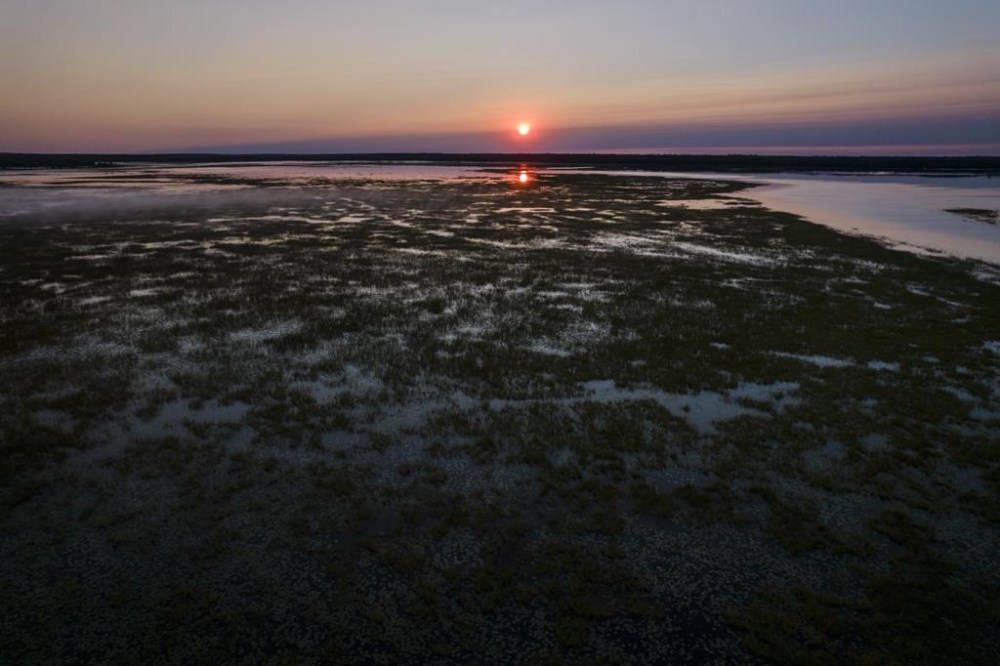
“They’ll just arise like that just through natural erosion of the water coming up on shorelines,” he said.
Cass County Sheriff Bryan Welk said the rice harvesters called after spotting the remains up on land. Harvesters usually use a canoe with a push pole or paddles to collect the rice, which is considered spiritually, culturally, nutritionally and economically significant to Ojibwe, Dakota and other tribal communities, according to the state’s Department of Natural Resources.
Deputies responded, determined the remains were ancient and then contacted the Leech Lake Heritage Sites program, which conducts archeological research in the area.
The Minnesota Indian Affairs Council was also called to assist, with the goal of handling the remains in “culturally appropriate manner,” the tribal and county law enforcement explained in a joint statement.
Welk said in an interview that besides erosion, remains also are unearthed through construction projects.
“It has happened a couple times a year, but then they can go several years in between,” Welk said. “It just depends.”
Authorities urged people to contact law enforcement if they encounter suspected human remains and not to disturb the area.
“In doing so, this ensures vital evidence is preserved, along with being respectful of those who were here before us,” the statement said.