Manitoba to consider support for news outlets
Read this article for free:
or
Already have an account? Log in here »
To continue reading, please subscribe:

Digital Subscription
One year of digital access for only $205*
- Enjoy unlimited reading on winnipegfreepress.com
- Read the E-Edition, our digital replica newspaper
- Access News Break, our award-winning app
- Play interactive puzzles
*First annual payment billed as $205.00 + GST for one year. This annual subscription will automatically renew at $233.00 + GST every 52 weeks (10% off the regular annual price of $259.35). Offer available to new and qualified returning subscribers only. Cancel any time.
To continue reading, please subscribe:
Add Free Press access to your Brandon Sun subscription for only an additional
$1 for the first 4 weeks*
- Enjoy unlimited reading on winnipegfreepress.com
- Read the E-Edition, our digital replica newspaper
- Access News Break, our award-winning app
- Play interactive puzzles
*Your next Brandon Sun subscription payment will increase by $1.00 and you will be charged $17.95 plus GST for four weeks. After four weeks, your payment will increase to $24.95 plus GST every four weeks.
Read unlimited articles for free today:
or
Already have an account? Log in here »
Hey there, time traveller!
This article was published 15/11/2024 (684 days ago), so information in it may no longer be current.
The Manitoba government says it is dedicated to protecting democracy, journalism and freedom of the press and plans to strike an all-party committee to determine how best to do that.
“If there’s a business landscape that makes it much more difficult for journalists to keep doing that important work, I think there is a need to have a conversation about some form of public support or at least a fair hearing of those issues,” Premier Wab Kinew said Friday.
The promise will be unveiled in Tuesday’s throne speech, which kicks off the new legislative session.
MIKE DEAL / FREE PRESS FILES The Manitoba government will conduct its throne speech on Tuesday which kicks off the new legislative session.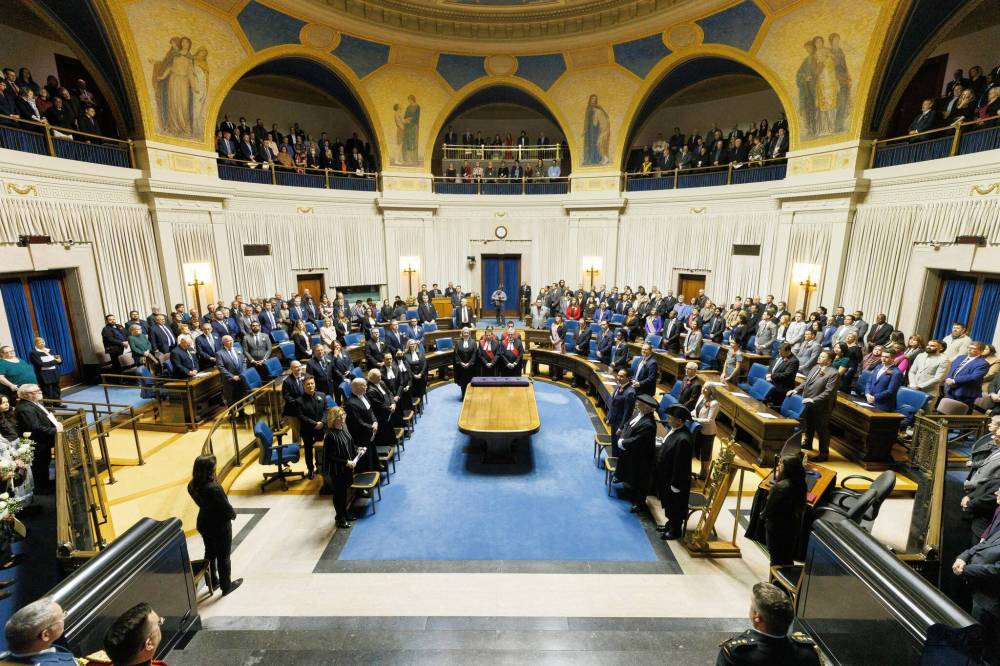
The committee would “look at the future of journalism in the province, including whether there’s public supports that might be needed, or to discuss whether a specific percentage of government and Crown corporation advertising should be dedicated to supporting local media,” Kinew said.
In the age of misinformation, polarization and the rise of authoritarianism, democracies can’t afford to let journalism disappear or become politicized, the former CBC reporter said, adding the media has faced major economic challenges since the Internet upended its traditional business model.
“Journalism plays such a critical role in our society in terms of upholding the freedom of speech, the ability of citizens to express themselves and, really importantly, to hold the powerful to account, including government,” he said in an interview.
In Ontario, Premier Doug Ford’s government has directed the four largest provincial agencies in charge of gaming, liquor and cannabis to earmark 25 per cent of their advertising budgets to Ontario publishers that are qualified as journalism organizations by the Canada Revenue Agency. The agencies spend more than $100 million a year on marketing.
The goal is to promote local content and culture and protect jobs in Ontario.
“I think that the role of freedom of the press and freedom of speech are so important that we can’t afford to have some kind of conversation about public support for journalism become politicized.”–Premier Wab Kinew
Rather than issuing a government directive, Manitoba’s premier said it’s important for an all-party committee to come up with a plan for this province.
The federal government’s measures to support local journalism have led to partisan criticism and mainstream media outlets being attacked and accused of bias, Kinew said.
Programs that have come under fire are: the 25 per cent refundable tax credit for eligible newsroom employees and the non-refundable 15 per cent tax credit for qualifying digital news subscriptions, as well as the Local Journalism Initiative to support the creation of original civic journalism in underserved areas.
(The Free Press receives LJI funding to support Manitoba’s only dedicated education reporter.)
Federal Conservative Leader Pierre Poilievre, whose party is ahead in the polls and may form government next year, has objected to support for private media companies and had promised to defund the CBC, calling it a “$1-billion propaganda arm” of the Liberal government.
“I think that the role of freedom of the press and freedom of speech are so important that we can’t afford to have some kind of conversation about public support for journalism become politicized,” Kinew said.
MIKAELA MACKENZIE / FREE PRESS FILES “Journalism plays such a critical role in our society in terms of upholding the freedom of speech, the ability of citizens to express themselves and, really importantly, to hold the powerful to account, including government,” Premier Wab Kinew said.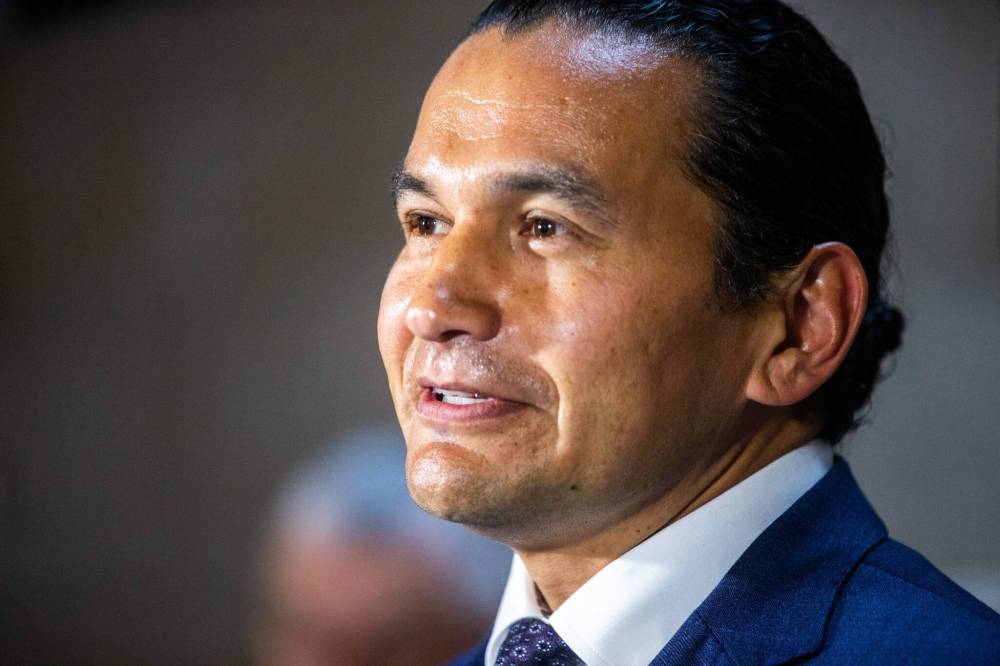
That’s why his government has chosen the all-party committee option.
“So it’s not just government, it’s opposition and potentially independent MLAs having an ability to sort through these issues, to hear from the public, from journalistic outfits and media organizations and really just have that open discussion about it,” the premier said. “This is a public good that I think everyone in our society recognizes, and the business case is not the same as it once was.”
The committee would delve into the need for intervention, how it would be applied and which outlets would be eligible to receive it.
The committee, Kinew said, isn’t a response to the rise of “fake news” and the election of Donald Trump as U.S. president. He has referred to news reporters as the “enemy of the people.”
“This more has to do with the economics of journalism in Canada and Manitoba specifically,” the premier said, citing French language publications and community papers, for example.
“…It is difficult for them to continue to be that voice and living memory of our respective communities here in Manitoba,” he said.
“This is a public good that I think everyone in our society recognizes, and the business case is not the same as it once was.”–Premier Wab Kinews
A non partisan, all-party approach that includes Tories, many of whom represent rural areas, is a starting point, he said.
“From my perspective, if something has a more conservative bent or a progressive bent or it plays it right down the middle doesn’t matter. What I want to see is that there is the proper exercise of that lever on the powerful continuing in our society, as well as an outlet for people to find out what’s going on in your community and to voice your opinions.”
The committee will hear from people throughout the province about local, rural and cultural publications and what’s important to them and report back with recommendations in time for next year’s throne speech, Kinew said.
“I think taking the time to go through an all-party legislative committee hopefully would allow this to be perceived as less political, less partisan, less of a heavy hand of government interfering in the market, and more about clear-eyed deliberation for the people of Manitoba on how we can ensure our democracy stays viable.”
carol.sanders@freepress.mb.ca


Carol Sanders
Legislature reporter
Carol Sanders is a reporter at the Free Press legislature bureau. The former general assignment reporter and copy editor joined the paper in 1997. Read more about Carol.
Every piece of reporting Carol produces is reviewed by an editing team before it is posted online or published in print — part of the Free Press‘s tradition, since 1872, of producing reliable independent journalism. Read more about Free Press’s history and mandate, and learn how our newsroom operates.
Our newsroom depends on a growing audience of readers to power our journalism. If you are not a paid reader, please consider becoming a subscriber.
Our newsroom depends on its audience of readers to power our journalism. Thank you for your support.

History
Updated on Friday, November 15, 2024 8:15 PM CST: removes extra wording