City forced to detour on road to zero-emission buses
Read this article for free:
or
Already have an account? Log in here »
To continue reading, please subscribe:

Digital Subscription
One year of digital access for only $205*
- Enjoy unlimited reading on winnipegfreepress.com
- Read the E-Edition, our digital replica newspaper
- Access News Break, our award-winning app
- Play interactive puzzles
*First annual payment billed as $205.00 + GST for one year. This annual subscription will automatically renew at $233.00 + GST every 52 weeks (10% off the regular annual price of $259.35). Offer available to new and qualified returning subscribers only. Cancel any time.
To continue reading, please subscribe:
Add Free Press access to your Brandon Sun subscription for only an additional
$1 for the first 4 weeks*
- Enjoy unlimited reading on winnipegfreepress.com
- Read the E-Edition, our digital replica newspaper
- Access News Break, our award-winning app
- Play interactive puzzles
*Your next Brandon Sun subscription payment will increase by $1.00 and you will be charged $17.95 plus GST for four weeks. After four weeks, your payment will increase to $24.95 plus GST every four weeks.
Read unlimited articles for free today:
or
Already have an account? Log in here »
Hey there, time traveller!
This article was published 12/12/2024 (629 days ago), so information in it may no longer be current.
Winnipeg Transit’s ambitious target to switch its entire fleet from diesel to zero-emission buses by 2045 is up against a major roadblock.
In 2021, Transit unveiled a proposal that set targets to replace 100 to 110 diesel buses with greener models by the end of 2027, along with a goal to switch its entire fleet to zero-emission vehicles by 2045, pending funding approvals.
While the city never secured enough funding to achieve the final goal, a new budget plan jeopardizes progress toward it.
MIKAELA MACKENZIE / FREE PRESS FILES
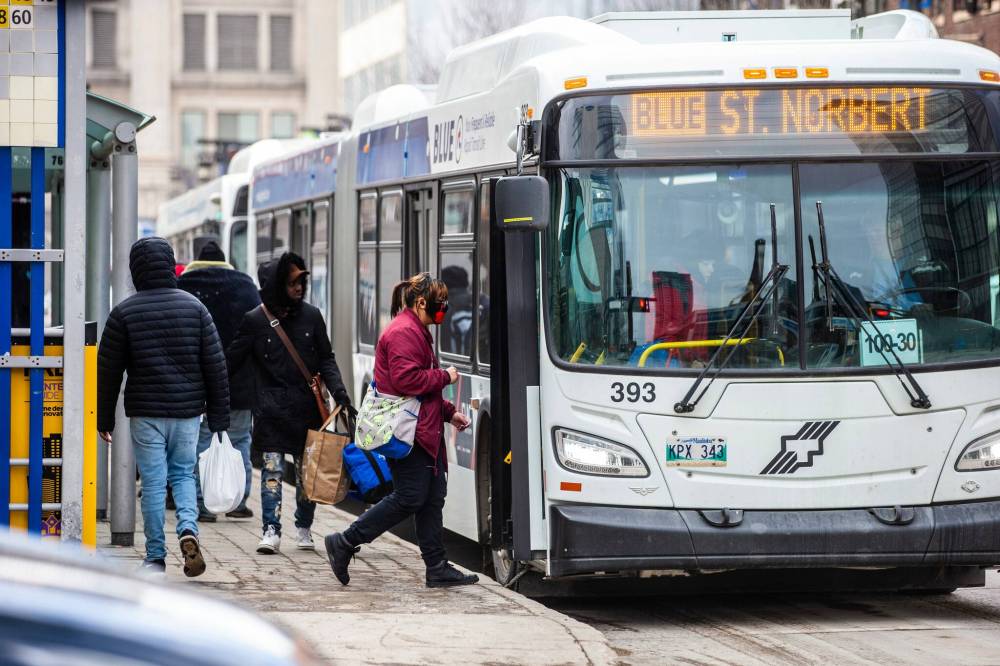
Electric buses cost about twice as much as those fuelled by diesel.Winnipeg’s 2025 preliminary budget suggests city council complete a tri-government agreement to replace some buses with greener models but also shift to solely funding new diesel buses in 2027.
“We’re not the only city in Canada that’s going this route. Unless we have federal or provincial support to buy electric buses and do the whole electric conversion, we cannot afford to convert the entire fleet,” said Coun. Janice Lukes, chairwoman of public works. “Our goal is to get more people on the buses. If we get people out of vehicles and on the buses with excellent service, that will reduce greenhouse gas emissions.”
Winnipeg Transit has 640 buses in its fleet, the city’s website says.
Lukes (Waverley West) said the city expects it could afford to add about 19 buses to its fleet over five years by focusing on diesel models only, since battery-electric and hydrogen fuel cell battery-electric buses are more expensive than standard diesel models.
“An electric bus costs twice the cost of a diesel bus, plus there is all the electrification requirements that are added on to that. Our goal is to provide a higher level of service. To do that, we just need more buses on the road,” said Lukes.
A $280-million Investing in Canada Infrastructure Program agreement announced in 2022 initially aimed to add 100 environmentally friendly buses to Winnipeg Transit’s fleet by 2027. However, the actual amount was later predicted to drop due to inflation.
A budget document released Wednesday estimates the city will add about 20 zero-emission buses in 2025 and 51 more in 2026, for a total of 71, though it warns that figure could change if costs escalate.
“Unless we have federal or provincial support to buy electric buses and do the whole electric conversion, we cannot afford to convert the entire fleet.”–Coun. Janice Lukes
Lukes said the target to replace Transit’s entire fleet with greener models isn’t cancelled per se, since more senior government funding would make it more likely.
When zero-emission bus targets were set, city staff estimated each green bus replacement would remove about 62 tonnes of greenhouse gas emissions per year. The city also estimated it would cost about $120 million less to replace outdated buses with diesel models than zero-emission ones over the following seven years.
The city’s budget proposal calls for a staff report in about six months on the use of diesel buses, “operational impacts” of the change and how it will affect the city’s climate change targets.
Mayor Scott Gillingham stressed the city will fulfil its commitment under the government partnership before changing course.
“Zero-emission buses are part of Winnipeg’s future… After that (initial order), our next round of purchases would be low-emission diesel buses,” said Gillingham.
The mayor also stressed ramping up overall transit operations is the city’s key priority.
“The more buses we can get on the road by using diesel buses, the more we can encourage people to get out of their cars and onto buses, which ultimately has the best benefit in cutting emissions,” he said.
“The more buses we can get on the road by using diesel buses, the more we can encourage people to get out of their cars.”–Mayor Scott Gillingham
A previous city report noted the ICIP program may not be completed until 2028.
City council will cast the final vote on the 2025 budget on Jan. 29.
joyanne.pursaga@freepress.mb.ca
X: @joyanne_pursaga

Joyanne is city hall reporter for the Winnipeg Free Press. A reporter since 2004, she began covering politics exclusively in 2012, writing on city hall and the Manitoba Legislature for the Winnipeg Sun before joining the Free Press in early 2020. Read more about Joyanne.
Every piece of reporting Joyanne produces is reviewed by an editing team before it is posted online or published in print — part of the Free Press‘s tradition, since 1872, of producing reliable independent journalism. Read more about Free Press’s history and mandate, and learn how our newsroom operates.
Our newsroom depends on a growing audience of readers to power our journalism. If you are not a paid reader, please consider becoming a subscriber.
Our newsroom depends on its audience of readers to power our journalism. Thank you for your support.
Related Articles
Proposed city budget raises property taxes 5.95 per cent