

Netanyahu says Israeli troops will occupy a buffer zone inside Syria for the foreseeable future
Advertisement
Read this article for free:
or
Already have an account? Log in here »
To continue reading, please subscribe:

Digital Subscription
One year of digital access for only $205*
- Enjoy unlimited reading on winnipegfreepress.com
- Read the E-Edition, our digital replica newspaper
- Access News Break, our award-winning app
- Play interactive puzzles
*First annual payment billed as $205.00 + GST for one year. This annual subscription will automatically renew at $233.00 + GST every 52 weeks (10% off the regular annual price of $259.35). Offer available to new and qualified returning subscribers only. Cancel any time.
To continue reading, please subscribe:
Add Free Press access to your Brandon Sun subscription for only an additional
$1 for the first 4 weeks*
- Enjoy unlimited reading on winnipegfreepress.com
- Read the E-Edition, our digital replica newspaper
- Access News Break, our award-winning app
- Play interactive puzzles
*Your next Brandon Sun subscription payment will increase by $1.00 and you will be charged $17.95 plus GST for four weeks. After four weeks, your payment will increase to $24.95 plus GST every four weeks.
Read unlimited articles for free today:
or
Already have an account? Log in here »
Hey there, time traveller!
This article was published 17/12/2024 (605 days ago), so information in it may no longer be current.
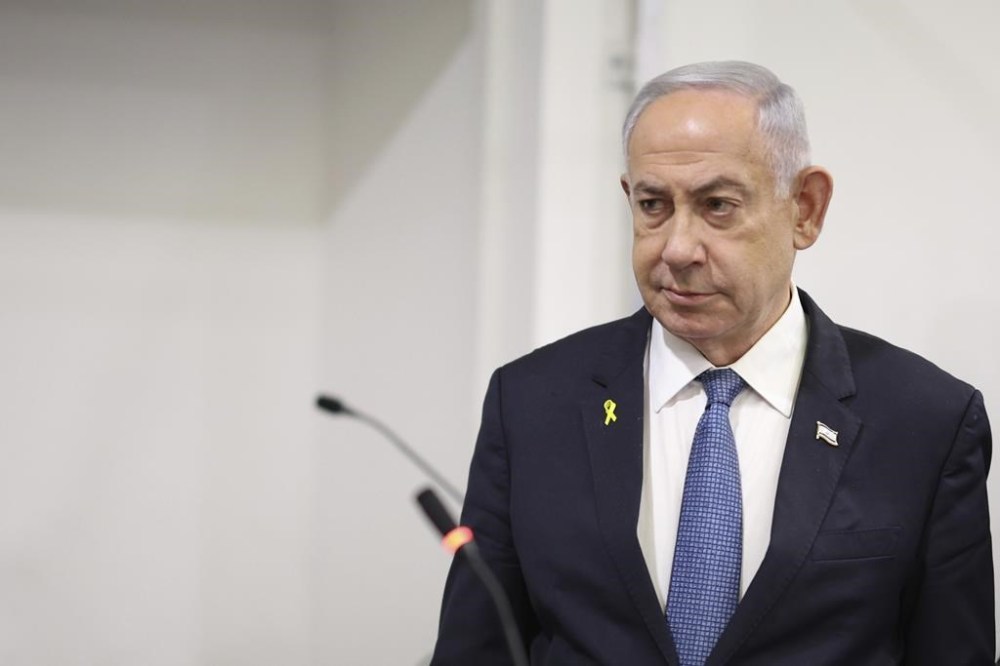
JERUSALEM (AP) — Prime Minister Benjamin Netanyahu said Tuesday that Israeli forces will stay in a buffer zone on the Syrian border, seized after the ouster of Syria’s President Bashar Assad, until another arrangement is in place “that ensures Israel’s security.”
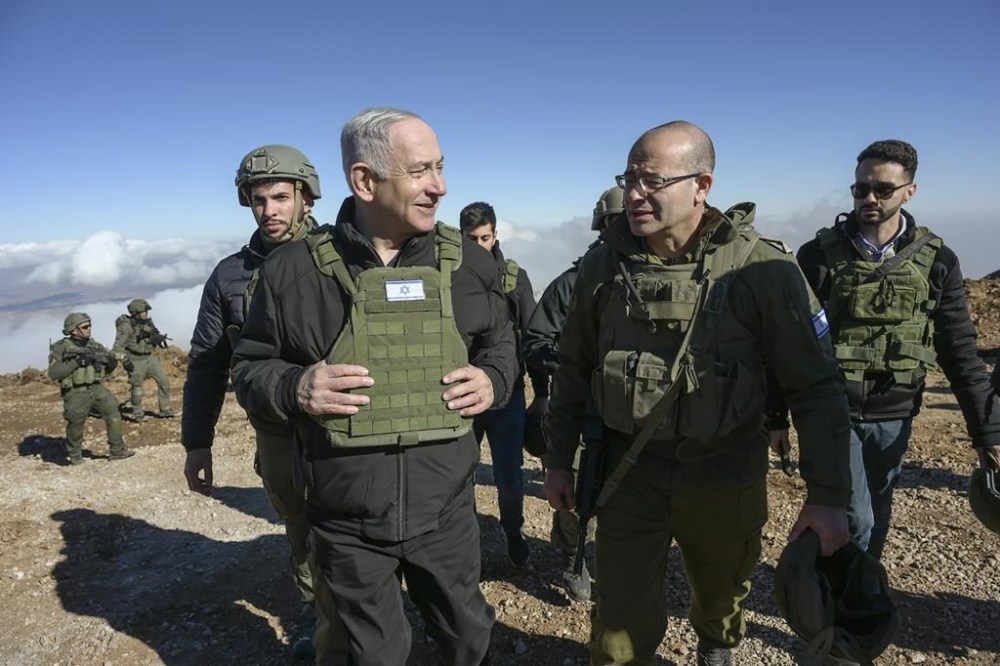
Netanyahu made the comments from the summit of Mount Hermon — the highest peak in the area — inside Syria, about 10 kilometers (6 miles) from the border with the Israel-held Golan Heights.
It appeared to be the first time a sitting Israeli leader had set foot that far into Syria. Netanyahu said he had been on the same mountaintop 53 years ago as a soldier, but the summit’s importance to Israel’s security has only increased given recent events.
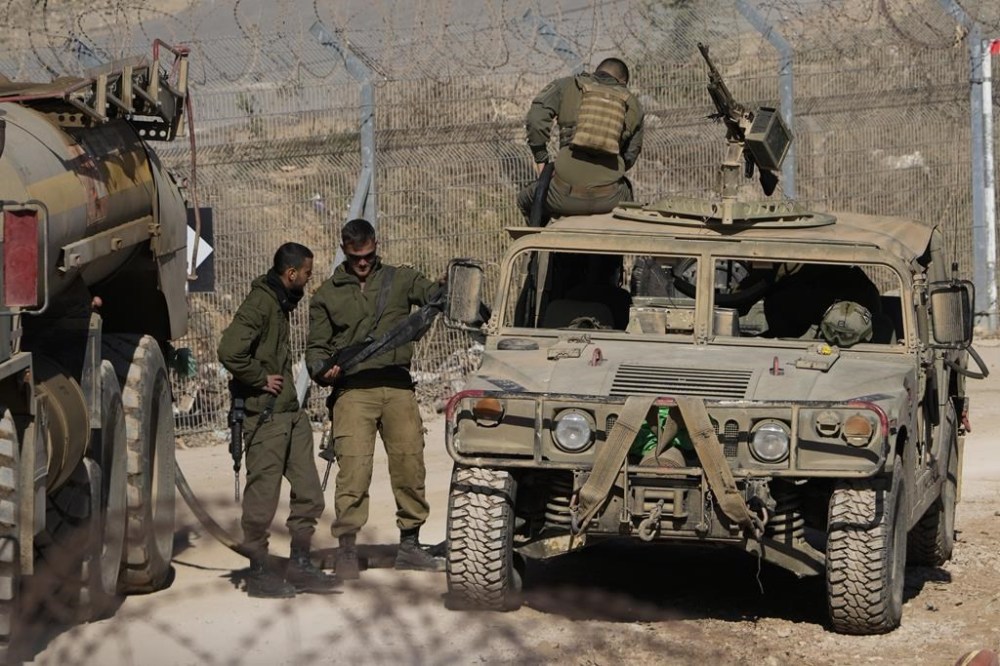
Israel seized a swath of southern Syria along the border with the Israeli-annexed Golan Heights days after Assad was ousted by rebels last week.
Israel’s capture of the buffer zone, a roughly 400-square-kilometer (155-square-mile) demilitarized area in Syrian territory, has sparked condemnation, with critics accusing Israel of violating a 1974 ceasefire and possibly exploiting the chaos in Syria in the wake of Assad’s ouster to make a land grab.
“We will stay … until another arrangement is found that ensures Israel’s security,” said Netanyahu who had traveled to the buffer zone on Tuesday with Defense Minister Israel Katz.
Katz said he instructed the Israeli military to quickly establish a presence, including fortifications, in anticipation of what could be an extended stay in the area. “The summit of the Hermon is the eyes of the state of Israel to identify our enemies who are nearby and far away,” he said.
An Israeli military official, who spoke on condition of anonymity in line with military regulations, said there is no plan to evacuate the Syrians living in villages within the buffer zone.
The buffer zone between Syria and the Israeli-controlled Golan Heights was created by the U.N. after the 1973 Mideast war. A U.N. force of about 1,100 troops had patrolled the area since then.
A U.N. spokesman said Tuesday that the advance of Israeli troops, however long it lasts, violates the deal that set up the buffer zone.
That agreement “needs to be respected, and occupation is occupation, whether it lasts a week, a month or a year, it remains occupation,” spokesman Stephane Dujarric said.
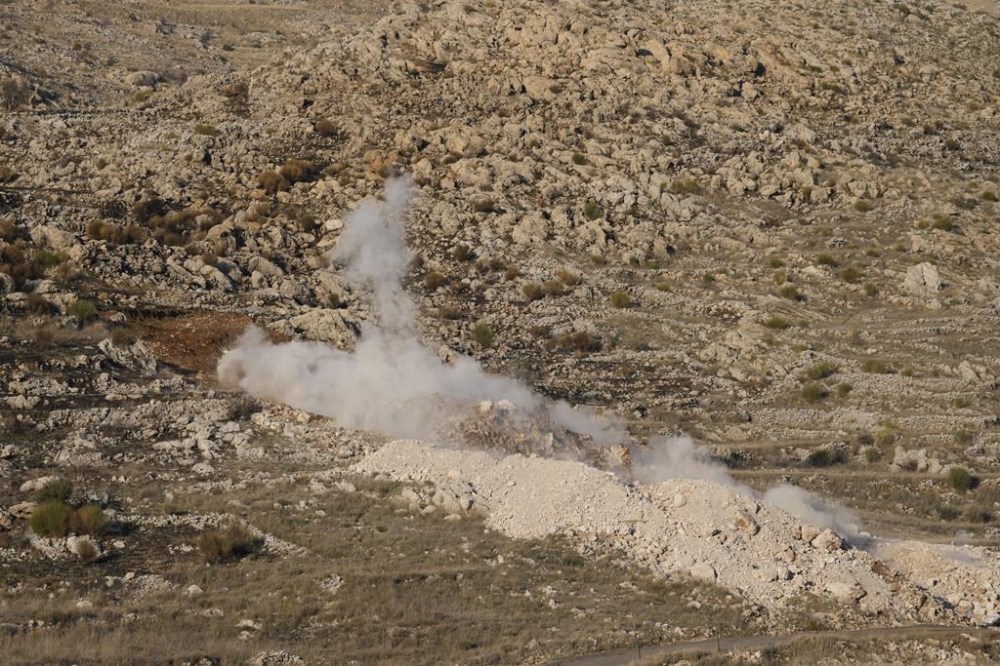
There was no immediate comment from Hayat Tahrir al-Sham, the insurgent group that led the ouster of Assad, or from Arab states.
Israel still controls the Golan Heights, which it captured from Syria during the 1967 Mideast war and later annexed — a move not recognized by most of the international community. Mount Hermon’s summit is divided between the Israeli-annexed Golan Heights, Lebanon, and Syria. Only the United States recognizes Israel’s control of the Golan Heights.
With Assad gone, a top U.N. official said Tuesday that militant leaders who have taken over Syria have committed to “an ambitious scaling-up of vital humanitarian support” for millions in desperate need of food and other aid.
The leader of the insurgent HTS — Ahmad al-Sharaa, formerly known as Mohammed al-Golani — and the country’s caretaker prime minister, Mohammed al-Bashir, pledged to support the movement of aid from Turkey, Lebanon, Jordan and other neighboring countries “for as long as humanitarian operations are required,” said Tom Fletcher.
Fletcher, who heads the the U.N. Office for the Coordination of Humanitarian Affairs, known as OCHA, spoke to the U.N. Security Council members from Damascus via a video link.
Germany said Tuesday that its diplomats had also met with insurgent leaders to discuss Syria’s political transition and “our expectations regarding the protection of minorities and women’s rights.”
German officials, who have noted the rebel group’s history of links to al-Qaida, said they will measure the group and the new government based on its actions. The United States has previously said that its officials have been in direct contact with HTS insurgents who ousted Assad.
Also Tuesday, U.S.-backed and Kurdish-led Syrian Democratic Forces proposed that the Kurdish-majority town of Kobani in northern Syria become a demilitarized zone, and that there be a “redistribution of security forces under American supervision and presence.”
Turkey, which backs the Syrian insurgents who toppled Assad, is also battling the Syrian Kurdish militia, considering it a terror group allied with the Kurdish insurgency within its own borders.
Syrian Kurdish forces were a key U.S. ally in the fight against the extremist Islamic State group.
In other developments, bodies of more than 30 Syrians who vanished under Assad’s rule were uncovered in a mass grave on Monday. Forensic teams and rebels worked together to unearth the remains in the village of Izraa, north of the city of Daraa, as families of the missing stood by.
The relatives said they had initially hoped to find their loved ones in prison.
“But we didn’t find anyone and it broke our hearts. They were burned alive here after being doused in fuel,” said Mohammad Ghazaleh, who was waiting at the mass grave site.
Some of the bodies recovered showed evidence that they had been shot in the head or burned, said Moussa Al-Zouebi, head of Izraa’s health directorate.
Syria’s new authorities have set up a hotline for reporting missing persons and secret detention sites.
In the Syrian capital of Damascus, Qatar officially reopened its embassy on Tuesday — nearly 13 years after it severed diplomatic relations with Assad’s government.
Qatar had reaffirmed its “categorical rejection of the regime’s repressive policies against the Syrian people” in a statement earlier. Most foreign embassies in Syria have been shut down since after the country’s civil war erupted in 2011.
The French Embassy in Damascus raised its flag Tuesday in a “symbolic gesture” to show support for the Syrian people during the transition. It’s reopening is pending ongoing evaluation of political and security conditions, French Foreign Minister French Foreign Minister Jean-Noël Barrot said.
The Turkish Embassy in Damascus also recently reopened.
___
Associated Press writer Edith M. Lederer at the United Nations and Omar Akour in Izraa, Syria, contributed to this report.