Sand rebrand Sio Silica has launched a charm offensive with Brokenhead Ojibway Nation in hopes of securing provincial go-ahead for a repackaged silica sand mine project
Read this article for free:
or
Already have an account? Log in here »
To continue reading, please subscribe:

Digital Subscription
One year of digital access for only $205*
- Enjoy unlimited reading on winnipegfreepress.com
- Read the E-Edition, our digital replica newspaper
- Access News Break, our award-winning app
- Play interactive puzzles
*First annual payment billed as $205.00 + GST for one year. This annual subscription will automatically renew at $233.00 + GST every 52 weeks (10% off the regular annual price of $259.35). Offer available to new and qualified returning subscribers only. Cancel any time.
To continue reading, please subscribe:
Add Free Press access to your Brandon Sun subscription for only an additional
$1 for the first 4 weeks*
- Enjoy unlimited reading on winnipegfreepress.com
- Read the E-Edition, our digital replica newspaper
- Access News Break, our award-winning app
- Play interactive puzzles
*Your next Brandon Sun subscription payment will increase by $1.00 and you will be charged $17.95 plus GST for four weeks. After four weeks, your payment will increase to $24.95 plus GST every four weeks.
Read unlimited articles for free today:
or
Already have an account? Log in here »
Hey there, time traveller!
This article was published 27/12/2024 (598 days ago), so information in it may no longer be current.
In the months since Sio Silica was denied an environmental licence to mine silica sand from southeastern Manitoba, the company has quietly regrouped, rebranded and begun laying the groundwork to reapply for provincial approval — starting with a push to win the support of Brokenhead Ojibway Nation.
It has pitched the mine — now called project SiMBA — in closed-door meetings to Brokenhead members with the promise of benefits, including an equity share valued at more than $10 million per year, employment and training opportunities, and an environmental-monitoring committee made up of community members.
The Fress Press/Narwhal have obtained a recording of one of three closed round-table meetings the company held with the First Nation in early November.
“We want to communicate, we apologize we didn’t do it in a better way before,” Sio Silica CEO Feisal Somji told about a dozen Brokenhead members at one of the meetings. “We wanted to come and talk to everyone first and get feedback and see if we have to make changes.… And we want to partner.”
But some Brokenhead members are wary of Sio Silica’s promises and worry the company has yet to address the proposal’s environmental risks. The Brokenhead River, members note, runs through the lands where Sio Silica plans to mine.
“I can’t see economic reconciliation happening when those economic activities go against our spiritual laws, our beliefs and those oral histories and teachings that were passed on to us,” former Brokenhead chief Deborah Smith said in an interview.
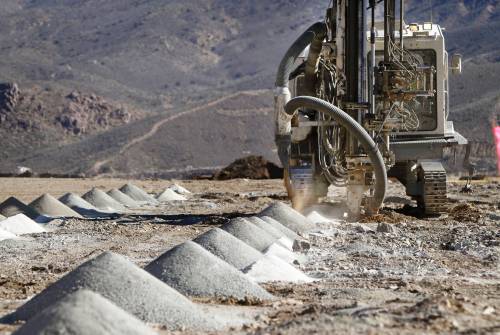
Sio Silica originally planned to extract 1.3 million tonnes annually of what it calls “high-purity silica sand” — used in clean-energy technology like solar panels and semiconductors — from a drinking-water aquifer roughly 25 kilometres southeast of Winnipeg. The sand would be removed using an airlift technique similar to the process used to clean water wells, and would leave clusters of large cavities in the buried sandstone. This process has never been applied to sand mining at a commercial scale.
Sio Silica said the mine would create between 50 and 100 jobs, contribute $1.2 billion to the Manitoba economy and help the province establish a clean-technology manufacturing industry. The company had lined up an agreement with German manufacturer RCT Solutions GmbH to supply sand for a solar panel manufacturing facility in Manitoba, projected to create another 8,000 jobs.
The German company RCT Solutions GmbH wants to build North America’s largest solar panel manufacturing operation in Manitoba using the pure quartz silica that Sio Silica hopes to produce here. 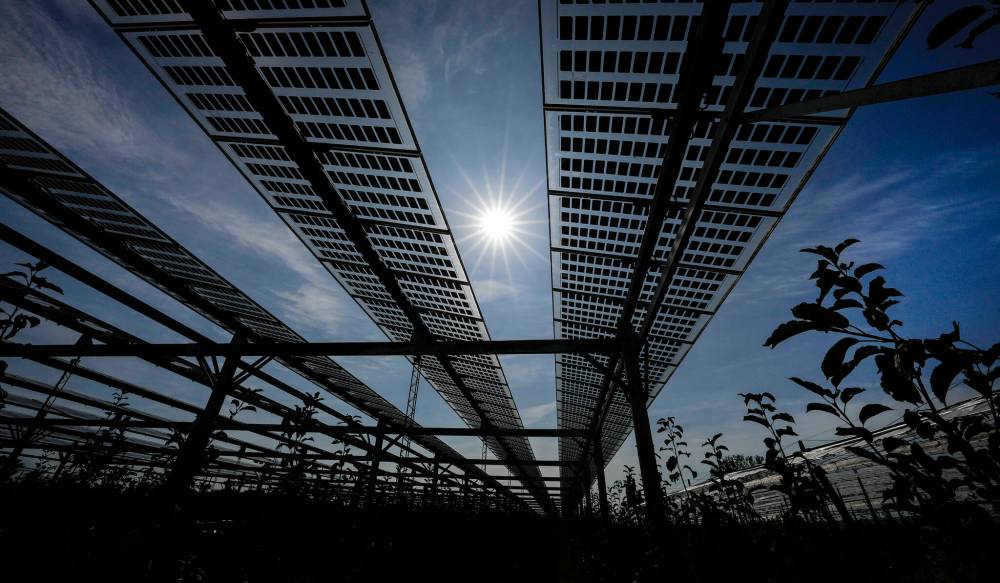
“A lot of people didn’t believe us,” Somji said of the deal in the round-table meeting with Brokenhead. “Perhaps it was too big and too good to be true.”
Brokenhead had limited involvement in Sio Silica’s first application process. Smith, who was chief at the time, asked the Impact Assessment Agency of Canada to review the project in 2020. In a letter, she expressed concern the company had not consulted the community — which is the closest First Nation to the proposed mine — and that the plan did not account for potential impacts to the Brokenhead River.
The company told the agency there was “no credible pathway for any interaction between either project and the health, social or economic conditions of Indigenous Peoples. Any conclusion to the contrary could be based only on misunderstandings.” The agency did not review the project proposal.
From the outset, Sio Silica’s mine has been mired in controversy.
Residents from Springfield, Anola and other Manitoba municipalities that draw water from the aquifer worried the process could cause permanent damage to their drinking water. They felt their concerns were not being taken seriously by the company, and that information about the mine had not been clearly and transparently explained.
After years of opposition from these residents, the province’s Clean Environment Commission assessed the project over several weeks of hearings in spring 2023. That summer, the commission concluded it was “unable to state with confidence that all potential environmental effects of this project have been fully considered and that adequate detailed plans have been prepared for preventing or mitigating these effects.”
Tensions flared throughout. Residents packed the halls for commission hearings and protested outside locked municipal council meetings where Sio Silica’s proposal was up for debate. The project was later marred by allegations the outgoing Progressive Conservative government tried to secure an environmental licence for the mine in the transition period before the NDP took office. Manitoba’s ethics commissioner is still investigating several Tories with respect to these allegations.
Related Articles
Sio Silica mining for support with new proposal













In February, Manitoba Premier Wab Kinew and Environment Minister Tracy Schmidt announced the province had decided to “(say) no to Sio” and reject the proposal.
The company responded that it was disappointed and would weigh its legal options, then went quiet.
So far, it’s not clear how Sio Silica will change its plan as it pursues a new environmental licence. The company has repeatedly said it stands behind the science of its proposal.
This time, however, the project will be pitched under a new name, Project SiMBA, “where ‘Si’ stands for silica, ‘MB’ represents Manitoba, and ‘A’ symbolizes action,” Somji said in a Dec. 23 emailed statement. The rebrand was first announced in November.
The company is also focused on better communicating the details of its extraction process.
Somji said the company has already drilled more than 70 test wells, extracted sand from about a dozen of them and monitored the environmental impacts.
“We are able to share with our stakeholders that there have been no impacts to the aquifer or surrounding groundwater, or the stability of the ground from the surface,” Somji said.
Sio Silica’s round-table meetings with Brokenhead began with a five-minute video explaining the process. The video addressed impacts to the aquifer including water quality, structural integrity of sand and limestone formations, and site reclamation, as well as listing potential uses for the sand.
Over the course of about two hours, attendees then heard remarks from Somji and were given the opportunity to ask questions.
“I think one of the mistakes we made is everyone believes this is new and novel and never been done before. … That’s not the case in this situation,” Somji said. “It isn’t a new technique, but it hasn’t been done for sand before.”
“We believe that our science is correct, we believe that what we say is going to happen will happen,” he later added.
“We believe that our science is correct, we believe that what we say is going to happen will happen.”–Sio Silica CEO Feisal Somji
Somji also noted the company was already adjusting its application to align with recommendations from the Clean Environment Commission, including scaling back the first year of its operation to extract 100,000 tonnes of sand from about 25 drill holes (down from several hundred drill holes planned in the original application) and completing a cumulative impact assessment.
“What we’re saying is we want to start slower. Everyone has said ‘we don’t like what you’re doing,’ but we’re saying give us a chance, we’ll start slower, we’ll report back and if everything is OK then we’ll start to go again,” Somji said.
Somji confirmed in the email the company will incorporate the recommendations outlined in the Clean Environment Commission report — which called for a slower approach, stronger oversight and more risk assessment — when it re-applies in 2025.
Sio Silica was criticized in its first application process for failing to meaningfully consult with Indigenous communities.
Smith said she can only recall one meeting with the company during her time as chief, which involved “mainly just listening to their project.”
“At that time we did indicate that our presence in that meeting was in no way, shape or form to be considered their duty to consult, engagement, or us being in support of anything,” she said.
MIKE DEAL / FREE PRESS FILES Brokenhead Ojibway Nation members, including former chief Deborah Smith, have been skeptical of Sio Silica’s promises and fear the project’s potential hazards have not been properly assessed.
After the project was rejected in February, Sio Silica announced in a press release that it had “entered into discussions with Broken Head (sic) Ojibway Nation for the location of advanced manufacturing facilities on their lands” and the community was going to “meaningfully participate in the development of our project through education, jobs, benefits and revenues.”
“These benefits will disappear if the project is cancelled,” the company said.
Somji told CTV in November the company would focus on “looking at ways to do proper economic reconciliation within the sort of Treaty 1 area” in preparation for a new application.
In an email, Somji said the company has held round-table discussions “to listen, build trust, and explore areas of shared interest, such as environmental stewardship, economic opportunities, and sustainable development.” None of the company’s activities will be on Brokenhead lands, Somji said.
At the round-table meeting, Somji laid out details of an economic benefit package he said the company presented to Brokenhead leadership.
Those opportunities included an equity share that would start somewhere in the range of $10-12 million annually and gradually increase with every year the mine was in production, reaching $20-24 million “within a few years,” Somji said. It would also include employment, training and certification opportunities for Brokenhead members.
Environmental monitoring committee proposed
The company also proposed an environmental monitoring committee staffed with Brokenhead members.
“We have proposed to set up a committee where that committee has full access to all of our data as it comes in line. You’ll have access to the site, can walk it whenever you choose and every month our team will provide summary reports,” Somji told members. “That committee would have the ability to say ‘stop.’”
In October 2023, Sio Silica signed a memorandum of understanding with Peguis Consultation and Special Projects to perform environmental monitoring duties. Somji told Brokenhead members “there hasn’t really been any followup” on those conversations with Peguis.
According to Kinnan Stevenson-French, environmental lead for Peguis Consultation and Special Projects, Sio Silica alerted the group it planned to reapply for a licence in the spring, but has not had further conversations with the company. Peguis still intends to monitor environmental impacts if the mine moves ahead, but will work independent of the company “to ensure proper monitoring and accurate information is being circulated to our members.”
Somji confirmed in the email the company has committed to sharing data and project updates, supporting environmental monitoring initiatives and offering employment, training and certification opportunities “that benefit local communities.” He did not comment on the specific economic benefits offered to Brokenhead, citing confidentiality.
Taylor Galvin, an environmental scientist and Brokenhead member who attended the round-table discussions, said she struggles to trust the company will follow through on any economic promises. Galvin has worked with several Indigenous communities impacted by industrial operations including hydroelectric development and mining.
“Those are just empty promises that every First Nation has heard,” she said in an interview. “I don’t put a price on our water — especially groundwater as amazing and immaculate as it is where they’re proposing this project.”
“I don’t put a price on our water — especially groundwater as amazing and immaculate as it is where they’re proposing this project.”–Environmental scientist Taylor Galvin
She worries the project could have detrimental effects on the Brokenhead River, which runs through the watershed Sio Silica plans to mine before cutting through the heart of the community and flowing into Lake Winnipeg.
“(The river) is already suffering. The biodiversity is decreasing, there’s a lot of erosion,” Galvin said. “It’s a relative. You can’t commodify something like that when all things in creation need that to survive.”
From the outset, Sio Silica’s appeal to Brokenhead “caused a great divide in our community,” Galvin said.
The company first approached community members in July, when the band invited members to a “major project meeting” and fish fry. Details of the project were not provided.
“They advertised it in a very discreet way,” Galvin said.
Round-table discussions “on the economic opportunity with SIMBA-Sio Silica” were advertised by the First Nation a few months later. Galvin said that left youth out of the conversation, as well as elders without email.
“This project is a 25-year proposal, that’s equivalent to one generation and we look toward seven generations,” she said. “We know our voices are stronger as one.”
JOHN WOODS / FREE PRESS FILES Sio Silica CEO Feisal Somji has been courting the support of Brokenhead Ojibway Nation in hopes of relaunching a rebranded mining project in southeastern Manitoba.
Alongside Somji, Sio Silica was represented by Carla Devlin, current mayor of nearby East St. Paul, who was named a vice-president of the company in the summer. Brokenhead owns parcels of land in the RM of East St. Paul and members have expressed concern Devlin’s position with the company could pose a conflict of interest. Somji said the company has no land claims or applications before East St. Paul council.
During the meeting, Somji and Devlin stressed the round tables were the beginning of ongoing discussions.
“We’re trying to move forward speaking to as many people in the community as we can,” Devlin said.
But Smith and Galvin are concerned members are only being offered one-sided information.
“We are at a disadvantage,” Smith said. “We don’t have access to our own capacity, to our own technicians, our own experts — those are things that are very expensive.
“It’s well known that we are always faced with economic challenges in our communities and it’s almost like the company sees our vulnerability and preys on it.”
“Council will continue to work together and ensure factual information will be shared with our membership about resource development projects being proposed in our territory.”–Brokenhead leadership
Brokenhead leadership did not respond to a request for comment by publication time. In a statement to members in late November, chief and council noted “community involvement in these discussions is crucial.”
“Many members have expressed interest in the benefits of various development proposals, while others are raising concerns,” the statement said. “Council will continue to work together and ensure factual information will be shared with our membership about resource development projects being proposed in our territory.
“We are working with the Province to ensure that there is partnerships and direct benefits for Brokenhead Ojibway Nation in past, present, and future resource development. This is the first step towards true economic reconciliation.”
In an effort to balance the information members are being provided, Galvin and Smith organized a community-led information session in late November, which included presentations from members of grassroots organizations that have opposed silica mining projects across the province. They plan to host more events with environmental non-profits and other groups in the future to help make the science of Sio Silica’s proposal more accessible to members.
“I think there’s a mix of people that see the economic benefits and people that see the environmental impacts, and then I think there’s a lot of people that … don’t really know what’s going on,” Smith said of the community’s response to the proposal.
“For us, it’s just making sure that everybody has an opportunity to understand both sides of the issue.”
julia-simone.rutgers@freepress.mb.ca

Julia-Simone Rutgers is the Manitoba environment reporter for the Free Press and The Narwhal. She joined the Free Press in 2020, after completing a journalism degree at the University of King’s College in Halifax, and took on the environment beat in 2022. Read more about Julia-Simone.
Julia-Simone’s role is part of a partnership with The Narwhal, funded by the Winnipeg Foundation. Every piece of reporting Julia-Simone produces is reviewed by an editing team before it is posted online or published in print — part of the Free Press‘s tradition, since 1872, of producing reliable independent journalism. Read more about Free Press’s history and mandate, and learn how our newsroom operates.
Our newsroom depends on a growing audience of readers to power our journalism. If you are not a paid reader, please consider becoming a subscriber.
Our newsroom depends on its audience of readers to power our journalism. Thank you for your support.