

Stand-alone U of M engineering-education department first of its kind in Canada

Advertisement
Read this article for free:
or
Already have an account? Log in here »
To continue reading, please subscribe:

Digital Subscription
One year of digital access for only $205*
- Enjoy unlimited reading on winnipegfreepress.com
- Read the E-Edition, our digital replica newspaper
- Access News Break, our award-winning app
- Play interactive puzzles
*First annual payment billed as $205.00 + GST for one year. This annual subscription will automatically renew at $233.00 + GST every 52 weeks (10% off the regular annual price of $259.35). Offer available to new and qualified returning subscribers only. Cancel any time.
To continue reading, please subscribe:
Add Free Press access to your Brandon Sun subscription for only an additional
$1 for the first 4 weeks*
- Enjoy unlimited reading on winnipegfreepress.com
- Read the E-Edition, our digital replica newspaper
- Access News Break, our award-winning app
- Play interactive puzzles
*Your next Brandon Sun subscription payment will increase by $1.00 and you will be charged $17.95 plus GST for four weeks. After four weeks, your payment will increase to $24.95 plus GST every four weeks.
Read unlimited articles for free today:
or
Already have an account? Log in here »
Hey there, time traveller!
This article was published 01/01/2025 (626 days ago), so information in it may no longer be current.
The University of Manitoba is now home to the first stand-alone department of “engineering education” — an up-and-coming discipline in academia — in Canada.
A decade after it was established, U of M’s Centre for Engineering Professional Practice and Engineering Education is winding down operations and being transformed into an academic department.
The centre has supported curriculum delivery and research on how engineers in training are taught to better prepare them for all areas of the workforce since 2014.
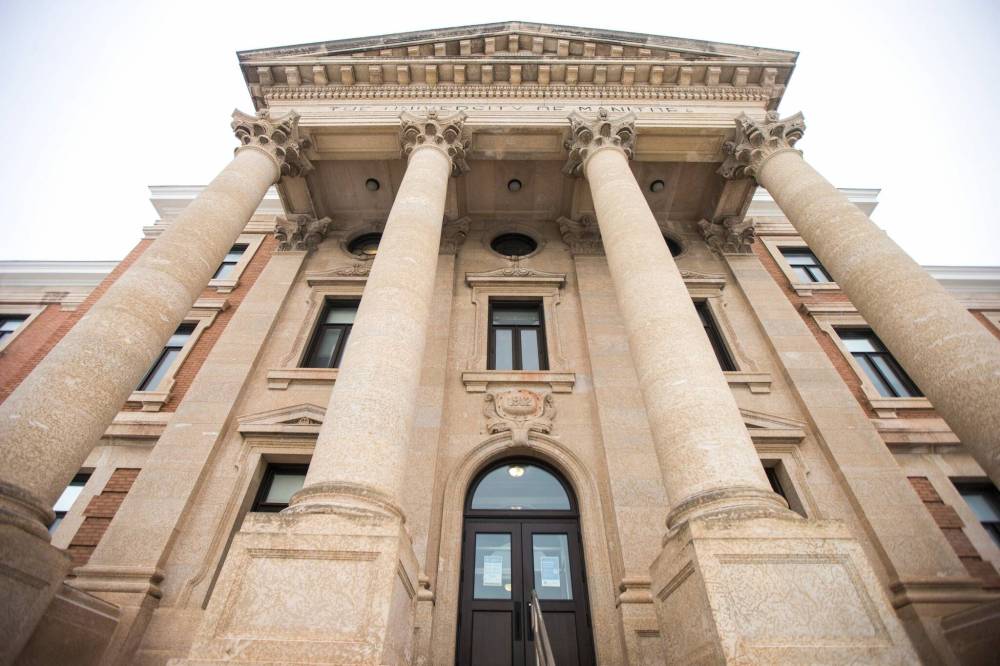
The University of Manitoba administration building. An overhaul of U of M’s faculty of engineering is slated to be complete by the spring. (Mikaela MacKenzie / Free Press files)
Its scholars of “engineering education” have studied the profession’s culture, its role in truth and reconciliation and newcomer integration into the workforce.
An overhaul inside Manitoba’s only dedicated faculty of engineering — what its dean calls a “natural evolution” of the centre — is slated to be complete by the spring.
Engineer-academic Marcia Friesen noted Manitoba is an outlier in that it has a single engineering school; its next-door neighbour to the west has two options offered at the University of Saskatchewan and University of Regina.
“We can’t be niche. We can’t say, ‘We’re only going to focus on this discipline’ or, ‘We’re only going to be research-intensive.’ We have to be everything for everybody in the province. That’s both a responsibility and a privilege,” said Friesen, dean of the Price Faculty of Engineering.
U of M’s unique position forces it to be nimble, she said, adding her faculty’s flexible nature has allowed the post-secondary institute to become a national leader in the emerging discipline that is “engineering education.”
Backed by support from 70 per cent of her faculty council, Friesen tabled a proposal at the start of the school year to set up a new department dedicated to it.
The academic administrator cited “engineering education” as an interdisciplinary area that “warrants visibility and credibility” in a request penned to university secretary Jeff Leclerc on Sept. 12.
“Over 20 years, the momentum established internationally has solidified engineering education as a discipline with its unique and defined body of knowledge, questions of inquiry, standards of evidence, and a community of practice,” she wrote in a letter.
Both the university’s senate and board of governors approved the pitch in late 2024.
The new department will take on many of its predecessor’s projects and begin delivering required core courses across accredited undergraduate programs in five types of engineering — civil, mechanical, computer, electrical and biosystems — over the winter term.
Professors will support the introductory year for all bachelor’s degree candidates, but there are no plans to establish another undergraduate degree. Instead, its instructors, engineers-in-residence and staff members will launch micro credentials and develop graduate programs.
The $1.8 million in baseline operating funds for the centre, which is currently being phased out, are being transferred to run the department.
Friesen stressed that the latest addition to her faculty will not take anything away from its “strong core disciplines” and related skills that industry partners expect.
At the same time, there will be opportunities to further collaborate with the kindergarten-to-Grade 12 sector — in which STEAM (science, technology, engineering, arts and mathematics) is a buzzword — to develop age-appropriate exposure to engineering, she said.

“You don’t go to your engineer once a year the way you go to your dentist,” the dean added.
“(We need to) find natural ways to expose students to the uniqueness of engineering as distinct from math or science.”
She noted that deans across Canada — who have long been watching colleagues south of the border dabble in the emerging discipline — were excited about the initiative when she briefed them on it at a recent stakeholder meeting.
Virginia Tech and Purdue University have both made names for themselves as global leaders in “engineering education” studies.
maggie.macintosh@freepress.mb.ca
Maggie Macintosh
Education reporter
Maggie Macintosh reports on education for the Free Press. Originally from Hamilton, Ont., she first reported for the Free Press in 2017. Read more about Maggie.
Funding for the Free Press education reporter comes from the Government of Canada through the Local Journalism Initiative.
Every piece of reporting Maggie produces is reviewed by an editing team before it is posted online or published in print — part of the Free Press‘s tradition, since 1872, of producing reliable independent journalism. Read more about Free Press’s history and mandate, and learn how our newsroom operates.
Our newsroom depends on a growing audience of readers to power our journalism. If you are not a paid reader, please consider becoming a subscriber.
Our newsroom depends on its audience of readers to power our journalism. Thank you for your support.
Maggie Macintosh
Education reporter
Maggie Macintosh reports on education for the Free Press. Originally from Hamilton, Ont., she first reported for the Free Press in 2017. Read more about Maggie.
Funding for the Free Press education reporter comes from the Government of Canada through the Local Journalism Initiative.
Every piece of reporting Maggie produces is reviewed by an editing team before it is posted online or published in print — part of the Free Press‘s tradition, since 1872, of producing reliable independent journalism. Read more about Free Press’s history and mandate, and learn how our newsroom operates.
Our newsroom depends on a growing audience of readers to power our journalism. If you are not a paid reader, please consider becoming a subscriber.
Our newsroom depends on its audience of readers to power our journalism. Thank you for your support.
Advertisement Advertise With Us
Advertisement Advertise With Us