Protected Seal River conservation area moves closer to reality
Read this article for free:
or
Already have an account? Log in here »
To continue reading, please subscribe:

Digital Subscription
One year of digital access for only $205*
- Enjoy unlimited reading on winnipegfreepress.com
- Read the E-Edition, our digital replica newspaper
- Access News Break, our award-winning app
- Play interactive puzzles
*First annual payment billed as $205.00 + GST for one year. This annual subscription will automatically renew at $233.00 + GST every 52 weeks (10% off the regular annual price of $259.35). Offer available to new and qualified returning subscribers only. Cancel any time.
To continue reading, please subscribe:
Add Free Press access to your Brandon Sun subscription for only an additional
$1 for the first 4 weeks*
- Enjoy unlimited reading on winnipegfreepress.com
- Read the E-Edition, our digital replica newspaper
- Access News Break, our award-winning app
- Play interactive puzzles
*Your next Brandon Sun subscription payment will increase by $1.00 and you will be charged $17.95 plus GST for four weeks. After four weeks, your payment will increase to $24.95 plus GST every four weeks.
Read unlimited articles for free today:
or
Already have an account? Log in here »
Hey there, time traveller!
This article was published 05/03/2025 (561 days ago), so information in it may no longer be current.
Federal, provincial and Indigenous leaders will pursue formal designation for Canada’s largest Indigenous-led protected area after a year-long assessment found conserving northern Manitoba’s Seal River watershed is achievable, publicly popular and a step toward meeting conservation and reconciliation goals.
The Seal River Watershed Alliance, made up of members from the Sayisi Dene First Nation, Northlands Denesuline First Nation, Barren Lands First Nation and O-Pipon-Na-Piwin Cree Nation, signed a memorandum of understanding with the Manitoba government and Parks Canada in January 2024. That document formalized an agreement to evaluate the environmental, socio-economic and cultural impacts of protecting the region from industrial development.
The resulting feasibility study, released Wednesday, recommends the governments start negotiations to develop a protected area in the pristine, 50,000-square-kilometre watershed.
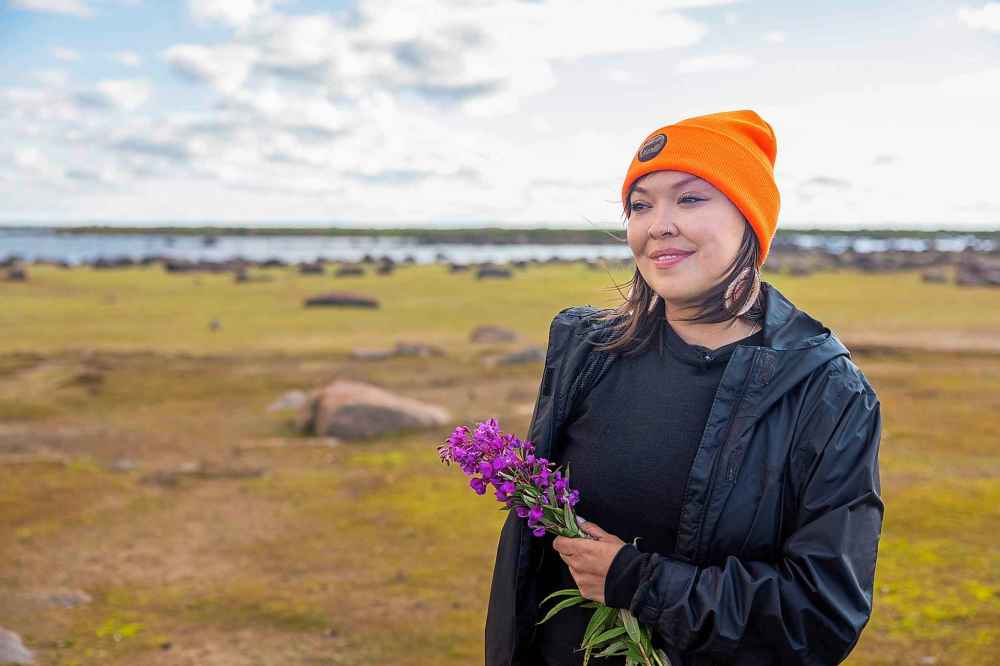
“This will be the starting point for that big change that we see happening in our communities,” Stephanie Thorassie, executive director of the Seal River Watershed Alliance, said in an interview. “To make big changes, we need to make sure that we have sustainable access to lands and waters that are healthy.”
The sprawling Seal River watershed, centred around what Thorassie called “the last truly wild river in Manitoba,” is more than 99 per cent intact, with no permanent roads, mines or hydroelectric developments. It’s home to scores of caribou — the heart of Cree and Dene cultural identity — as well as seals, beluga whales, wolves, moose, wolverines and several species of fish and migratory birds.
Parts of the watershed are already protected through three provincial parks and an ecological reserve; protecting the remainder would add an area about the size of Nova Scotia to Canada’s network of protected areas, nudging the country towards its goal to protect 30 per cent of lands and waters by 2030.
“It is a significant amount of pristine nature,” Manitoba Environment and Climate Change Minister Mike Moyes said in an interview. “We’re really excited about the Seal River watershed and the opportunity it presents. We always want to try to conserve more land so Manitobans can enjoy our beautiful province for generations to come.”
How the protected area will look is still up for discussion.
The report recommends exploring “all potential land designations” that would support the Indigenous Protected and Conserved Area (IPCA), including national and provincial park reserves.
“Something to remember about IPCAs is it’s not a cut-and-paste approach,” Thorassie said.
“What makes them so beautiful is it’s really dependent on the area. What it might look like in another province is not necessarily what this one is going to look like. That’s why having the voices of stakeholders, rightsholders, Canadians and Manitobans … is so important for the next phase of the project.”
Moyes said the province has a variety of conservation tools at its disposal, including parks, ecological reserves and provincially significant peatlands.
“To make big changes, we need to make sure that we have sustainable access to lands and waters that are healthy.”–Stephanie Thorassie
“As with any protected area, we’re always going to consult with Manitobans, we’re always going to ensure that we are listening and hearing all the different communities that could be impacted,” he added.
As part of the study, the alliance researched carbon storage, bird populations, eco-tourism potential and ecological benefits to better understand the impact of conserving the watershed. This research balanced scientific studies with the First Nations’ traditional knowledge of their ancestral lands, something Thorassie said has often been left out of conservation projects.
“We’re often seen as an amendment at the back of the report, and this being Indigenous-led … it was really important that we highlighted our knowledge right off the hop,” she said.
The Seal River Watershed Alliance and Parks Canada also held consultations with the hunting, tourism and mining sectors, and community members in each of the four nations, as well as in Churchill, Thompson and Winnipeg.
A survey taken during in-person community meetings found more than 70 per cent of Seal River members and more than 85 per cent of urban residents support protecting all or part of the region with a national park, according to the study, while an online survey conducted by Parks Canada last summer found “significant public support” for establishing a protected area.
A geological assessment found “medium to high mineral potential” in parts of the watershed, though the report notes the communities “have asserted strong opposition to mining in the watershed,” as mining and hydroelectric developments have caused “devastating impacts on lands and waters in other Indigenous territories.”
Economic opportunities for the region could instead include a continuation of the land guardian program — which has already created 13 environmental monitoring jobs for Seal River community members — and a variety of tourism programs, the assessment said.
Some of the consulted groups expressed concern that a protected area could be bad for business, notably lodge operators and outfitters that worry it could mean new restrictions on hunting and fishing in the region.
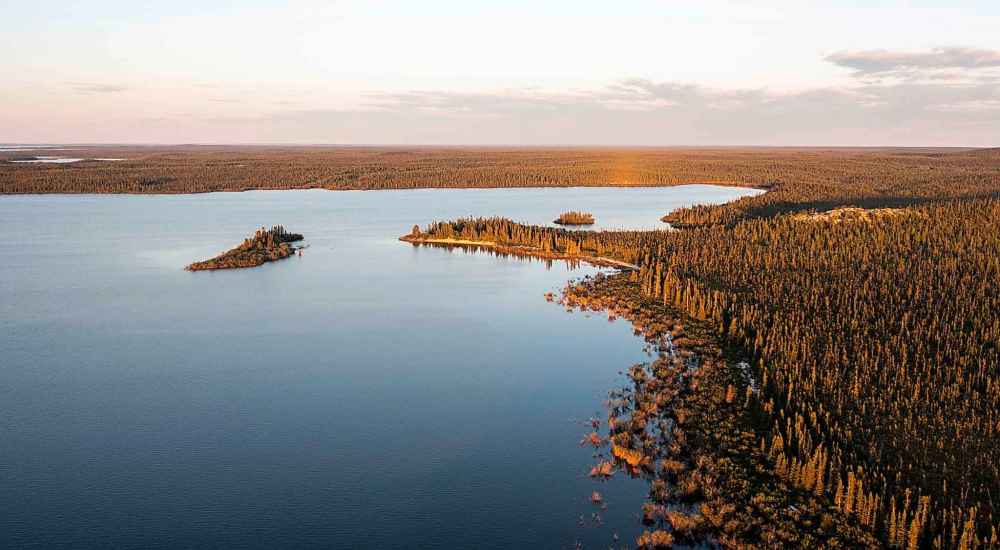

Thorassie said the alliance is taking these concerns seriously. Tourism is already the largest economic driver in the region, with five commercial lodges in the watershed generating approximately $11 million in revenue, per the study, while a further dozen nearby outfitters provide hunting, angling and ecotourism opportunities.
“We want to invite people to come visit — maybe we want them to come catch a 30-pound lake trout with some of our guides,” Thorassie said. “It’s a magical place to visit.… We’re really excited to showcase what we have in our own backyard.”
Ultimately, the rules, restrictions and opportunities created as part of the new protected area will be developed in further collaboration, with input from Manitobans and Canadians in all interested sectors, Thorassie said.
“We know that we don’t exist in siloes, we know that we’re not alone,” Thorassie said. ”We might be really isolated in the north, but as we see everywhere in the world with climate change, everything is changing, boundaries are moving … and we really believe that working together is the only way that we’re going to be successful.”
julia-simone.rutgers@freepress.mb.ca

Julia-Simone Rutgers is an investigative reporter who joined the Free Press in 2020. Read more about Julia-Simone.
Every piece of reporting Julia-Simone produces is reviewed by an editing team before it is posted online or published in print — part of the Free Press‘s tradition, since 1872, of producing reliable independent journalism. Read more about Free Press’s history and mandate, and learn how our newsroom operates.
Our newsroom depends on a growing audience of readers to power our journalism. If you are not a paid reader, please consider becoming a subscriber.
Our newsroom depends on its audience of readers to power our journalism. Thank you for your support.
Related Articles
Uncertain forecast on climate action