

Credit union says it’s not to blame for client defrauded out of $650K

Advertisement
Read this article for free:
or
Already have an account? Log in here »
To continue reading, please subscribe:
Monthly Digital Subscription
$1 per week for 24 weeks*
- Enjoy unlimited reading on winnipegfreepress.com
- Read the E-Edition, our digital replica newspaper
- Access News Break, our award-winning app
- Play interactive puzzles
*Billed as $4.00 plus GST every four weeks. After 24 weeks, price increases to the regular rate of $19.95 plus GST every four weeks. Offer available to new and qualified returning subscribers only. Cancel any time.
Monthly Digital Subscription
$4.99/week*
- Enjoy unlimited reading on winnipegfreepress.com
- Read the E-Edition, our digital replica newspaper
- Access News Break, our award-winning app
- Play interactive puzzles
*Billed as $19.95 plus GST every four weeks. Cancel any time.
To continue reading, please subscribe:
Add Free Press access to your Brandon Sun subscription for only an additional
$1 for the first 4 weeks*
*Your next subscription payment will increase by $1.00 and you will be charged $16.99 plus GST for four weeks. After four weeks, your payment will increase to $23.99 plus GST every four weeks.
Read unlimited articles for free today:
or
Already have an account? Log in here »
Hey there, time traveller!
This article was published 06/03/2025 (385 days ago), so information in it may no longer be current.
Access Credit Union’s staff did all they could — and were obligated to do — to prevent a Winnipeg man from transferring his retirement savings to a fraudster, the financial institution argues in court filings.
Lawyers Andrew McDonald and Marc Lemieux filed a lawsuit on behalf of Peter Squire, who retired following a career with the local real estate board, in the Court of King’s Bench in September.
The statement of claim names Access Credit Union and the Royal Bank of Canada as defendants.
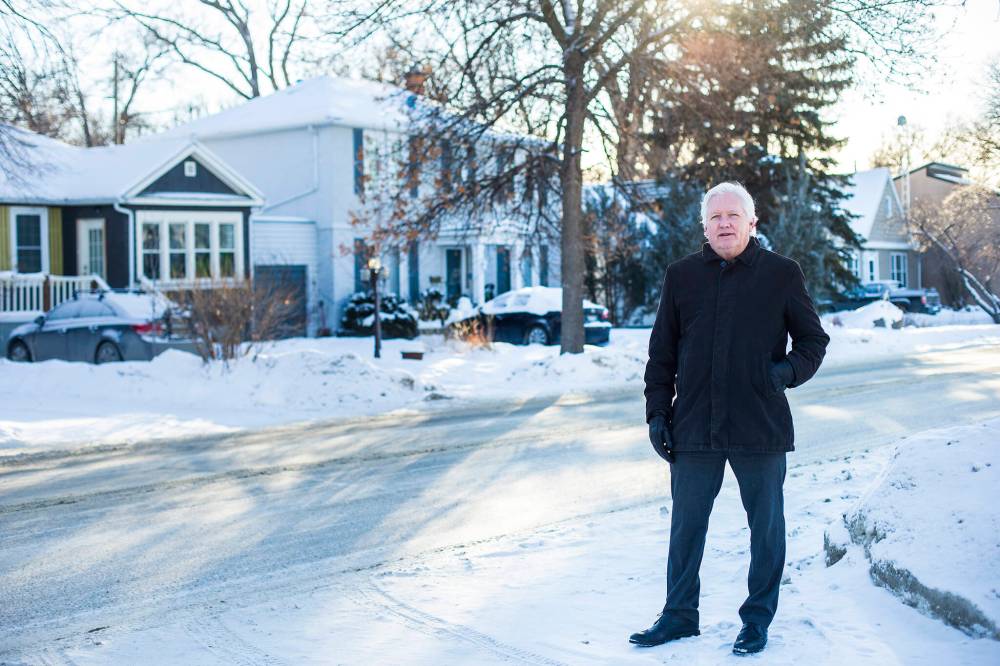
MIKAELA MACKENZIE / FREE PRESS files
Peter Squire retired following a career with the local real estate board.
Squire opened an account for his retirement with Crosstown Civic Credit Union in 2012, before Access acquired that institution in 2021 and became its legal successor.
Squire, in his late 60s, was scammed out of around $650,000 from the Access account in the fall of 2022 by a phone fraudster, who claimed to be with the Bank of Montreal, and encouraged him to invest in government bonds, the court filing said.
Access’s lawyers, Kevin Williams and Matthew Nordlund, argue in a January statement of defence that the credit union questioned the legitimacy of the two wire transfers Squire made and even offered a lower-risk option, before he signed agreements indicating there was no guarantee any cash could be returned.
The credit union asked the court in its filing to turf the lawsuit against it, with costs.
The fraudster directed Squire to transfer the funds to an RBC account in Toronto in two lump sums, where it was siphoned off to a Citibank account in Hong Kong and disappeared.
RBC has yet to file a statement of defence and Access Credit Union has filed a cross-claim against the Toronto-headquartered bank. The cross-claim seeks compensation from RBC for any damages the credit union may be found liable for, as well as court costs.
Squire requested the first wire transfer, of $175,000, on Nov. 9, 2022.
“Prior to processing the first wire transfer, (Access) inquired as to the nature and legitimacy of the first wire transfer,” reads the defence filing.
“The plaintiff assured (Access) that the proposed transfer was legitimate… notwithstanding the plaintiff’s assurances, (Access) offered the plaintiff a bank draft as a lower-risk alternative.”
Squire did not take up the bank draft offer, the credit union says, and then inked a sender agreement that confirmed he fully disclosed any suspicious circumstances and that any loss would be to his account.
He returned days later, on Nov. 14, 2022, and asked for a second wire transfer for $473,290.08, which the credit union again questioned and again offered up a bank draft, before he signed another agreement on the same terms.
The transfers were processed by about Nov. 16, 2022 and sent to the RBC account, before Squire came back to the credit union on Nov. 22 to ask Access to try to recall them.
“(Access) immediately took steps to recall the first and second wire transfers but were unable to do so successfully,” the defence filing said.

The credit union denies any negligence or breach of contract and said it exercised reasonable care, performed its obligations under its contract with Squire consistent with best practices and industry standards.
The credit union argues Squire’s alleged losses came from his own negligence and failures.
Squire’s lawsuit said he went to a Winnipeg RBC branch a few days after the second transfer with new scam instructions for a third transfer, but the teller there immediately got suspicious he was being scammed.
RBC later closed the fraudster’s account, his court filing said, but Squire did not recover the funds.
erik.pindera@freepress.mb.ca
Erik Pindera is a reporter for the Free Press, mostly focusing on crime and justice. The born-and-bred Winnipegger attended Red River College Polytechnic, wrote for the community newspaper in Kenora, Ont. and reported on television and radio in Winnipeg before joining the Free Press in 2020. Read more about Erik.
Every piece of reporting Erik produces is reviewed by an editing team before it is posted online or published in print — part of the Free Press‘s tradition, since 1872, of producing reliable independent journalism. Read more about Free Press’s history and mandate, and learn how our newsroom operates.
Our newsroom depends on a growing audience of readers to power our journalism. If you are not a paid reader, please consider becoming a subscriber.
Our newsroom depends on its audience of readers to power our journalism. Thank you for your support.
Erik Pindera is a reporter for the Free Press, mostly focusing on crime and justice. The born-and-bred Winnipegger attended Red River College Polytechnic, wrote for the community newspaper in Kenora, Ont. and reported on television and radio in Winnipeg before joining the Free Press in 2020. Read more about Erik.
Every piece of reporting Erik produces is reviewed by an editing team before it is posted online or published in print — part of the Free Press‘s tradition, since 1872, of producing reliable independent journalism. Read more about Free Press’s history and mandate, and learn how our newsroom operates.
Our newsroom depends on a growing audience of readers to power our journalism. If you are not a paid reader, please consider becoming a subscriber.
Our newsroom depends on its audience of readers to power our journalism. Thank you for your support.
Advertisement Advertise With Us
Advertisement Advertise With Us