Harsh spotlight on Manitoba’s use of solitary confinement Allegations of widespread practice in our correctional facilities the subject of a class-action lawsuit slated for November
Read this article for free:
or
Already have an account? Log in here »
To continue reading, please subscribe:

Digital Subscription
One year of digital access for only $205*
- Enjoy unlimited reading on winnipegfreepress.com
- Read the E-Edition, our digital replica newspaper
- Access News Break, our award-winning app
- Play interactive puzzles
*First annual payment billed as $205.00 + GST for one year. This annual subscription will automatically renew at $233.00 + GST every 52 weeks (10% off the regular annual price of $259.35). Offer available to new and qualified returning subscribers only. Cancel any time.
To continue reading, please subscribe:
Add Free Press access to your Brandon Sun subscription for only an additional
$1 for the first 4 weeks*
- Enjoy unlimited reading on winnipegfreepress.com
- Read the E-Edition, our digital replica newspaper
- Access News Break, our award-winning app
- Play interactive puzzles
*Your next Brandon Sun subscription payment will increase by $1.00 and you will be charged $17.95 plus GST for four weeks. After four weeks, your payment will increase to $24.95 plus GST every four weeks.
Read unlimited articles for free today:
or
Already have an account? Log in here »
Hey there, time traveller!
This article was published 31/07/2025 (424 days ago), so information in it may no longer be current.
At age 41, Gene Malcolm doesn’t take freedom for granted — not after spending more than four years collectively in solitary confinement.
Beginning when he was 14 at the Manitoba Youth Centre and continuing over the next 23 years at various provincial correctional facilities, Malcolm has tallied a total of 1,600 days in segregation. The longest stretch lasted 159 consecutive days.
Today, he says he sometimes opens and closes his home’s front door just to remind himself what it’s like to be free.
SUPPLIED
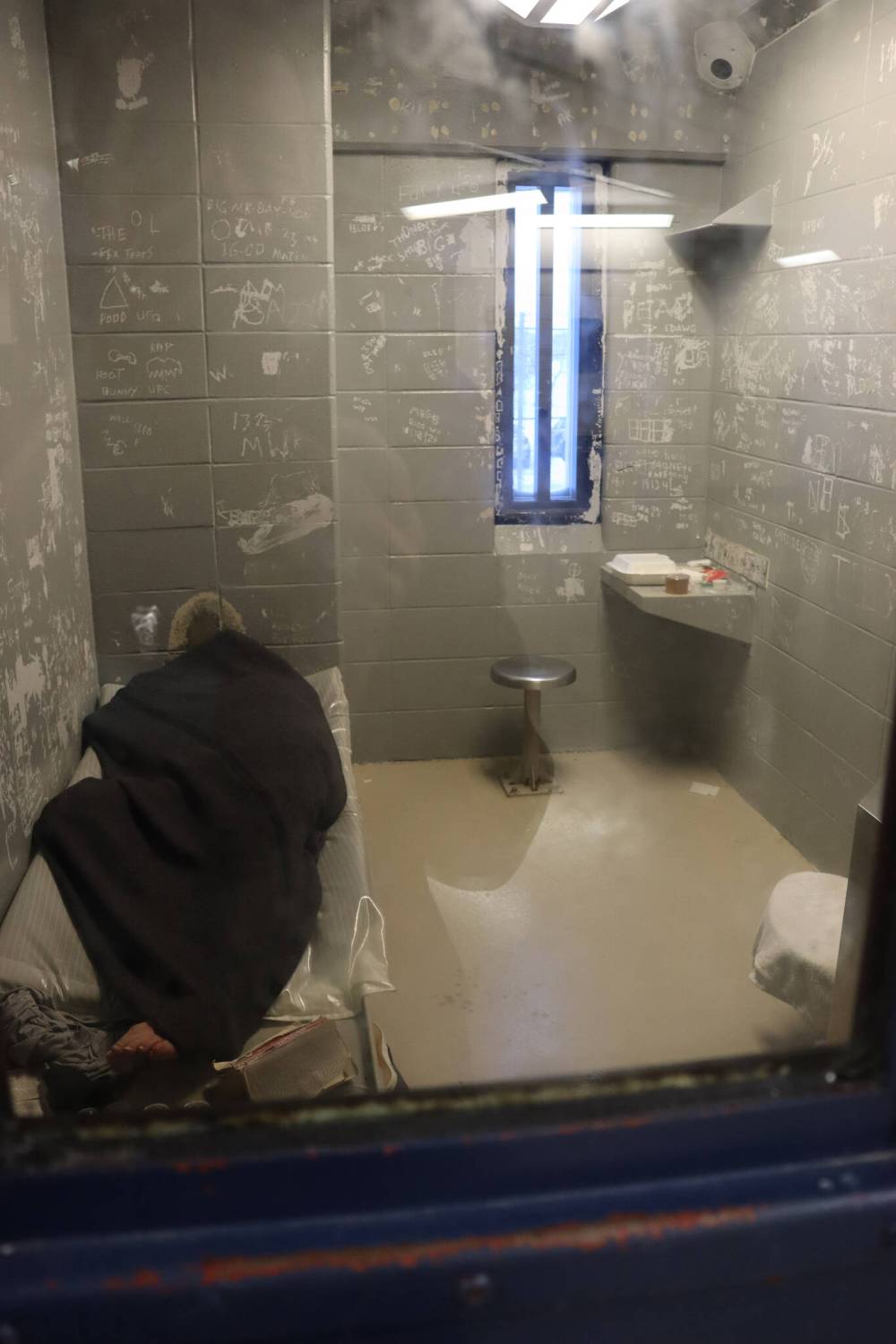
A segregation cell at Headingley Correctional Centre. Expert reports for a class-action lawsuit describe Manitoba’s solitary-confinement policies as ‘dehumanizing, degrading and dangerous.’
Widespread use of solitary confinement in Manitoba correctional facilities is the subject of a class-action lawsuit that is scheduled to go to trial in November.
The class action covers anyone who developed mental illness while in segregation, experienced segregation as a youth or had stints lasting longer than 15 days in segregation between Sept. 12, 2012 and May 4, 2022, according to lawyer James Sayce of the Toronto-based firm Koskie Minsky LLP.
“Children and the seriously mentally ill should not be held in solitary confinement,” Sayce said. “This class action seeks to end the brutal, unnecessary and expensive segregation practices taking place in Manitoba jails.”
A provincial spokesperson said the government couldn’t comment on its segregation policy due to the ongoing lawsuit before the courts.
An expert’s report that was filed earlier this year on behalf of the plaintiffs illustrates how ingrained its usage is, describing provincial policies and jailhouse conditions as “dehumanizing, degrading and dangerous.”
It’s an experience Malcolm knows all too well.
“I got treated like an animal a lot of times, so I guess I acted like an animal,” he told the Free Press.
“I got treated like an animal a lot of times, so I guess I acted like an animal.”
Malcolm grew up in the North End and was involved in dealing drugs, stealing cars and gang culture at a young age.
His first solitary stint occurred in his early teens shortly after he was caught stealing a vehicle. When he arrived at the Manitoba Youth Centre with a gang insignia cut into his hair, he was given two choices: shave his head or sit in a cell alone until his hair grew out.
Malcolm opted for the latter, triggering a six-week stay in solitary confinement.
It was only the beginning.
He racked up assault and gang-related offences between 1998 and 2021, cycling through provincial correctional facilities — Winnipeg Remand Centre, Brandon Correctional Centre, Headingley Correctional Centre and Milner Ridge Correctional Centre — and spending time in segregation every step of the way.
SUPPLIED
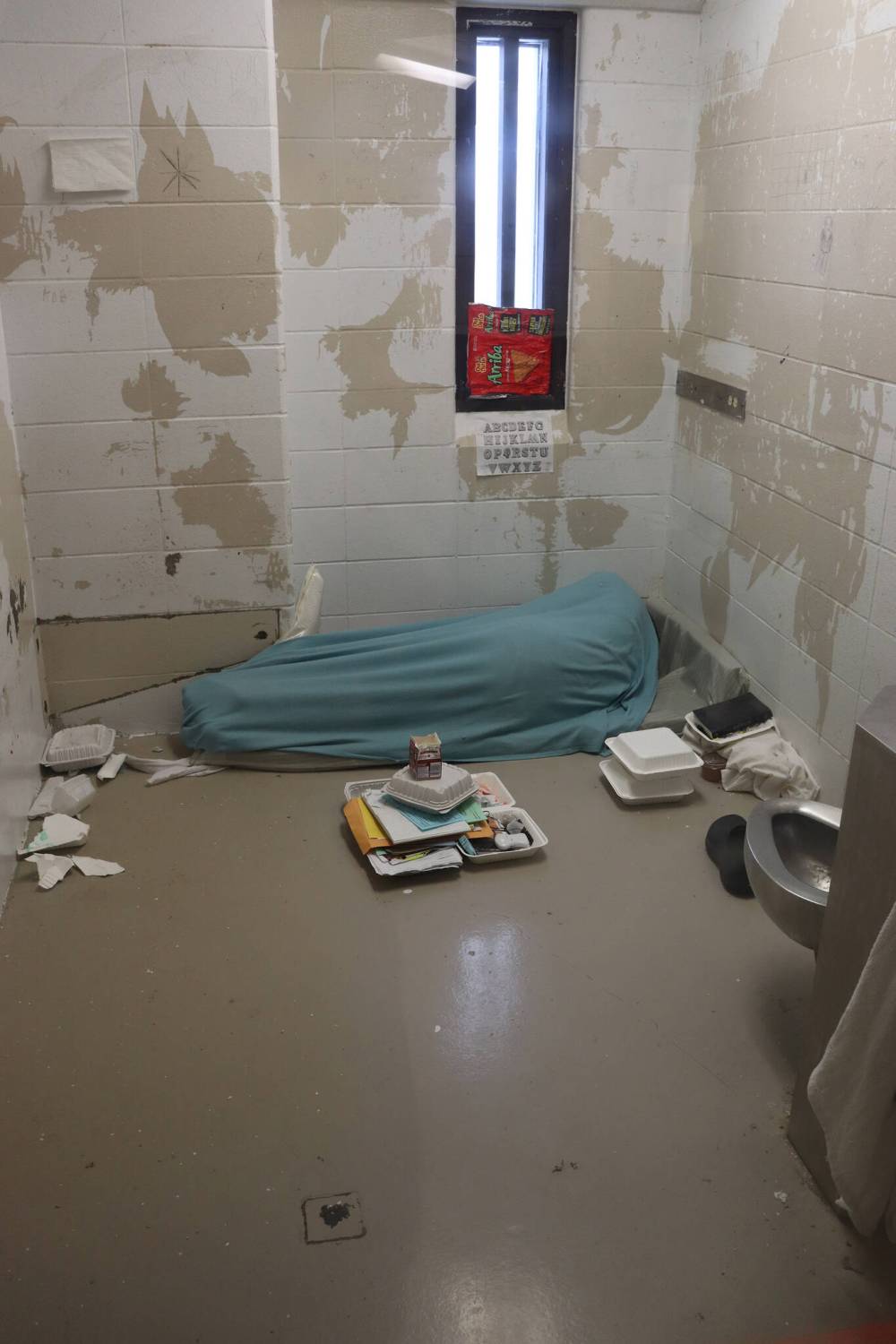
A segregation cell in Headingley’s Correctional Centre’s Foxtrot Unit.
He vividly remembers the Remand Centre — bare cement walls, a thin mattress and a toilet. Guards would remove the mattress and handcuff prisoners if they were deemed to be misbehaving, he said.
Access to fresh air was a rarity, sometimes taking weeks because the centre was so overcrowded, Malcolm said.
“That’s traumatizing too because all you’re trying to do is get a court date,” Malcolm said. “You have all these obstacles in between. These people (corrections officers) are messing with your food. They’re messing with your livelihood. They’re messing with your life.”
Because of the repeated periods locked away in the “hole,” Malcolm started hallucinating and was diagnosed with bipolar disorder, schizophrenia and depression.
He was placed on 27 different medications. The angrier or more aggressive he would get, the more he was prescribed.
Dr. Craig Haney, the plaintiffs’ expert and a psychology professor at the University of California-Santa Cruz, toured Headingley, the Remand Centre, the Women’s Correctional Centre and Manitoba Youth Centre last December.
The segregation units were operating under “draconian conditions,” said Haney, who has previously toured prisons in Cuba, Mexico, Russia and throughout the United States.
“The conditions of confinement I encountered were stark and depriving — ranging from very bad to outright egregious — and the segregation practices the prisoners described being exposed to were truly severe and isolating,” Haney wrote in his report.
“Tthe segregation practices the prisoners described being exposed to were truly severe and isolating.”
The cells he viewed were cramped, barren and in varying levels of filth and deterioration. Inmates had few possessions; guards would spend seconds checking on their well-being, he said in his report, adding access to fresh air was limited, in some cases, due to snow piled on ventilation grates.
Haney said the provincial policy allowing segregated inmates 30 minutes daily outside their cells is among the most severe standards he’s seen. Many facilities he previously toured usually allowed for at least one hour per day outside the cell.
“In terms of harshness and the risk of harm to which they subject prisoners, (Manitoba facilities) rivalled anything I have observed in some of the worst solitary confinement units in the United States,” Haney wrote.
SUPPLIED
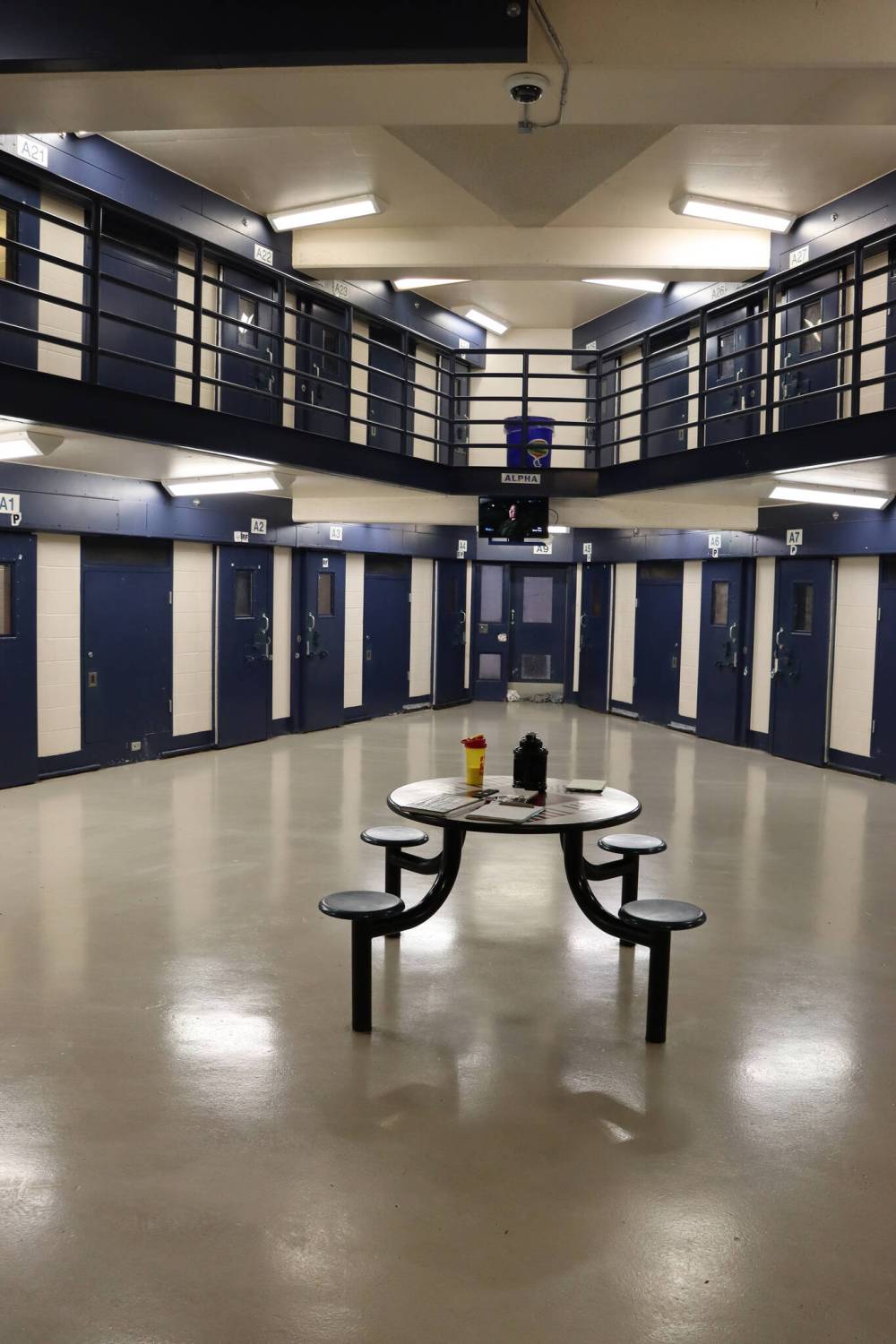
The primary 16-cell segregation unit in Headingley Correctional Centre’s Alpha Unit.
In 2019, the federal government banned the use of segregation as a punishment following multiple lawsuits filed over the practice. Now, isolated federal inmates must be granted four hours a day outside their cells, including two hours of “meaningful human contact.”
The United Nations Standard Minimum Rules for the Treatment of Prisons, colloquially referred to as the Nelson Mandela Rules, have called solitary confinement exceeding 15 consecutive days a form of psychological torture and argue it should be avoided for youth and people with mental illnesses.
As part of his research, Haney interviewed several juveniles at the Manitoba Youth Centre who reported spending months in segregation.
“The very fact that juveniles are being placed in these conditions, and kept there for lengthy periods, including some who appear to have mental-health histories dating to childhood, is simply shocking,” Haney said in his report.
Manitoba’s Correctional Services Act mirrors the UN’s limit of 15 days for disciplinary segregation, but has no cap for preventative segregation.
The latter is used when the safety of either the inmate or other inmates is at risk, for medical supervision or if an inmate shows signs of self-harm.
Despite the provincial legislation, individual facilities have imposed stretches of segregation up to 60 consecutive days, according to documents viewed by Haney.
University of Ottawa criminologist Justin Piché called Haney’s findings damning.
“If I were in the premier’s shoes and the minister of justice’s, I would take what he has to say extremely seriously,” Piché said in an interview. “This is a researcher that has studied this issue quite seriously in various jurisdictions over a long period of time.”
The B.C. government faced a similar class-action lawsuit.
Filed in 2018, the lawsuit alleged the province neglected prisoners and breached the Canadian Charter of Rights and Freedoms by enforcing extended periods of segregation.
A proposed settlement of up to $60 million was reached last month.
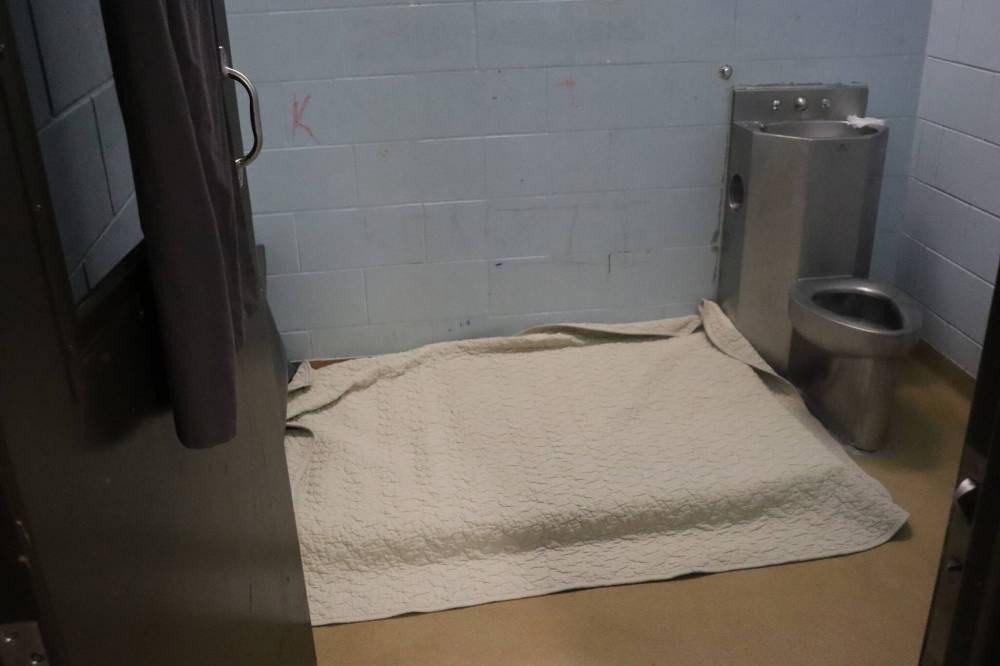
SUPPLIED
A segregation cell at the Manitoba Youth Centre.
Solitary confinement is often described as a prison inside a prison because the deprivation and isolation are more magnified, Piché said. If people didn’t previously have mental-health issues, it’s likely they will if their time in segregation exceeds the UN’s standards, he said.
“If we’re expecting people to be coming out of solitary confinement as better versions of themselves, we’re not dealing with reality,” he said.
“If we’re expecting people to be coming out of solitary confinement as better versions of themselves, we’re not dealing with reality.”
In 2023, provincial court Judge Stacey Cawley issued several recommendations regarding Manitoba’s use of solitary confinement after Jeffrey Owen Tait, 31, died by suicide four years earlier while housed in a Headingley segregation unit.
Among the recommendations in her inquest report, Cawley called on the province to appoint an independent third party to review Manitoba Correctional Services’ use of the practice.
Manitoba officials wouldn’t provide a progress report in response to Cawley’s recommendation, citing the ongoing lawsuit.
A freedom of inquest request by the Free Press failed to determine whether the province has made any progress. In a July 22 letter, the province said it couldn’t provide any reports, briefing notes or communication to the minister of justice about a third-party review of segregation usage because no such records exist.
matthew.frank@freepress.mb.ca




History
Updated on Tuesday, August 5, 2025 8:42 AM CDT: Corrects spelling of Gene Malcolm's name