Where there’s smoke, there’s a new record Winnipeg logs smokiest month; closes in on smokiest year
Read this article for free:
or
Already have an account? Log in here »
To continue reading, please subscribe:

Digital Subscription
One year of digital access for only $205*
- Enjoy unlimited reading on winnipegfreepress.com
- Read the E-Edition, our digital replica newspaper
- Access News Break, our award-winning app
- Play interactive puzzles
*First annual payment billed as $205.00 + GST for one year. This annual subscription will automatically renew at $233.00 + GST every 52 weeks (10% off the regular annual price of $259.35). Offer available to new and qualified returning subscribers only. Cancel any time.
To continue reading, please subscribe:
Add Free Press access to your Brandon Sun subscription for only an additional
$1 for the first 4 weeks*
- Enjoy unlimited reading on winnipegfreepress.com
- Read the E-Edition, our digital replica newspaper
- Access News Break, our award-winning app
- Play interactive puzzles
*Your next Brandon Sun subscription payment will increase by $1.00 and you will be charged $17.95 plus GST for four weeks. After four weeks, your payment will increase to $24.95 plus GST every four weeks.
Read unlimited articles for free today:
or
Already have an account? Log in here »
Hey there, time traveller!
This article was published 01/08/2025 (420 days ago), so information in it may no longer be current.
The haze in Winnipeg has barely dissipated in recent weeks, making July the smokiest month since records have been kept.
Smoky conditions have forced the cancellation of a Blue Bombers practice, an outdoor event for kids and several youth soccer championship games. It’s so bad, Winnipeg is approaching another negative milestone: recording the smokiest year in decades.
Environment and Climate Change Canada meteorologist Crawford Luke said the agency has been recording hourly smoke levels since 1953.
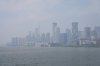
MIKAELA MACKENZIE / FREE PRESS Smoke obscures a neighbourhood in the south end of the city on Friday.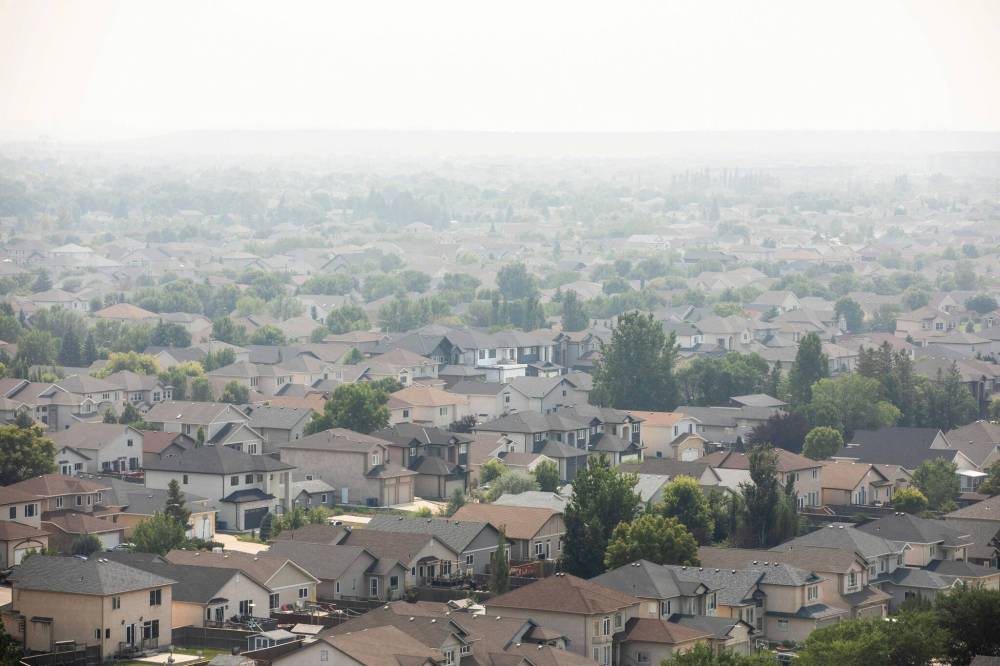
Luke said the agency records levels of smoke when visibility is reduced to 10 kilometres or less. He noted Winnipeg had 189 hours of smoke during July — 26 hours more than the 163 hours in May 1961.
To make matters worse, since the wildfire season runs from April until the end of August, Winnipeg should easily beat its smokiest year to date: 1961, which had 304 hours of smoke.
“We’ve already had 280 hours so far this year and that already puts us in second place,” he said on Friday.
“If this smoke doesn’t clear, we could reach the record this weekend.”
The wind is predicted to shift from the south as of Friday night: “We’re hoping it will slowly get better over the weekend.”
“It has always been tough to predict smoke, but this year it has got even more complicated. There’s so much smoke across the continent — there are now fires in the southwest United States — that we’re getting smoke from the U.S. and Canada. So, almost no matter where the wind is coming from, there will just be smoke.”
The weather forecasting agency issued an air quality warning for Winnipeg and much of Manitoba on Friday.
“If this smoke doesn’t clear, we could reach the record this weekend.”–Meteorologist Crawford Luke
Air quality levels in Winnipeg are predicted to be at 10-plus, or very high risk, well into Saturday night.
Adam Anderson, the Manitoba Lung Association’s government relations and policy analyst, said when air quality numbers get that high, everyone is at risk.
“The first step is knowing, so you should always check the air quality and plan accordingly. When the air quality gets to 10-plus, that’s as high as the scale goes — it’s bad.”
Anderson urged people to know where they can go to breath clean air, whether it is in a room with an air purifier or a civic library or other indoor space with air conditioning.
“Try to limit the exposure to smoke,” he said. “When it is 10-plus, and you have to go outside, put on a mask, an N95 is recommended.
“The real risk of wildfire smoke is we don’t know where it comes from and what it was burning. It could be a building with different materials. You don’t know what carcinogens you are being exposed to.”
He pointed out that wildfire seasons are becoming more extreme.
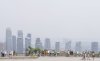
MIKE DEAL / FREE PRESS FILES Wildfire smoke shrouds downtown Winnipeg as a cyclist makes their way along a bike path beside the Red River on Friday, July 11.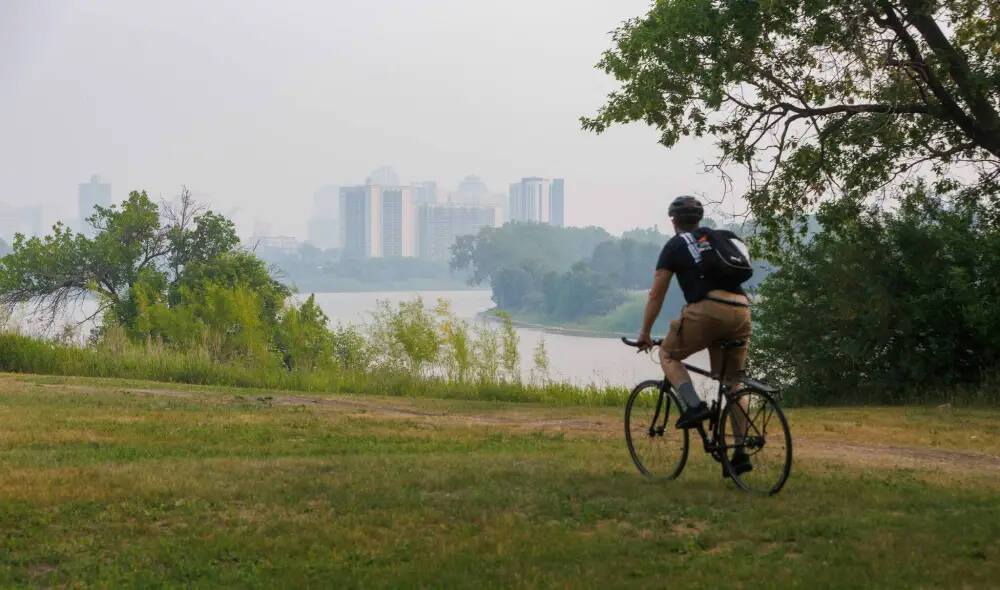
Ron Brown knows what it is like to cancel a major annual event because of smoke.
Brown, the CEO of BGC Winnipeg, formerly known as Boys and Girls Club of Winnipeg, disappointed a few hundred children on Thursday when he announced the annual JumpStart Games had to be cancelled because of poor air quality.
“They can’t be rescheduled,” Brown said. “We’ve done this every year for 10 years, except for the COVID years, and you always worry about rain or lightning, but we’ve never had to cancel.”
“When Environment Canada tells to you curtail outdoor activities, well that’s what you do. It broke a lot of hearts, but it is the right call.”
Brown said it’s not the only program operated by BGC that has been affected by smoke.
“Our Clean Machine program, where 12-, 13- and 14-year-olds pick up litter has been affected. We’ve always considered the heat index, but now we’ve had to cancel a few days because of air quality.”

Thompson and Kenora, Ont., have also set or almost set smoke records this year.
Thompson has had 504 hours of smoke so far this year, just shy of the 507 hours of smoke it received during the entire wildfire season in 1989.
In July alone, Thompson had 408 hours of smoke, smashing the previous monthly high of 238 hours in August 1989.
Kenora received 171 hours of smoke in July, more than the 139 hours it had in July 2021.
Kenora had 261 hours of smoke from April to Aug. 1, compared to the second-highest recording of 145 hours in that same time period in 2021.
“Kenora has already broken the record for the entire year; they had 232 hours in 2021,” Luke said, adding it continues to be smoky in the northwestern Ontario city.
kevin.rollason@freepress.mb.ca

Kevin Rollason
Reporter
Kevin Rollason was a general assignment reporter at the Free Press.
Our newsroom depends on a growing audience of readers to power our journalism. If you are not a paid reader, please consider becoming a subscriber.
Our newsroom depends on its audience of readers to power our journalism. Thank you for your support.
Related Articles
CFL, Blue Bombers monitoring Winnipeg air quality ahead of game against Argonauts