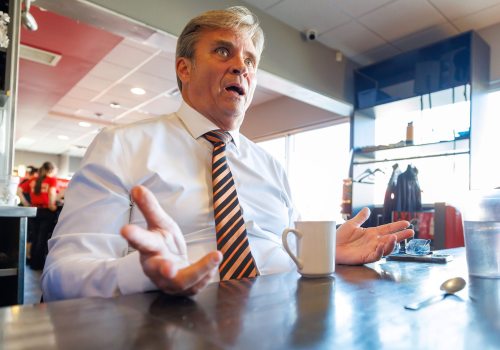
Bluster on bail boiling over, but jury is out Seeking pre-trial release reveals a complex, often chaotic court process, but growing calls for change lacks evidence, experts argue
Read this article for free:
or
Already have an account? Log in here »
To continue reading, please subscribe:
Digital Subscription
One year of digital access for only $1.44 a week*
- Enjoy unlimited reading on winnipegfreepress.com
- Read the E-Edition, our digital replica newspaper
- Access News Break, our award-winning app
- Play interactive puzzles
*Billed as $5.77 plus GST every four weeks. After 52 weeks, price increases to the regular rate of $19.95 plus GST every four weeks. Offer available to new and qualified returning subscribers only. Cancel any time.
To continue reading, please subscribe:
Add Free Press access to your Brandon Sun subscription for only an additional
$1 for the first 4 weeks*
- Enjoy unlimited reading on winnipegfreepress.com
- Read the E-Edition, our digital replica newspaper
- Access News Break, our award-winning app
- Play interactive puzzles
*Your next Brandon Sun subscription payment will increase by $1.00 and you will be charged $17.95 plus GST for four weeks. After four weeks, your payment will increase to $24.95 plus GST every four weeks.
Read unlimited articles for free today:
or
Already have an account? Log in here »
Hey there, time traveller!
This article was published 03/10/2025 (383 days ago), so information in it may no longer be current.
It was a rare glimpse into how Manitoba’s justice system tackles the tricky — and, increasingly political — issue of bail.
Publication bans cover the majority of contested bail hearings, preventing the public from knowing what defence lawyers and prosecutors argued.
But on Thursday, the usual ban wasn’t in place in a Grand Rapids man’s aggravated assault case, allowing the Free Press the opportunity to pull back the veil on bail court.
Appearing before provincial court Judge Robert Heinrichs, Crown prosecutor Paul Cooper said Nazareth Nasikapow possessed an “astonishing record of violence” and argued that his application for bail be denied.
Nasikapow, 43, is accused of aggravated assault for his alleged role in the group beating of his 56-year-old cousin at the victim’s Grand Rapids home earlier this year.
The victim was unresponsive when first responders arrived.
Nasikapow was listening to the hearing remotely, from jail, while his lawyer and Cooper made their cases. Cooper said if Nasikapow was allowed out of jail while awaiting trial, there was too great a risk that he would reoffend.
He highlighted Nasikapow’s history of convictions for violence and repeatedly breaching court-ordered conditions, including allegations he breached release conditions following alleged, unrelated offences earlier this year. The prosecutor also raised concern about potential contact with witnesses — some of whom are extended family members of both the accused and victim.
But defence lawyer Karl Gowenlock said his bail plan would keep Nasikapow out of trouble. The proposal included a curfew, an electronic ankle monitor, an order to abstain from intoxicants and a requirement that he reside in Winnipeg to ensure his client would stay away from Grand Rapids.
At the end of the 30-minute hearing, Heinrichs conceded, “overall, it’s not that bad a bail plan,” but it wasn’t enough to alleviate his concerns, given Nasikapow’s extensive record.
Nasikapow will remain behind bars while he waits for further court proceedings.
In recent years, public concerns over accused individuals reoffending while on pre-trial release have skyrocketed, fuelling the bail-reform debate growing louder across the country.
Related Articles
Solution to national bail problem requires information that doesn’t exist Mayor to testify next week before Commons committee studying bail reform, crime issue













Bail can be granted in one of three ways: by judges after contested hearings; with the consent of Crown prosecutors following discussions with defence lawyers; or by law enforcement agencies, which can release accused on undertakings or appearance notices, without the involvement of the courts.
Calls for reform have come from federal Conservatives, provincial premiers and justice ministers across the political spectrum, police chiefs, officers’ unions and the public, often following shocking crimes committed by individuals who are out on bail.
Most recently, Winnipeg Mayor Scott Gillingham has added his voice to the fray, highlighting cases of alleged repeat offenders in weekly bulletins. He’s slated to speak to a House of Commons committee on the matter next week, pushing for changes to a system that he and many others believe is not working as intended.
The public outrage has not gone unnoticed inside the Law Courts in Winnipeg.
A frequent topic of off-record conversations in the halls, reform also merits the occasional mention during bail hearings, where judges consider whether denying release to an individual is necessary to maintain the public’s confidence in the administration of justice.
The debate has reached the Prime Minister’s Office. Mark Carney has promised his government will bring forward legislation this fall to reform the Criminal Code as it relates to bail. Conservative Leader Pierre Poilievre, however, has said the proposed changes will fall short, and has urged the Liberal government to pass his party’s “Jail Not Bail Act.”
But as the volume from all sides of the issue swells, there is likely little public understanding of what really occurs in bail courts in Manitoba and across the country.
There is a lack of publicly available data on the prevalence of accused individuals committing additional offences after they’ve been granted bail.
This week, the Free Press spent two days watching bail proceedings unfold in provincial court.
First up was bail triage court, where defence lawyers — or, more often, articling law students — appear before a judicial justice of the peace, along with paralegals working for the Crown attorneys’ office.
Dozens upon dozens of people accused of committing crimes appeared in the court Wednesday. They appeared by video or phone or had a lawyer appear on their behalf.
The defence would typically:
- ask for an adjournment to develop a bail plan ahead of a hearing,
- adjourn matters to an in-custody docket for clients who aren’t seeking bail,
- tell the justice of the peace that the Crown had consented to their client’s release on certain conditions
- or ask to have the client’s matter moved over to regular or domestic-violence bail court for a contested hearing.
Down the hall, on Thursday, the Free Press attended five contested bail hearings before Heinrichs. The accused were alleged to have committed robberies, court-order breaches, thefts and drug offences.
At most of the brief hearings, defence lawyers sought and were granted standard publication bans, ensuring the specifics of what was discussed are not made public.
Generally, Crown prosecutors provided an overview of the allegations and the reasons bail should be denied. The defence would outline a release plan, including various conditions meant to keep their client out of trouble.
Heinrichs delivered his decisions on the spot, without taking a break to gather his thoughts. He denied bail in three of the five hearings.
Brandon Trask, an associate law professor at the University of Manitoba and a former Crown prosecutor in the Maritimes, was not surprised by Thursday’s outcomes.
“I think the public is being left with an inaccurate impression right now, if you were to only listen to much of the talk politically,” Trask said.
“People are being left with the impression that, ‘Oh, everybody’s being let out.’ That’s just absolutely not accurate.”
He said roughly 75 per cent of Manitoba’s jail inmates are on remand awaiting trial, not serving sentences after convictions.
“People are being left with the impression that, ‘Oh, everybody’s being let out.’ That’s just absolutely not accurate.”
In many cases, Crown attorneys and defence lawyers reach an agreement to either release an accused on conditions, or remand them to jail to await trial without the need for a hearing. But sometimes, they’re at loggerheads, necessitating a hearing before a judge.
“It’s the system working the way it’s designed to… are you going to get some cases where people end up committing further crimes while out on bail? Yes, unfortunately, that will happen occasionally,” Trask said.
But the flip side, he said, would be to put everyone charged with a crime in custody ahead of their trial, which would not be feasible; Manitoba jails are already overcrowded.
Of greater import, the Charter of Rights and Freedoms provides everyone accused of a crime the right to be presumed innocent and the right not to be denied reasonable bail without just cause.
Trask said he thinks the debate around bail reform is misguided, with little understanding of the process and considerations that are made.
“We have our framework for bail in the Criminal Code, and public safety is already an absolutely essential element that’s considered in all of these cases, and public confidence in the administration of justice is factored in,” he said.
Notwithstanding recent concerns raised by the Manitoba Association of Crown Attorneys about having insufficient time to prepare bail submissions, prosecutor and union spokesman Ben Wickstrom said the system is working the way the law, as it’s currently written, intends.
Ben Wickstrom is a prosecutor and spokesman for the Manitoba Crown Attorney Association.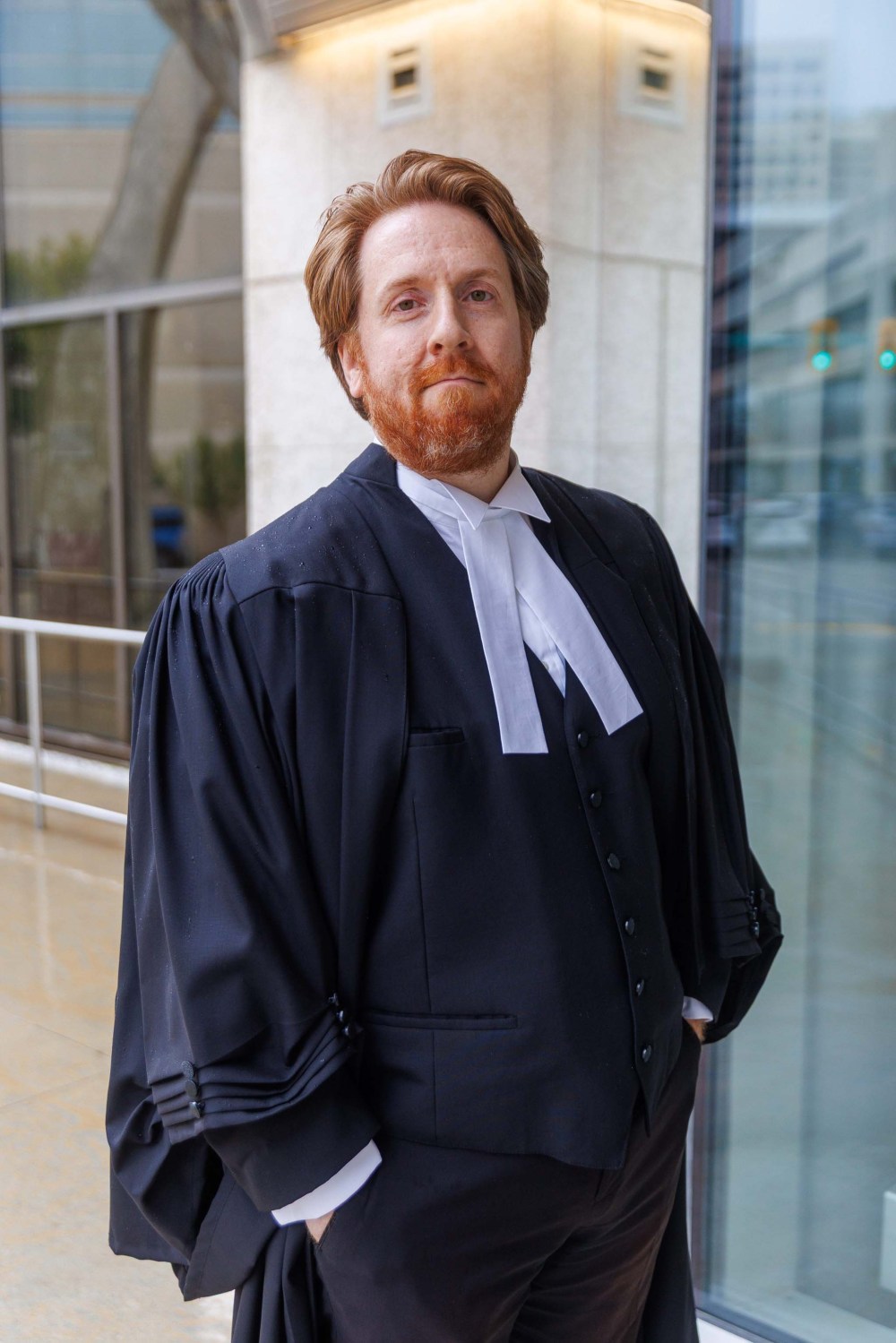
The union, said Wickstrom, does not wish to take a position on any possible reforms to bail legislation, given the role Crown attorneys have in the system.
“What we’ve said all along is we’d like any discussion around bail reform to be as informed by as many facts as possible… we don’t want to make snap judgments,” said Wickstrom, adding the association hopes the system is well-resourced enough to function properly.
“But it’s not to say that requesting changes to the system isn’t a legitimate part of the public discourse…. Everybody gets to weigh in, and then Parliament and our elected officials respond how they see is fit.”
Chris Gamby, spokesman for the Criminal Defence Lawyers Association of Manitoba, said the debate around bail is occurring in a data vacuum.
“A lot of times, what’s happening is they’re picking one case or two cases that are particularly egregious, and they’re trying to suggest that is representative of the system,” said Gamby, a practising defence lawyer, adding he believes the conversation would be better served if it were based on statistics.
“I don’t think it makes any sense to make policy decisions in that way.”
And further, he said, he’s unsure if denying bail in more cases will have a significant impact on public safety.
“The way to deal with this is to try to understand why do we have crime? What are the common causes… and look at addressing what those issues are,” he said. “And, quite frankly, it might be less expensive than opening more jails.”
erik.pindera@freepress.mb.ca


Erik Pindera is a reporter for the Free Press, mostly focusing on crime and justice. The born-and-bred Winnipegger attended Red River College Polytechnic, wrote for the community newspaper in Kenora, Ont. and reported on television and radio in Winnipeg before joining the Free Press in 2020. Read more about Erik.
Every piece of reporting Erik produces is reviewed by an editing team before it is posted online or published in print — part of the Free Press‘s tradition, since 1872, of producing reliable independent journalism. Read more about Free Press’s history and mandate, and learn how our newsroom operates.
Our newsroom depends on a growing audience of readers to power our journalism. If you are not a paid reader, please consider becoming a subscriber.
Our newsroom depends on its audience of readers to power our journalism. Thank you for your support.