Learning the hard way Elementary students share struggles with reading after report reveals education system failing
Read this article for free:
or
Already have an account? Log in here »
To continue reading, please subscribe:
Digital Subscription
One year of digital access for only $1.44 a week*
- Enjoy unlimited reading on winnipegfreepress.com
- Read the E-Edition, our digital replica newspaper
- Access News Break, our award-winning app
- Play interactive puzzles
*Billed as $5.77 plus GST every four weeks. After 52 weeks, price increases to the regular rate of $19.95 plus GST every four weeks. Offer available to new and qualified returning subscribers only. Cancel any time.
To continue reading, please subscribe:
Add Free Press access to your Brandon Sun subscription for only an additional
$1 for the first 4 weeks*
- Enjoy unlimited reading on winnipegfreepress.com
- Read the E-Edition, our digital replica newspaper
- Access News Break, our award-winning app
- Play interactive puzzles
*Your next Brandon Sun subscription payment will increase by $1.00 and you will be charged $17.95 plus GST for four weeks. After four weeks, your payment will increase to $24.95 plus GST every four weeks.
Read unlimited articles for free today:
or
Already have an account? Log in here »
Hey there, time traveller!
This article was published 09/11/2025 (344 days ago), so information in it may no longer be current.
The Manitoba Human Rights Commission published the long-awaited results of a probe into how schools are teaching children to read — or failing to do so — at the end of October.
The 70-page report represents Phase 1 of a special project that’s become known as “Manitoba’s Right to Read.” A followup on the implementation of investigators’ recommendations is expected in 2026-27.
Local investigators concluded many teachers do not have training in structured literacy, a neuroscience-backed philosophy founded on explicit instruction in phonics, which stresses recognizing the connection between sounds and letters/letter combinations.
The structured-literacy method of teaching had all but lost the so-called “reading wars” by the 2000s, amid concerns memorizing letter-sound associations was repetitive and, as a result, was destroying students’ motivation to learn. Schools pivoted to prioritizing exposing children to a wide variety of interesting and increasingly difficult texts.
Led by researchers and frustrated parents, the international “Science of Reading” movement has reignited the debate in recent years.
Human rights investigators across Canada have endorsed a return to back-to-basics — structured literacy — lessons for all kids, but especially those with suspected or diagnosed learning disabilities.
An 11-year-old boy showed up to the Manitoba legislature on World Dyslexia Day (Oct. 8) to call on elected officials to take action locally.
Little did Jacob Dyck know that he, now a student at Laureate Academy, would inspire others to share their first-hand struggles with reading.
The Free Press interviewed four elementary students to learn how the school system, despite teachers’ best efforts, failed to help them become fully literate.
Their experiences mirror the Right to Read’s conclusions that there’s a patchwork of teaching, intervention and strategies, and that Manitoba families are paying thousands of dollars out of pocket to help their children master a basic skill.
Blake Neufeld
Grade 4 student at Princess Margaret School in North Kildonan
Cost estimate: $3,000 per school year for twice-weekly tutoring
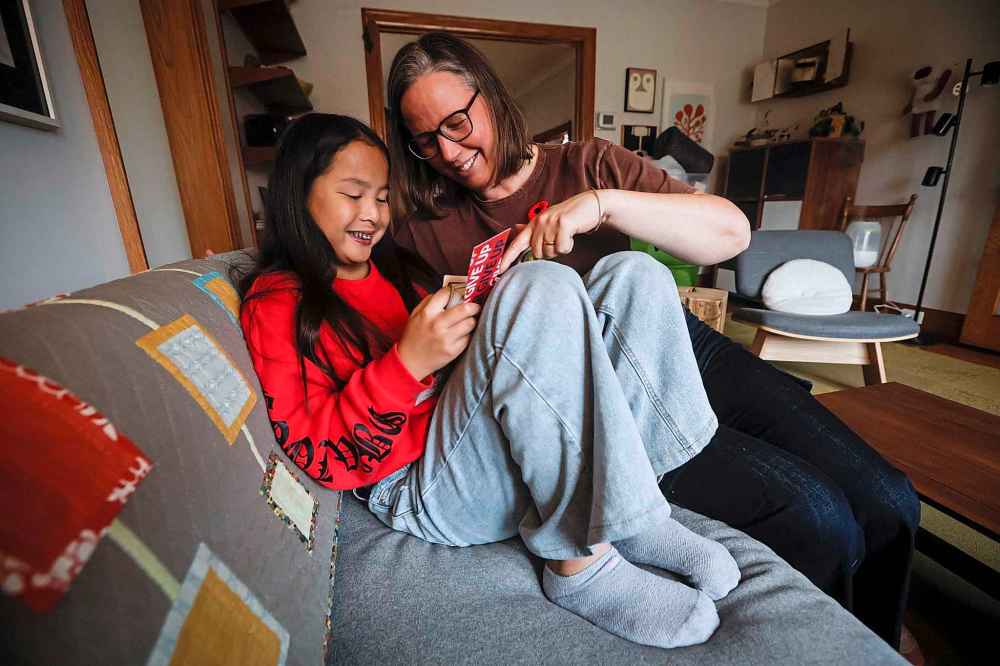
MIKAELA MACKENZIE / FREE PRESS Blake Neufeld with a letter activity.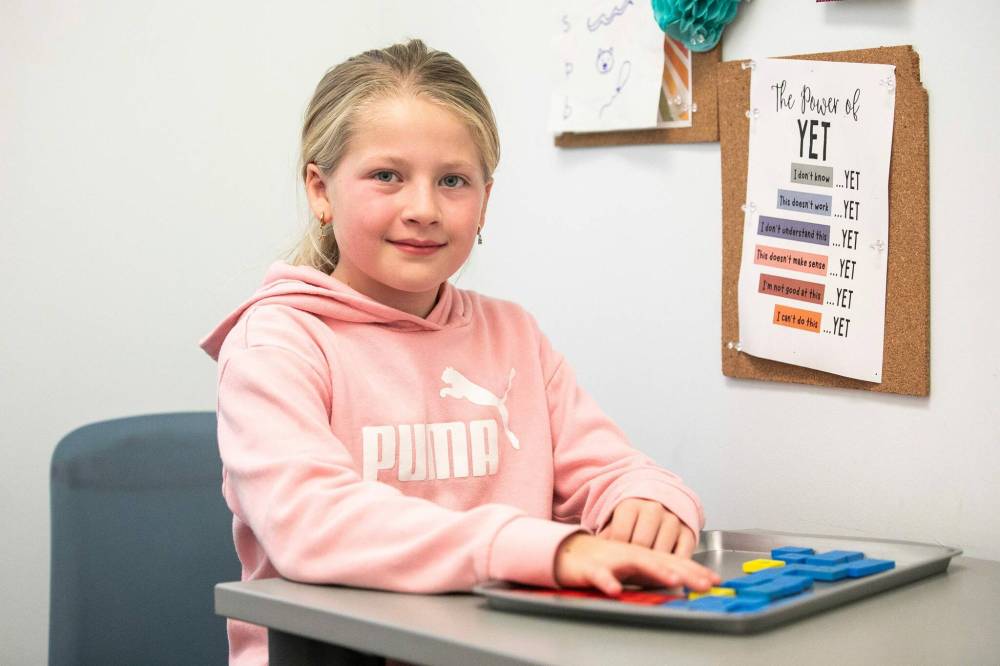
Blake got dressed on the morning of Oct. 24 in a bright red shirt — a symbol of the ink often associated with grading mistakes. Last year, at the end of Grade 3, she was formally diagnosed with dyslexia by a school psychologist.
“I didn’t get taught the right way and it made my reading worse,” the nine-year-old told a news conference put on by Dyslexia Canada.
It was a week ahead of the Right to Read release, and she was surrounded by a sea of other students and parents in red in downtown Winnipeg.
Blake did not read from a script. She spoke directly to reporters, some of them equipped with video cameras, about how difficult her early schooling had been. While she noted private tutoring is helping her gain confidence, it cannot wipe away the tears she has shed in frustration.
“It was really hard because I felt really sad,” Blake said. “Sometimes, after school, I came home and cried in my bed because I was so sad because I didn’t know what to do.”
Mom Brianna Neufeld said their family was lucky to book a “very rare” appointment with a public school-based clinician in April, five months after they requested it.
The mother of three said she suspects her middle child’s poor mental health made her a priority. If anyone suspected Blake had a learning disability, it was never raised to the Neufelds, she said.
“I didn’t get taught the right way and it made my reading worse.”
The family took it upon themselves to seek assistance because of Blake’s report cards — she was not meeting grade-level expectations — and well-being.
Blake was registered in her school’s Reading Recovery program in grades 1 and 2. Asked about whether these extra lessons made an impact, the nine-year-old replied: “Not really.”
What has made a difference is twice-weekly tutoring, but it comes at a hefty cost and it isn’t yet enough to help Blake “unlearn” old habits, her mom said.
“I’m not sure she will ever fully overcome the harm done,” Neufeld said of interventions that urged Blake to use context clues to read rather than phonics.
She said her daughter continues to guess words she does not know rather than sound them out, because that’s how she was taught in class and Reading Recovery.
Rowan Pokrant
Grade 5 student at Arthur A. Leach School in Waverley Heights
Cost estimate: $5,500 for 12 months of tutoring
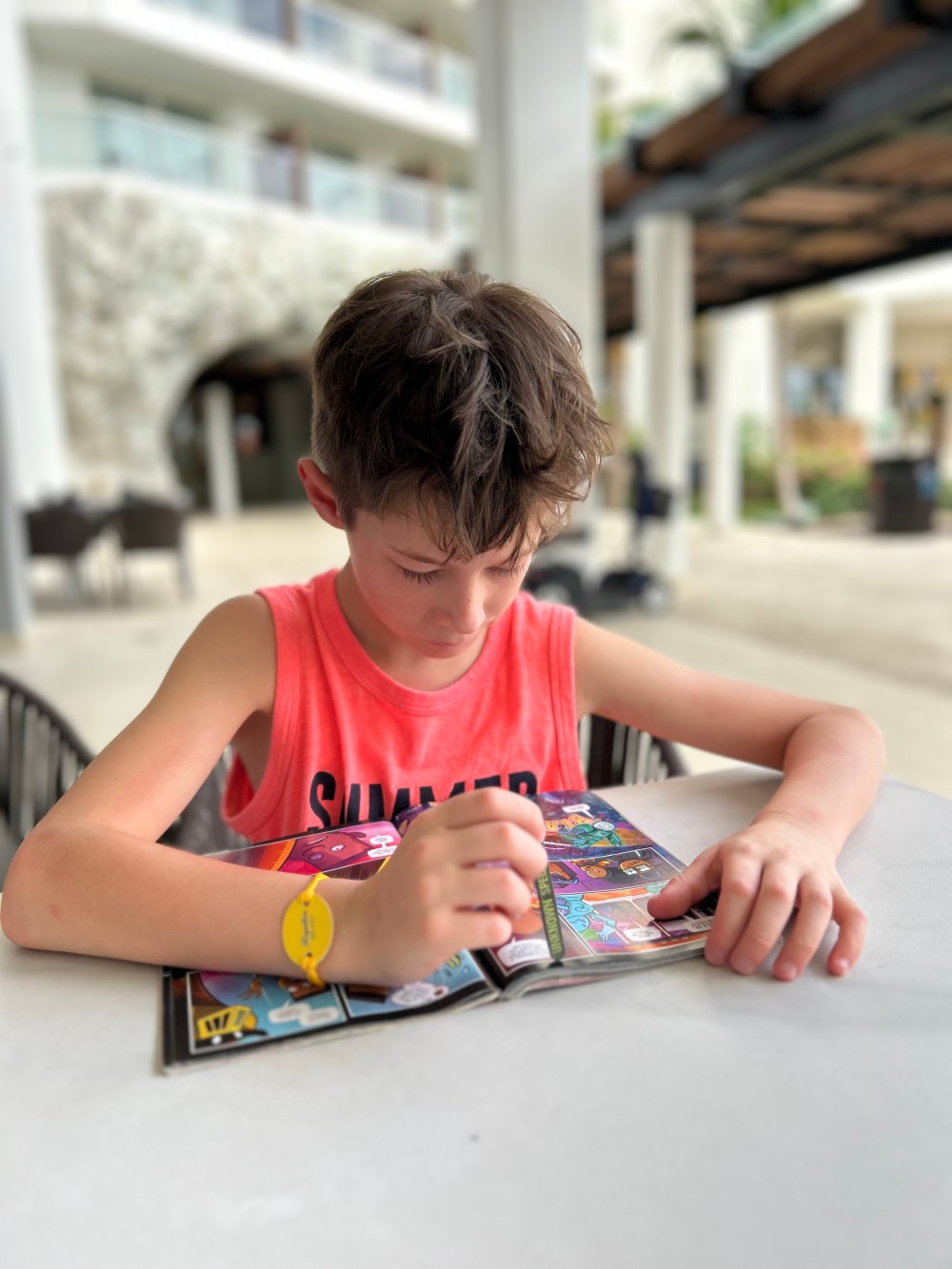
Not only is Rowan a confident reader of English graphic novels, but he’s also a fan of flipping through manga — or what his dad calls “the backwards books.”
The popular genre of action-packed Japanese comics are read from right to left.
As far as his parents are concerned, their 10-year-old son’s latest obsession is a welcome one.
It was only three years ago that he asked his mom, “Will I ever love to read like you?”
(He’s not quite there yet, but as of the beginning of Grade 5, Rowan told the Free Press, “I like to read now.”)
His mom, a pediatrician, is a self-described reading fanatic who ripped through phonics workbooks “for fun” as a kid.
Dr. Jina Pagura recalled her surprise to learn Rowan, the oldest of her two boys, wasn’t being taught to read with the same kinds of decodable texts — let alone structured literacy — at school.
Pagura’s concerns peaked when Rowan, then a Grade 2 student, presented her with a made-up story that was impossible to decipher. He didn’t know how to insert vowels into his writing, she said.
The family hired a private tutor and, for 12 months, Rowan regularly woke up early to do extra literacy lessons before school.
The 10-year-old is currently meeting grade-level benchmarks.
Rowan said his mom is particularly talented at leading their nightly readalouds, but he volunteers to tap in on occasion.
They are about 100 pages from finishing the fifth novel in the Harry Potter series, after which the family will screen the film adaptation of J.K. Rowling’s Harry Potter and the Order of the Phoenix.
The longest novel in the series has been boring in comparison, he said, noting that No. 4 was far more exciting. It was his favourite fantasy book-and-movie combination to date.
“I’d always thought, ‘They’ll get to school and school will do the rest.’”
Pagura has long been passionate about getting books into the hands of young patients and urging families to do readalouds at home.
“I’d always thought, ‘They’ll get to school and school will do the rest,’” she said, adding her son’s experience was a wakeup call that Manitoba was not embracing evidence-based practises to teach reading.
The pediatrician said it was “absolutely heartbreaking” to learn many children, including those with and without suspected learning disabilities, are not getting the instruction they need to become literate.
“I have patients from all socioeconomic statuses, new immigrant families, and what they are hearing from school because the school isn’t picking up on things — “everything is fine” — is really terrifying,” she said.
The mother of two noted that students might stop attending school and fall further behind if they feel ashamed about their skills. “It’s this continual, self-fulfilling prophecy.”
Dr. Pagura has begun writing letters asking for school-based assessments when a child who enters her office is struggling with literacy skills.
The response is often, “They are getting interventions,” she said. But she noted that when she follows up to request structured literacy, “I don’t ever hear anything back.”
The Manitoba Pediatric Society has endorsed her calls on the province to ensure all children have access to evidence-based instruction. Its national counterpart has taken a similar stance.
“In-class quality reading programs must include phonemic awareness, phonics, and reading practice to improve word-reading accuracy and speed,” according to the national advocacy organization’s 2024 statement on literacy education.
Hazel Pancoe
Grade 6 student at Laureate Academy in St. Norbert
Cost estimate: $3,000 for a private dyslexia assessment, $10,000 in tutoring and $24,000 for private school in 2025-26 alone
Hazel’s mother Colette Pancoe took in the crowd of more than 200 people gathered at the Centre Culturel Franco-Manitobain for the unveiling of the Right to Read findings at the end of Dyslexia Awareness Month on Oct. 30.
“If you looked around the room, it was 95 per cent white women — white, affluent women,” said Pancoe, a self-described member of that demographic group.
“Those are not the only families that are experiencing dyslexia.”
For Pancoe, the contents of the human rights commission’s report were all too familiar.
She is among the parents who have extensively advocated on behalf of a child with a learning disability. It’s often uncomfortable because parents are pitted against each other, owing to the limited resources, Pancoe said.
The St. Vital family opted to pay for a private clinician two school years ago and, equipped with results, searched for an after-school tutor who specialized in dyslexia.
During Hazel’s last year at École Varennes, the then-Grade 5 student relied on older classmates for help in her multi-age homeroom.
The Pancoes expressed gratitude for the “unofficial tutors and homework helpers” in 2024-25, but they acknowledged it was not sustainable. Hazel reluctantly agreed to attend an alternative school located south of the Perimeter Highway this fall.
Hazel noted that the school doesn’t have music, shops or French classes. “I am the only girl in Grade 6!” she added.
Before meeting with “Dr. Chris” at Red Ladder Optimized Learning in Grade 4, Hazel said she attributed her reading challenges to being in French immersion and learning two languages at once.
For a chatty student like her, school has always been a welcome opportunity to socialize. That wasn’t the case for tutoring. Hazel admitted she had to be bribed to attend sessions via treats from the Crusty Bun bakery.
Moving schools has been an adjustment, but she said she’s relieved to no longer require tutoring.
Finances aside, the Pancoes are privileged with the time, skills and confidence required to navigate school, clinical and government systems, her mom said.
One of the “series of hoops,” involved applying for a tax credit available to children with disabilities, Pancoe said. “Hazel was lucky enough to get it — if you can call it ‘lucky,’” she added.
Cece Friesen
Grade 6 student at Laidlaw School in Tuxedo
Cost estimate: $2,500 for a one-time private dyslexia assessment and $35 per tutoring session at the Learning Disabilities Association of Manitoba
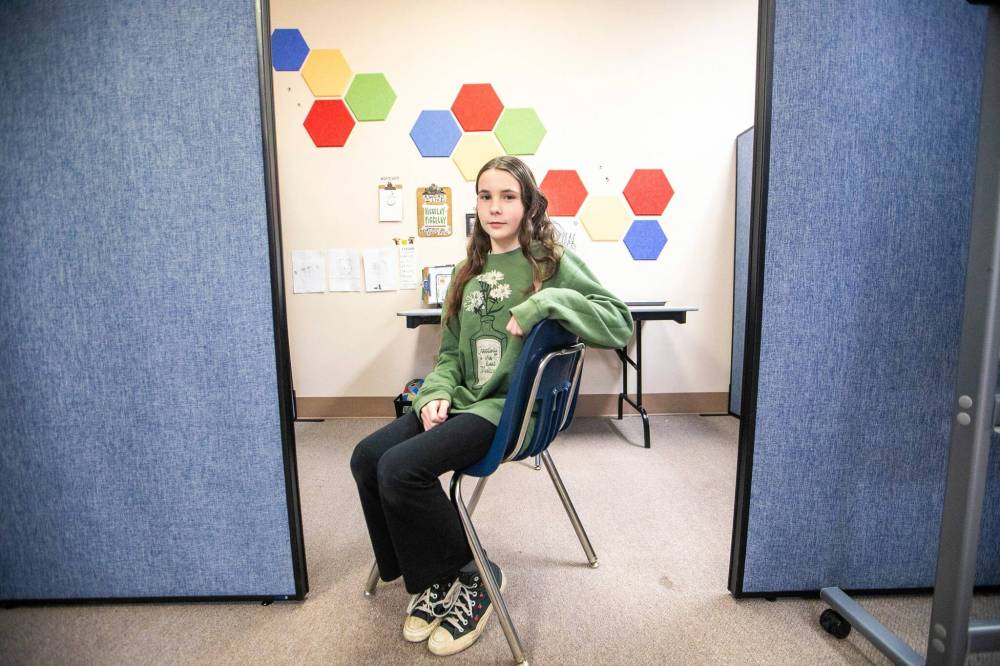
Cece, 11, used to be an aspiring author or fashion designer, but she is now planning to pursue medicine.
And while there’s no rush to decide on a career path, the Grade 6 student is still developing a key skill — reading — that will serve her adult self.
During a sitdown interview this week, Cece described all of her favourite things about Laidlaw School. She likes its intimate size, her friends and her teacher. As for her preferred subjects, it’s a tie between art and history.
Mother Michelle Ward said moving Cece to another school was never a serious option, even though status-quo programming has not always met her daughter’s reading needs.
Cece’s classes were never taught phonics explicitly, directly or systematically. While many of her peers learned to read through exposure to diverse reading materials, she never had an a-ha moment.
The 11-year-old recalled feeling embarrassed about her slow reading pace and using a finger to help her follow sentences.
Cece said regular tutoring and listening to audiobooks, as per her current classroom teacher’s advice, has helped build her confidence.
“For a while, you didn’t really want to use anything that made you feel like you were different,” her mom said, adding that Cece has always loved stories, especially when they’re laid out in graphic novels, but getting through other texts can be a challenge.
Cece’s current pick is The Girl Who Drank The Moon by Kelly Barnhill. Her favourite book of all time is Sisters by Raina Telgemeier.
“If Cece had been screened sooner, I think the gap with her peers would’ve closed a lot sooner. It’s still not closed,” Ward said.
She added that her family is “happier now,” given they have answers and know where to find support.
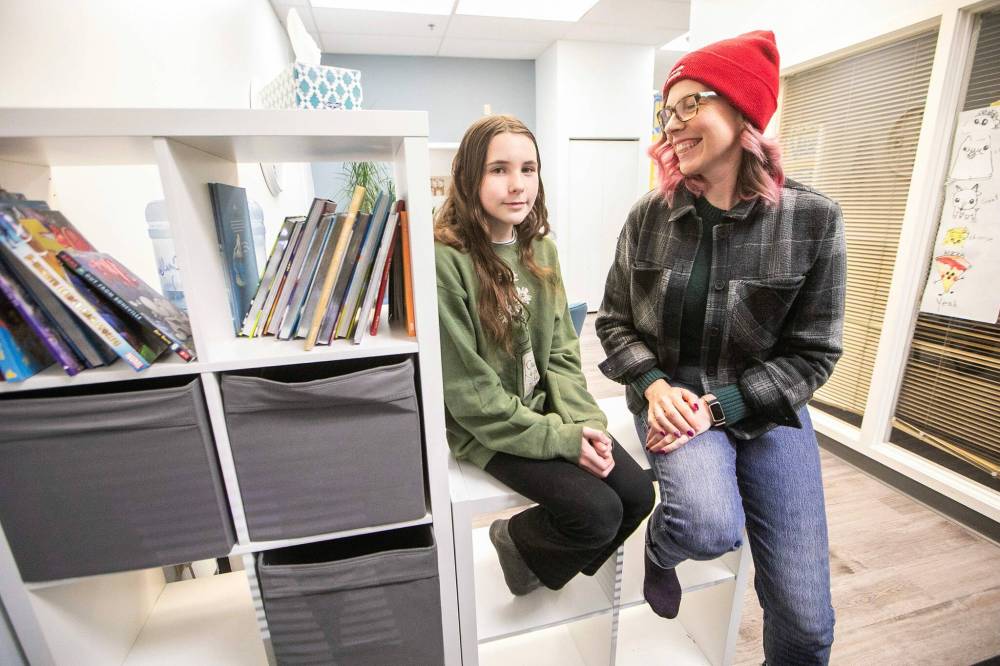
Ward and Cece met with the education minister Nov. 4 to celebrate a unanimous vote in the house to enshrine regular early-reading screening into law.
Following the third reading of Bill 225, the Public Schools Amendment Act (Early Reading Screening), Education Minister Tracy Schmidt revealed she knows what it’s like to raise a struggling reader. (Schmidt’s office declined to share further information, citing her desire to keep her children out of the public eye.)
Her department is developing a plan to address the Right to Read’s “great recommendations,” Schmidt said.
The minister noted that scanning every student’s progress regularly between kindergarten and Grade 4 is a first step.
The Manitoba Teachers’ Society endorsed the new legislation, but its leadership flagged concerns that “identification must be paired with real support.”
The union, which represents 17,000 public school teachers, said in a bulletin that schools need more specialists and screening should be “teacher-led, flexible and adaptable,” rather than tied to a single commercial tool. It also condemned a one-size-fits-all approach to reading instruction.
maggie.macintosh@freepress.mb.ca

Maggie Macintosh
Education reporter
Maggie Macintosh reports on education for the Free Press. Originally from Hamilton, Ont., she first reported for the Free Press in 2017. Read more about Maggie.
Funding for the Free Press education reporter comes from the Government of Canada through the Local Journalism Initiative.
Every piece of reporting Maggie produces is reviewed by an editing team before it is posted online or published in print — part of the Free Press‘s tradition, since 1872, of producing reliable independent journalism. Read more about Free Press’s history and mandate, and learn how our newsroom operates.
Our newsroom depends on a growing audience of readers to power our journalism. If you are not a paid reader, please consider becoming a subscriber.
Our newsroom depends on its audience of readers to power our journalism. Thank you for your support.

History
Updated on Sunday, November 9, 2025 5:16 PM CST: Adds photo of Hazel Pancoe, with her mother Colette.