

NASCAR owner Bob Jenkins ‘hurt’ by ‘take-it-or-leave-it’ charter offer made with hours to sign
Advertisement
Read this article for free:
or
Already have an account? Log in here »
To continue reading, please subscribe:
Monthly Digital Subscription
$0 for the first 4 weeks*
- Enjoy unlimited reading on winnipegfreepress.com
- Read the E-Edition, our digital replica newspaper
- Access News Break, our award-winning app
- Play interactive puzzles
*No charge for 4 weeks then price increases to the regular rate of $19.00 plus GST every four weeks. Offer available to new and qualified returning subscribers only. Cancel any time.
Monthly Digital Subscription
$4.75/week*
- Enjoy unlimited reading on winnipegfreepress.com
- Read the E-Edition, our digital replica newspaper
- Access News Break, our award-winning app
- Play interactive puzzles
*Billed as $19 plus GST every four weeks. Cancel any time.
To continue reading, please subscribe:
Add Free Press access to your Brandon Sun subscription for only an additional
$1 for the first 4 weeks*
*Your next subscription payment will increase by $1.00 and you will be charged $16.99 plus GST for four weeks. After four weeks, your payment will increase to $23.99 plus GST every four weeks.
Read unlimited articles for free today:
or
Already have an account? Log in here »
CHARLOTTE, N.C. (AP) — Front Row Motorsports owner Bob Jenkins testified Wednesday in the federal antitrust case against NASCAR that he was “honestly very hurt” by a “take-it-or-leave-it” offer on a new charter agreement that came with a deadline of mere hours to sign the 112-page document.
Front Row, alongside 23XI Motorsports, is suing NASCAR over antitrust claims for the charter agreement that was presented on the eve of the 2024 playoffs and went into effect this year. He said he was out to dinner with his parents and had no cell signal when the charter offer came in.
When he finally got phone service, he had dozens of missed calls and texts about the charter agreement and reached out to several rival owners.
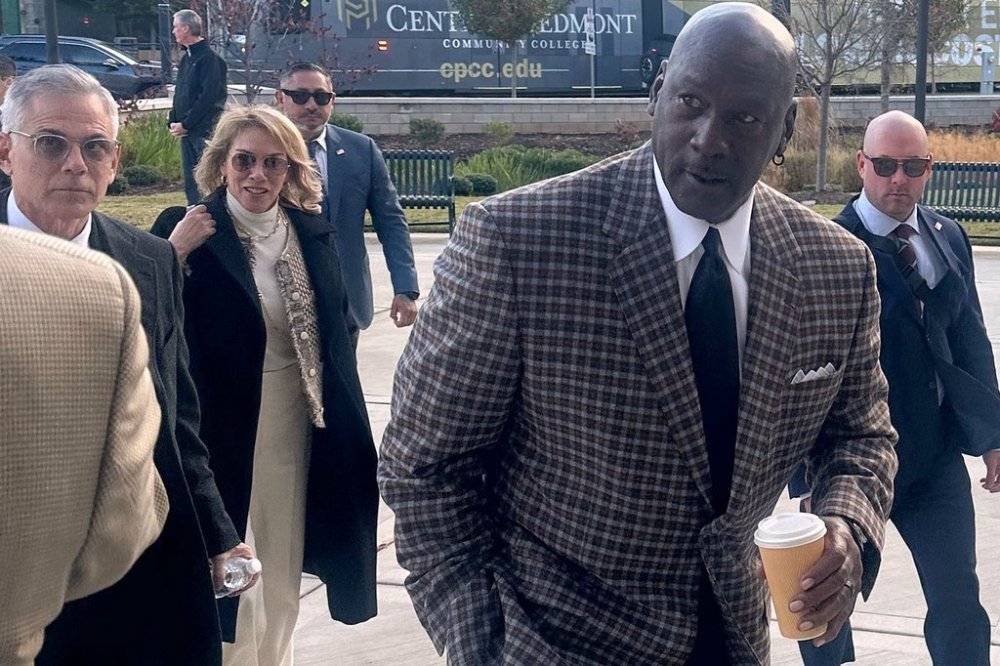
“There was a lot of passion, a lot of emotion, especially from Joe Gibbs, he felt like he had to sign it,” Jenkins testified. “Joe Gibbs felt like he let me down by signing. Not a single owner said, ‘I was happy to sign it.’ Not a single one.”
Jenkins said the charter agreements arrived at 6 p.m. on a Friday with a midnight deadline to sign them. He felt the timing was deliberate as “no attorney on the East Coast was available to read a 112-page document.”
He claimed NASCAR “knew we had to blindly sign it. Some of these owners have $500-$600 million facilities, long-term sponsors. They couldn’t walk away from that.”
Jenkins asked for and received an extension on signing but testified NASCAR Commissioner Steve Phelps made clear it was for review purposes only and told Jenkins, “negotiations are concluded. We are not re-opening the document.”
Jenkins, a fast-food franchise owner, plans to hand Front Row Motorsports down to his four sons so he testified he spoke to the two eldest about the charter offer. He explained that 13 of 15 organizations had signed — Jenkins said he felt NASCAR believed he would cave to the pressure of the other teams having already committed — but that he really did not believe the charter offer was a good deal and did not want to sign.
When they agreed with him, he joined Basketball Hall of Famer Michael Jordan and three-time Daytona 500 winner Denny Hamlin, the owners of 23XI, in suing NASCAR.
Front Row was one of the teams that received original charter agreements in 2016 when the system was created. He didn’t love the deal then but felt it was a step in the right direction in bolstering the health of the top stock car racing series in the United States.
He felt the 2025 agreement went “virtually backward in so many ways.
“It was insulting, it went so far backward. NASCAR wanted to run the governance with an iron fist, it was like taxation without representation,” he testified. “NASCAR has the right to do whatever it wants.”
Front Row and 23XI have accused NASCAR of being a monopolistic bully in violation of federal antitrust laws in this landmark antitrust case that could rewrite the framework of the sport. The teams contend NASCAR is a monopoly that has handcuffed them with a no-win revenue model.
The charter agreement that took effect this year ended more than two years of bitter negotiations in which neither side budged. The deal fell short of the requests made by all 15 teams, but 13 teams still signed under the belief they’d lose their protected status as a charter — which guarantees both entry into every race and a defined share of the purse.
Jenkins has never turned a profit since launching his NASCAR team in the early 2000’s and estimates he’s lost $100 million even while winning the Daytona 500 in 2021. But he said he grew up a NASCAR fan, was a charter member of the Dale Earnhardt fan club beginning with Earnhardt’s rookie season and lived out a dream in becoming a team owner.
He testified he’s fighting for NASCAR to be healthy and stable — for the Florida-based France family that owns it and all the participants.
“This is not about bashing the France family,” Jenkins testified. “They’ve made a lot of great decisions. This charter is not one of them.”
He said his fellow owners agree.
“100% of the owners think the charter system is good,” Jenkins said. “The charter agreement is not.”
NASCAR executive takes stand over alleged illegal monopoly abuses
Scott Prime, NASCAR executive vice president in charge of strategy, testified for a second day to his role in shaping the Cup Series’ charter system when he worked outside the series for a consulting firm.
Prime compiled a 2014 report for the McKinsey firm that stated concerns over the longevity of the sport if NASCAR didn’t act to improve the health of their race teams. One of the suggestions was issuing taxi-like “medallions,” which was the genesis for the charter system.
Jeffrey Kessler, attorney for 23XI and Front Row, said even with charters, NASCAR teams remain stuck in a weakened negotiating state and with unfavorable terms because there are no other legitimate stock car series options.
“You’re a monopoly,” Kessler told Prime. “There’s no place else to compete. There was no place else for them to go, correct?”
“NASCAR is the premier stock car racing series today, yes,” Prime said.
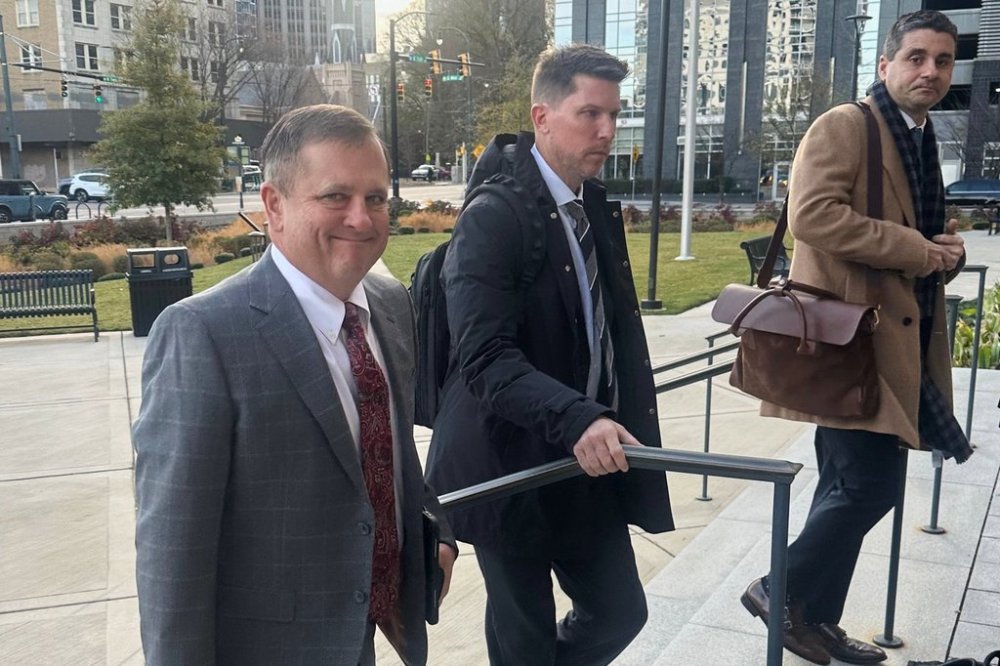
Prime said NASCAR became concerned about the threat of a breakaway stock car series during 2024 charter negotiations. He said at the time NASCAR considered several options that included offering charters to team owners on a “first come, first served” basis and as drastic an option as taking cars in-house for the France family to run and essentially eliminating race teams.
“Only a monopolist has the power to say, ‘Take my offer and if you don’t take it, you will no longer be in this business, and someone else will take your place,'” Kessler said.
NASCAR would present the take-it-or-leave it offer that left Jenkins hurt.
How it got here
The trial is expected to last two weeks.
NASCAR is owned and operated by the France family, which founded the series in 1948.
Kessler told the jury Monday that over a three-year period almost $400 million was paid to the France Family Trust and a 2023 evaluation by Goldman Sachs found NASCAR to be worth $5 billion. The pretrial discovery process revealed NASCAR made more than $100 million in 2024.
NASCAR contends it is doing nothing wrong and has not restrained trade or commerce by its teams. The series says the original charters were given for free to teams when the system was created in 2016 and the demand for them created a market of $1.5 billion in equity for chartered organizations.
The new charter agreement upped the guaranteed money for every chartered car to $12.5 million in annual revenue, from $9 million. But Hamlin and Jenkins have both testified it costs $20 million to bring a single car to the track for all 38 races and that figure does not include any overhead, operating costs or a driver’s salary.
Both testified they don’t have the ability to slash costs and teams are too reliant on outside sponsorship to survive.
“It’s offensive to say I’ve overspent. We have a model that works for us,” Jenkins testified. “I have never turned a profit. And it’s not from malpractice. The level we compete at is just so expensive.”
Prime testified as much and noted in his consulting role he discovered in 2014 that teams lost a combined $85 million, or an average of $1.3 million a car. He also learned that under the system before charters, when cars had to qualify for a race based on speed, a team would lose $700,000 if it failed to make the field.
Behind the scenes
NASCAR’s lawyers were admonished by Judge Kenneth Bell after the jurors were dismissed for the day for violating rulings on what could be introduced in court. The lawyers had been told they could not use text exchanges between Spire co-owner Jeff Dickerson and Prime because Dickerson is not a witness, and they could not discuss Jenkins’ income stream from non-NASCAR businesses.

“These will not happen again,” Bell warned the defense.
Christopher Yates, who has been lead attorney in the year since the case began, has through three days let his associates handle all the in-court action.
Meanwhile, as the two sides left court at the end of the day, a spectator waited for Jordan and played the introduction music that always played before Jordan began an NBA game. Jordan, during a break in court, told a reporter he did not watch North Carolina’s win over Kentucky on Tuesday night.
___
AP auto racing: https://apnews.com/hub/auto-racing