

‘This is the future of health care’
Virtual medicine ward offers comfort of couch

Advertisement
Read this article for free:
or
Already have an account? Log in here »
To continue reading, please subscribe:

Digital Subscription
One year of digital access for only $205*
- Enjoy unlimited reading on winnipegfreepress.com
- Read the E-Edition, our digital replica newspaper
- Access News Break, our award-winning app
- Play interactive puzzles
*First annual payment billed as $205.00 + GST for one year. This annual subscription will automatically renew at $233.00 + GST every 52 weeks (10% off the regular annual price of $259.35). Offer available to new and qualified returning subscribers only. Cancel any time.
To continue reading, please subscribe:
Add Free Press access to your Brandon Sun subscription for only an additional
$1 for the first 4 weeks*
- Enjoy unlimited reading on winnipegfreepress.com
- Read the E-Edition, our digital replica newspaper
- Access News Break, our award-winning app
- Play interactive puzzles
*Your next Brandon Sun subscription payment will increase by $1.00 and you will be charged $17.95 plus GST for four weeks. After four weeks, your payment will increase to $24.95 plus GST every four weeks.
Read unlimited articles for free today:
or
Already have an account? Log in here »
Hey there, time traveller!
This article was published 08/12/2025 (272 days ago), so information in it may no longer be current.
Hospital patients who are being treated for certain ailments or need to be hooked up to an IV for antibiotics may soon be cared for from the comfort of their couch.
The province has relaunched the virtual medicine ward, a program first used during the COVID-19 pandemic.
Winnipeg hospital patients, who have been assessed as stable, spend their final days before discharge recovering at home.
They are monitored by doctors and nurses using Zoom calls, and medical devices connected through the Internet.
The program frees up much-needed hospital beds.
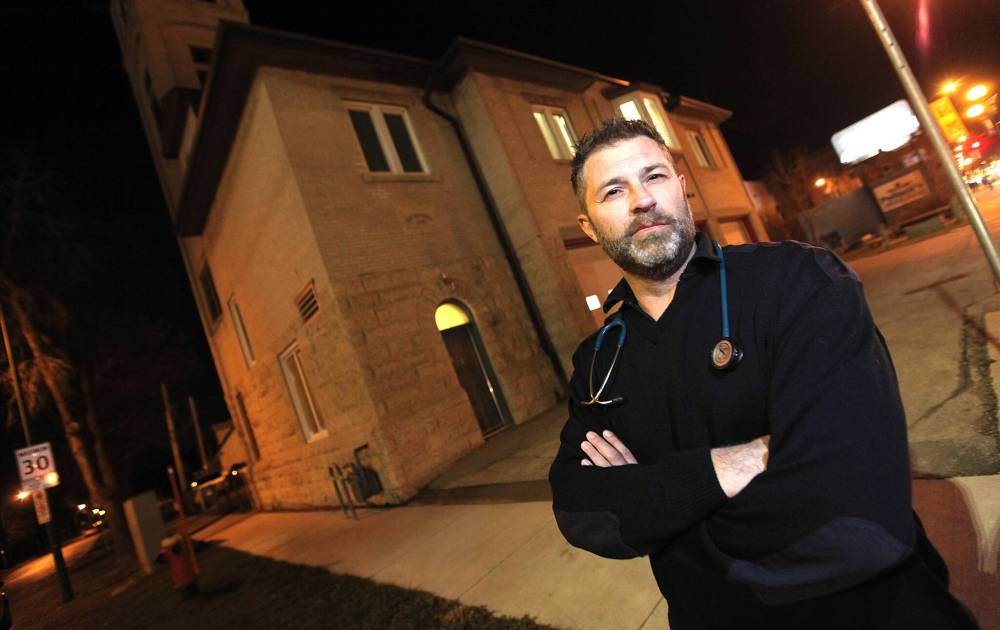
“This is the future of health care,” said Dr. Shawn Young, chief medical officer of the Health Sciences Centre, Manitoba’s largest hospital.
“These are people who would otherwise be in a hospital bed. So they are still sick, that they need hospitalization… they still need the IV antibiotics, they still need the oxygen. We can now actually safely move some of them back home, but give them the supports they need to stay connected to providers in the hospital in case things change with their status.
He said the model blends acute in-patient care with the comforts of home.
“This is the future of health care.”
The program is currently designed to take patients who have mild to moderate illnesses, including COPD, RSV, influenza and COVID-19, as well as those who need IV antibiotics. Since it began operation in September, 15 patients have taken part, releasing the equivalent of 90 hospital bed days.
It currently has the capacity to treat 30 patients at one time.
Doctors and nurses monitor the patients seven days a week, from 7:30 a.m. to 7:30 p.m., and paramedics with the Winnipeg Fire Paramedic Service follow up overnight.
Each patient is outfitted with a tablet that’s connected to medical equipment such as oxygen-saturation and blood-pressure monitors.
Young said paramedics will go into people’s homes if blood work is needed or an IV must be connected.
The program is expected to be of huge benefit as the respiratory season ramps up.
Ryan Woiden, president of the Paramedics of Winnipeg, said paramedics “strongly support” the initiative.
He said community paramedicine already plays a role in caring for patients at home, which reduces pressure on emergency departments.
“While Winnipeg is currently facing a serious shortage of paramedics, we are eager to learn more about how this innovative approach can help expand access care.”
“While Winnipeg is currently facing a serious shortage of paramedics, we are eager to learn more about how this innovative approach can help expand access care and strengthen this important resource for our community,” Woiden said.
Shared Health has hired four nurses for the virtual program; a fourth nursing position and three clerk positions are to come.
Patients who have participated have come from the Health Sciences Centre, St. Boniface Hospital, Grace Hospital and Concordia Hospital.
Health officials say only three patients had to be returned to hospital since it launched.
Health Minister Uzoma Asagwara said the benefit is apparent.
“This is really about giving people choices and offering the ability to get care in the comfort of their own community,” Asagwara said. “We just want to make sure we are doing everything we can to make sure patients are getting care at the right place and that we’re doing what’s necessary to also ensure patient flow through the system to reduce those pressures on our emergency departments.”
“This is really about giving people choices and offering the ability to get care in the comfort of their own community.”

The minister said patients have the comfort of knowing they are being watched closely and can be returned to hospital quickly if needed.
Young said he can envision the day when more patients are treated at home than in hospital.
“Governments are not going to want to build more hospitals and increase hospital beds because of the incredible expense,” he said, pointing out there is risk associated with a hospital stay.
“Every eight or 12 hours, your care is transitioned to somebody else. More importantly, there are a lot of bugs and bacteria and viruses here that get shared quite frequently because of the closed basis. People can get sick here.”
kevin.rollason@freepress.mb.ca
Kevin Rollason
Reporter
Kevin Rollason was a general assignment reporter at the Free Press.
Our newsroom depends on a growing audience of readers to power our journalism. If you are not a paid reader, please consider becoming a subscriber.
Our newsroom depends on its audience of readers to power our journalism. Thank you for your support.
Kevin Rollason
Reporter
Kevin Rollason was a general assignment reporter at the Free Press.
Our newsroom depends on a growing audience of readers to power our journalism. If you are not a paid reader, please consider becoming a subscriber.
Our newsroom depends on its audience of readers to power our journalism. Thank you for your support.
Related Articles
We’re done accepting ‘good enough’ Besieged health-care system, not ER staff, to blame for mom’s death, heartbroken nurse says






Advertisement Advertise With Us
Advertisement Advertise With Us