

Japan’s nuclear watchdog halts plant’s reactor safety screening over falsified data
Advertisement
Read this article for free:
or
Already have an account? Log in here »
To continue reading, please subscribe:

Digital Subscription
One year of digital access for only $205*
- Enjoy unlimited reading on winnipegfreepress.com
- Read the E-Edition, our digital replica newspaper
- Access News Break, our award-winning app
- Play interactive puzzles
*First annual payment billed as $205.00 + GST for one year. This annual subscription will automatically renew at $233.00 + GST every 52 weeks (10% off the regular annual price of $259.35). Offer available to new and qualified returning subscribers only. Cancel any time.
To continue reading, please subscribe:
Add Free Press access to your Brandon Sun subscription for only an additional
$1 for the first 4 weeks*
- Enjoy unlimited reading on winnipegfreepress.com
- Read the E-Edition, our digital replica newspaper
- Access News Break, our award-winning app
- Play interactive puzzles
*Your next Brandon Sun subscription payment will increase by $1.00 and you will be charged $17.95 plus GST for four weeks. After four weeks, your payment will increase to $24.95 plus GST every four weeks.
Read unlimited articles for free today:
or
Already have an account? Log in here »
Hey there, time traveller!
This article was published 07/01/2026 (278 days ago), so information in it may no longer be current.
TOKYO (AP) — Japan’s nuclear watchdog said Wednesday it is scrapping the safety screening for two reactors at the Hamaoka nuclear power plant in central Japan, after its operator was found to have fabricated data about earthquake risks.
It was a setback to Japan’s attempts to accelerate nucler reactor restarts. Less than a quarter of commercial nuclear reactors are operational in the wake of the 2011 Fukushima Daiichi meltdowns, but rising energy costs and pressure to reduce carbon emissions have pushed the government to prioritize nuclear power.
Chubu Electric Power Co. had applied for safety screening to resume operations at the No. 3 and 4 reactors at the Hamaoka plant in 2014 and 2015. Two other reactors at the plant are being decommissioned, and a fifth is idle.
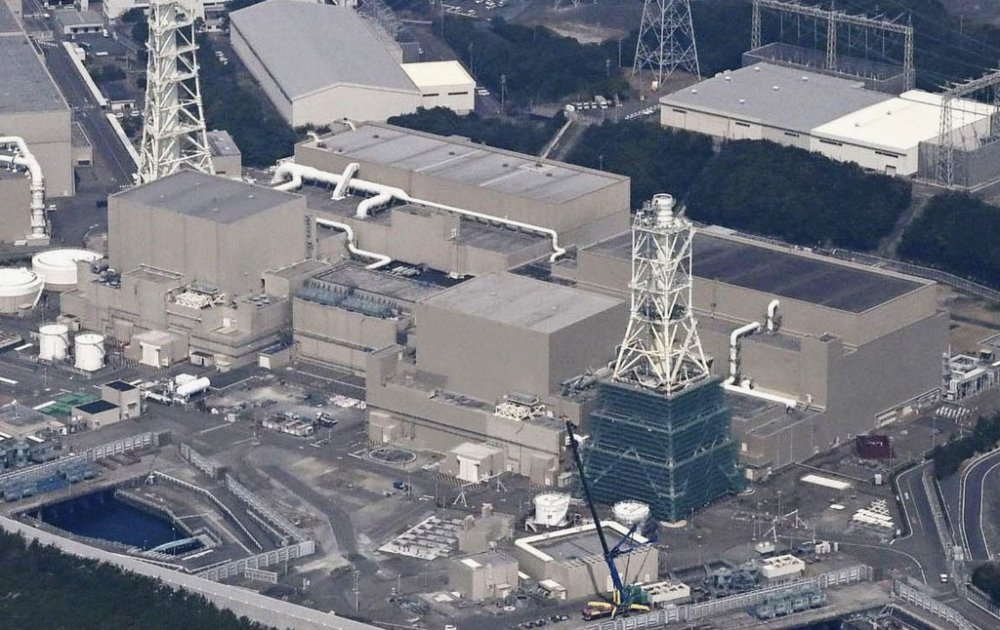
The plant, about 200 kilometers (125 miles) west of Tokyo, is located on a coastal area known for potential risks from so-called Nankai Trough megaquakes.
The Nuclear Regulation Authority said it started an internal investigation last February, after receiving a tip from a whistleblower that the utility had for years provided fabricated data that underestimated potential seismic risks.
The regulator suspended the screening for the reactors after it confirmed the falsification and the utility acknowledged the fabrication in mid-December, said Shinsuke Yamanaka, the watchdog’s chair. The NRA is also considering inspecting the utility headquarters.
“Ensuring safety is the first and foremost responsibility for nuclear plant operators,” Yamanaka said, adding that seismic data was clearly fabricated. “It is outrageous and it’s a serious challenge to safety regulation.”
The scandal surfaced Monday when Chubu Electric President Kingo Hayashi acknowledged that workers at the utility used inappropriate seismic data with an alleged intention to underestimate seismic risks. He apologized and pledged to establish an independent panel for investigation.
The screening, including data that had been approved earlier, would have to start from scratch or possibly be rejected entirely, Yamanaka said. The NRA will decide on the case next week, without waiting for the utility’s probe results, he said.
Public opinion in Japan remains divided due to lingering safety concerns after the 2011 Fukushima Daiichi meltdowns.
Of Japan’s 57 commercial reactors, 13 are currently in operation, 20 are offline and 24 others are being decommissioned, according to NRA.