

Council eyes infill reward for participating neighbourhoods

Advertisement
Read this article for free:
or
Already have an account? Log in here »
To continue reading, please subscribe:

Digital Subscription
One year of digital access for only $205*
- Enjoy unlimited reading on winnipegfreepress.com
- Read the E-Edition, our digital replica newspaper
- Access News Break, our award-winning app
- Play interactive puzzles
*First annual payment billed as $205.00 + GST for one year. This annual subscription will automatically renew at $233.00 + GST every 52 weeks (10% off the regular annual price of $259.35). Offer available to new and qualified returning subscribers only. Cancel any time.
To continue reading, please subscribe:
Add Free Press access to your Brandon Sun subscription for only an additional
$1 for the first 4 weeks*
- Enjoy unlimited reading on winnipegfreepress.com
- Read the E-Edition, our digital replica newspaper
- Access News Break, our award-winning app
- Play interactive puzzles
*Your next Brandon Sun subscription payment will increase by $1.00 and you will be charged $17.95 plus GST for four weeks. After four weeks, your payment will increase to $24.95 plus GST every four weeks.
Read unlimited articles for free today:
or
Already have an account? Log in here »
Hey there, time traveller!
This article was published 14/01/2026 (245 days ago), so information in it may no longer be current.
A new proposal would ensure small infill projects raise revenue for the communities they are built in, which could support parks and recreation upgrades.
The “neighbourhood infill benefits reserve” would collect 80 per cent of the property tax revenue generated from many new housing projects with two, three or four units. That would take place for five years, beginning the year after an affected development is completed, if city council approves the plan.
Coun. Brian Mayes, whose St. Vital ward is expected to claim the largest share of that growth, welcomed the idea as a promising first step.
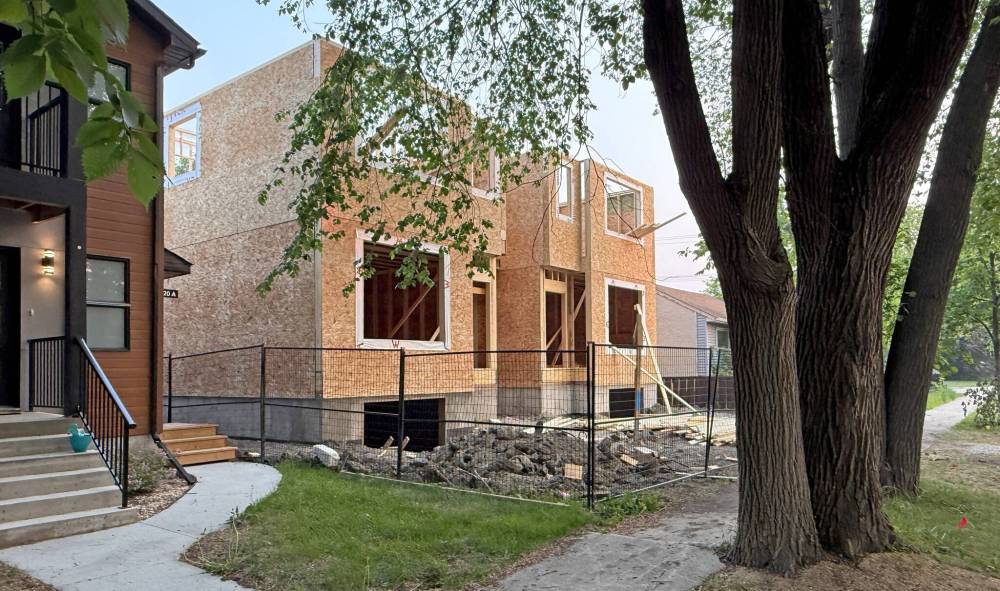
Free Press Files
A new proposal called the “neighbourhood infill benefits reserve” would collect 80 per cent of the property tax revenue generated from new housing projects in existing communities which could be used to support parks and recreation upgrades to those communities.
“The St. Vital (ward) has had the most of these units … in recent years. People have been told density is its own reward … But you put more people in the neighbourhood, there’s more strain, there’s more demand on existing infrastructure. So, finally, we’re recognizing that,” said Mayes.
Based on past development, city staff predict St. Vital will have the largest portion of these projects of all 15 Winnipeg wards over the next decade, accounting for 20 per cent of the overall total.
The reserve would apply to developments within a designated “intensification target area” where the city recently made sweeping zoning changes to trigger more home construction. The area includes most neighbourhoods throughout the city, excluding only the newest ones, such as Sage Creek.
While Mayes said he’s been waiting for this type of funding for years, he is concerned it won’t go far enough. He said city officials confirmed the reserve isn’t slated to collect tax dollars from homes with secondary suites on the same lot, which he believes should be included.
“That’s been … far and away the most common form of infill in my ward … I think that’s had a big impact on the neighbourhood and it would only be fair to recognize that,” said Mayes.
The city defines a secondary suite as a smaller living space with a separate entrance, which is attached to or located on the same property of a single-family home. Often referred to as “granny suites” in the past, these have the same owner as the larger home but can be rented out.
There would be no new charge levied to fund the new reserve. Once it is active, local organizations could apply for grants to secure funding for community amenities, like parks and recreation.
A city staff report suggests the funds could be used to: acquire land for parks or recreation facilities; develop properties for publicly accessible parks and recreation use; construct or renovate recreation facilities; or plant trees on publicly accessible land.
“Funds raised would be allocated to wards in which they were raised, to be spent in or near its infill areas,” the report notes.
In June 2025, a major zoning change took effect that allows up to four housing units to be built on a single lot in most residential areas without a public hearing. The changes sparked some calls to boost funding for infrastructure and services in communities with the most growth.
Coun. John Orlikow, who called for some form of neighbourhood growth reserve following those changes, said he also supports the proposal but hopes to see it expand to cover larger residential buildings.
“If an area’s getting a lot more growth, there’s an impact. There’s no way around it. There’s an impact on space at the community centre, parks (and much more),” said Orlikow (River Heights-Fort Garry).
For example, Orlikow said funding could help add or improve rinks at community centres to serve more people once more homes are built.
“I do believe in densification. We have to do it but we also have to recognize that it has an impact on existing neighbourhoods and this will help alleviate some of that impact,” he said.
City staff predict the reserve could collect between $136,000 and $490,000 per year over the next decade, depending how many homes are built. Grants could be available by mid-2027.
However, city council’s property and development chairman said he’s concerned the reserve may receive much less revenue than the report predicts.
A separate city report shows just five development permits were issued for such projects between June 26, 2025 and the third week of November, said Coun. Evan Duncan (Charleswood-Tuxedo-Westwood).

“I think the idea is a good one. I just don’t know … if there’s going to be a lot of (uptake) in these units,” said Duncan.
He’s concerned the city could spend ample time putting the funding program in place only to raise a limited amount of revenue.
City council is slated to cast the final vote on the idea on Jan. 29.
joyanne.pursaga@freepress.mb.ca
X: @joyanne_pursaga
Joyanne is city hall reporter for the Winnipeg Free Press. A reporter since 2004, she began covering politics exclusively in 2012, writing on city hall and the Manitoba Legislature for the Winnipeg Sun before joining the Free Press in early 2020. Read more about Joyanne.
Every piece of reporting Joyanne produces is reviewed by an editing team before it is posted online or published in print — part of the Free Press‘s tradition, since 1872, of producing reliable independent journalism. Read more about Free Press’s history and mandate, and learn how our newsroom operates.
Our newsroom depends on a growing audience of readers to power our journalism. If you are not a paid reader, please consider becoming a subscriber.
Our newsroom depends on its audience of readers to power our journalism. Thank you for your support.
Joyanne is city hall reporter for the Winnipeg Free Press. A reporter since 2004, she began covering politics exclusively in 2012, writing on city hall and the Manitoba Legislature for the Winnipeg Sun before joining the Free Press in early 2020. Read more about Joyanne.
Every piece of reporting Joyanne produces is reviewed by an editing team before it is posted online or published in print — part of the Free Press‘s tradition, since 1872, of producing reliable independent journalism. Read more about Free Press’s history and mandate, and learn how our newsroom operates.
Our newsroom depends on a growing audience of readers to power our journalism. If you are not a paid reader, please consider becoming a subscriber.
Our newsroom depends on its audience of readers to power our journalism. Thank you for your support.
Related Articles
Developer wants council to reconsider altered plan for apartment near beloved St. Vital park



Advertisement Advertise With Us
Advertisement Advertise With Us