

Alternative to remand’s revolving door imperative: lawyer
Offenders with mental illness, addictions cycle in, out of custody

Advertisement
Read this article for free:
or
Already have an account? Log in here »
To continue reading, please subscribe:

Digital Subscription
One year of digital access for only $205*
- Enjoy unlimited reading on winnipegfreepress.com
- Read the E-Edition, our digital replica newspaper
- Access News Break, our award-winning app
- Play interactive puzzles
*First annual payment billed as $205.00 + GST for one year. This annual subscription will automatically renew at $233.00 + GST every 52 weeks (10% off the regular annual price of $259.35). Offer available to new and qualified returning subscribers only. Cancel any time.
To continue reading, please subscribe:
Add Free Press access to your Brandon Sun subscription for only an additional
$1 for the first 4 weeks*
- Enjoy unlimited reading on winnipegfreepress.com
- Read the E-Edition, our digital replica newspaper
- Access News Break, our award-winning app
- Play interactive puzzles
*Your next Brandon Sun subscription payment will increase by $1.00 and you will be charged $17.95 plus GST for four weeks. After four weeks, your payment will increase to $24.95 plus GST every four weeks.
Read unlimited articles for free today:
or
Already have an account? Log in here »
Hey there, time traveller!
This article was published 21/01/2026 (251 days ago), so information in it may no longer be current.
A revolving door that sees people with mental illness or drug addiction in and out of the Winnipeg Remand Centre illustrates the need for treatment, not jail, a criminal defence lawyer says.
“If you’re having mental health issues and you’re a drug user, it’s very hard to get access to supports,” Jesse Blackman said.
One of his clients, who has been in custody multiple times, was banned from Winnipeg Transit in 2023 for repeatedly smashing bus windows with his head to silence the voices inside.
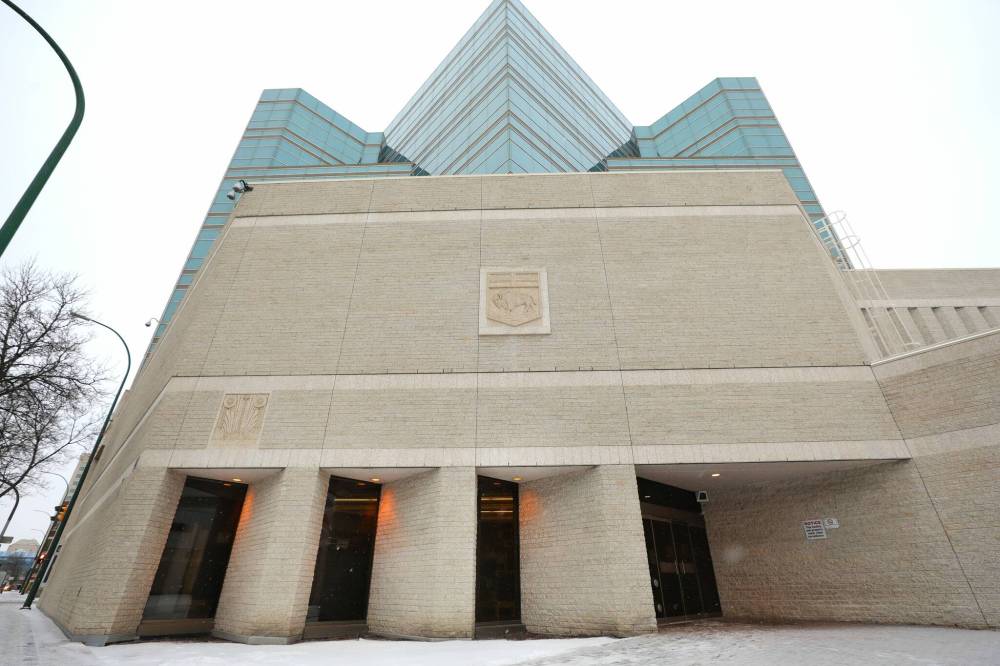
In the past, people with mental illness and addictions were sent to mental hospitals, the lawyer noted. With those institutions closing in recent decades, the government hasn’t provided the promised community supports to replace them.
“Without meaningful support, people who are entrenched in poverty are vulnerable to never experiencing stability,” Blackman said.
Rather than treating mental illness and addictions, the justice system often criminalizes it, he said.
More treatment options for those in the remand centre would be a game changer for crime prevention, Blackman said. He pointed to an October inquest report on the death of inmate Darren Wood, who died during drug withdrawal in 2021.
Provincial court Judge Heather Pullan’s report recommended the province step up and treat those held at the remand centre at risk of withdrawal from opioids. It called on the province to support the management of addiction in custody and during the transition into the community, calling it “the best outcome for the individual concerned and all Manitobans.”
Pullan recommended making opioid agonist treatment available, which is prescribed to prevent withdrawal symptoms, reduce cravings, and to help people stabilize.
Connecting people coming into custody with medicine to manage their addictions, such as suboxone, sublocade, and methadone, “would probably be the biggest intervention that we could do to prevent crime,” Blackman said.
“It would take a little bit of government funding. We’d need a little bit more doctor oversight at remand. But the consequences of people who are using drugs let loose in the community … that’s devastating on health care, devastating on the individual and they put people at risk as well.”
He’s hopeful that needed changes will come but said they won’t be easy.
“Any solution that we put forward is going to be very expensive. It’s going to be politically unsavoury. It doesn’t look good, politically, to be trying to support criminals right now,” the defence lawyer said.
The government has reviewed the inquest report and its recommendations and “remains focused on ongoing efforts to enhance safety and service delivery,” an emailed statement from Justice Minister Matt Wiebe said Wednesday.
“Work is continuing within Corrections and their medical team to consider the recommendations and identify appropriate next steps.”
A March 2025 report by Manitoba Auditor General Tyson Shtykalo raised concerns that not enough was being done to prepare inmates for release from the remand centre so they don’t end up back in jail.
It said the complex factors that led to an inmate’s incarceration need to be addressed for the sake of the inmate and the safety of the public. Assessing what an inmate needs — aside from basic health and safety — doesn’t happen until they’re sentenced.
Most in provincial custody are on remand waiting for a sentence, and end up being released for time served, deputy minister of justice Jeremy Akerstream told a legislative committee earlier this month.
Only 16 per cent are released on probation where connecting with a community corrections officer greatly reduces the odds of someone reoffending, the committee heard.
The province is trying to do more to prepare remand inmates for release into the community while dealing with an adult custody population at an “all-time high” that regularly exceeds 2,700, Akerstream said.

“We are seeing more individuals who are suffering from addictions, mental health issues and underlying health concerns generally,” he told the committee.
“We’ve worked very hard with both health as well as addictions, housing and homelessness to be able to start to address some of those needs.”
The October report on Wood’s death at the remand centre said Manitoba lags behind other provinces, offering released inmates with addiction issues little more than information on rapid access to addictions medicine.
“Although it is encouraging that (the remand centre) now discharges inmates with a pamphlet, in English only, about RAAM clinics, Manitoba has a long way to go to bring the level of treatment for opioid withdrawal in custody to the level of other provinces,” Pullan wrote.
carol.sanders@freepress.mb.ca
Darren Michael Wood Inquest Report
Carol Sanders
Legislature reporter
Carol Sanders is a reporter at the Free Press legislature bureau. The former general assignment reporter and copy editor joined the paper in 1997. Read more about Carol.
Every piece of reporting Carol produces is reviewed by an editing team before it is posted online or published in print — part of the Free Press‘s tradition, since 1872, of producing reliable independent journalism. Read more about Free Press’s history and mandate, and learn how our newsroom operates.
Our newsroom depends on a growing audience of readers to power our journalism. If you are not a paid reader, please consider becoming a subscriber.
Our newsroom depends on its audience of readers to power our journalism. Thank you for your support.
Carol Sanders
Legislature reporter
Carol Sanders is a reporter at the Free Press legislature bureau. The former general assignment reporter and copy editor joined the paper in 1997. Read more about Carol.
Every piece of reporting Carol produces is reviewed by an editing team before it is posted online or published in print — part of the Free Press‘s tradition, since 1872, of producing reliable independent journalism. Read more about Free Press’s history and mandate, and learn how our newsroom operates.
Our newsroom depends on a growing audience of readers to power our journalism. If you are not a paid reader, please consider becoming a subscriber.
Our newsroom depends on its audience of readers to power our journalism. Thank you for your support.
Related Articles
No reason to hope when there’s not nearly enough help



Advertisement Advertise With Us
Advertisement Advertise With Us