

No reason to hope when there’s not nearly enough help

Advertisement
Read this article for free:
or
Already have an account? Log in here »
To continue reading, please subscribe:

Digital Subscription
One year of digital access for only $205*
- Enjoy unlimited reading on winnipegfreepress.com
- Read the E-Edition, our digital replica newspaper
- Access News Break, our award-winning app
- Play interactive puzzles
*First annual payment billed as $205.00 + GST for one year. This annual subscription will automatically renew at $233.00 + GST every 52 weeks (10% off the regular annual price of $259.35). Offer available to new and qualified returning subscribers only. Cancel any time.
To continue reading, please subscribe:
Add Free Press access to your Brandon Sun subscription for only an additional
$1 for the first 4 weeks*
- Enjoy unlimited reading on winnipegfreepress.com
- Read the E-Edition, our digital replica newspaper
- Access News Break, our award-winning app
- Play interactive puzzles
*Your next Brandon Sun subscription payment will increase by $1.00 and you will be charged $17.95 plus GST for four weeks. After four weeks, your payment will increase to $24.95 plus GST every four weeks.
Read unlimited articles for free today:
or
Already have an account? Log in here »
Hey there, time traveller!
This article was published 21/01/2026 (250 days ago), so information in it may no longer be current.
In case you were wondering, this is what the failure of the mental-health system looks like.
Recently, a provincial court judge banned a 30-year-old Winnipeg man from using Winnipeg Transit because, over a period of several years, he had been arrested and released seven times for breaking bus windows with his head.
The man — homeless at the time, suffering from fetal alcohol spectrum disorder, schizophrenia and drug addiction — falls within the legal definition of a “vulnerable person.” That means under the Adults Living with an Intellectual Disability Act, he is unable to care for, or make the most elementary decisions, himself.
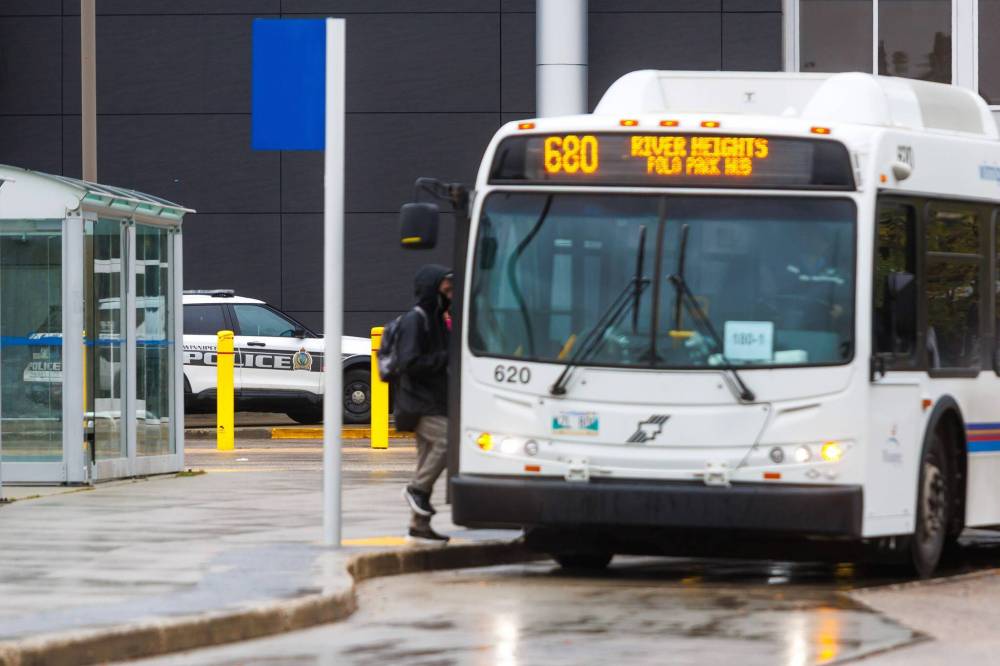
MIKE DEAL / FREE PRESS FILES
We can do a better job of treating people for mental-health issues and addictions before they break the law, Dan Lett writes.
Defence lawyer Jesse Blackman asked Judge Michael Clark to reject the Crown’s request to ban the man from using transit, arguing that notwithstanding his behaviour, the bus was still the only way he could move about the city or seek help.
Clark was unmoved by the request.
“(The ban) is tough, I know,” he said. “It’s more important that the public be protected. It’s time that riders and drivers of buses get a break.”
Then, Clark advised the man to “try and get help (himself) through the community.”
This case perfectly reveals our profound and collective failure to help people suffering from severe mental-health issues. The accused in this case was not disrupting the bus; this was someone in the repeated act of self-harm, inspired by “voices in his head” as his lawyer noted, desperate for some sort of structured care.
It would be wrong to disparage the judge or the Crown prosecutor in this case. Having to choose between public safety and saving someone from a compulsion for self-harm is an unfair task for anyone. Still, the court’s inability to prioritize the person involved in self-harm is the hallmark of a cold and cynical mindset in the justice system.
That said, this is a not a story about the failure of the justice system. This is the moment where we realize the system has lost any hope that it can alleviate the deeply connected problems of homelessness, addictions and mental health.
The court was not expressing a lack of compassion. It was waving the white flag of resignation.
Could a different approach have been taken?
The NDP government is scrambling to augment services for the homeless, addicted and mentally unwell. New housing units with wraparound health and social services are appearing every month. And there is a dedicated mental-health court that is supposed to divert those suffering the most out of the traditional justice system and into structured care.
Our intentions are good. Unfortunately, our ability to make those intentions a reality is curbed by decades of neglect.
For example, the screening process for mental-health court involves a team of prosecutors performing case-by-case assessments. At any one time, the court can handle about 30 cases; applications to have cases transferred there are exponentially higher.
As a result, according to those who work within the system, the screening process eliminates most cases with even a hint of violence. Some will say that this is accountability, ensuring a mentally unwell person who behaves violently is punished. Others will suggest mental-health court is skimming the easiest cases to ensure it has the greatest chance of success.
Even getting a case approved for mental-health court is a questionable win. The accused is often kept in remand for months awaiting an opening on the docket. While in remand, they get only the bare basics in physical and mental-health care.
And although mental-health issues are frequently accompanied by drug addiction, remand inmates cannot access medications to aid with withdrawal.
But let’s say the accused person gets approved for mental-health court and survives remand. On the other side, the chronic shortage of housing and intensive mental-health care means they still might not get the help they need.
When you spend decades failing to provide adequate resources to treat addictions and mental-health issues, you create a dangerous and expensive cycle of general mayhem and self-harm that drains resources from emergency paramedical services, hospital ERs, police and the justice system.
The situation is dire, but we can still do better.

We can do a better job of treating people for mental-health issues and addictions before they break the law, or end up in remand and prison. We can provide more resources to adjudicate cases involving the addicted or mentally unwell outside the normal court system. We can, if we continue to make the right investments, eventually provide housing and wraparound supports in quantities that better meet the demand.
Or, we can continue kicking this can down the road, releasing addicts and the people with mental-health issues with no supports, almost zero chance of recovery and a high likelihood their suffering will end only when they end themselves.
But realize this: every time someone failed by this system eventually dies because of lifestyle or a deliberate act to escape their suffering, 10 more people in need of help will have appeared.
That is not a solution. It’s a life sentence of suffering for all of society.
dan.lett@freepress.mb.ca
Dan Lett is a columnist for the Free Press, providing opinion and commentary on politics in Winnipeg and beyond. Born and raised in Toronto, Dan joined the Free Press in 1986. Read more about Dan.
Dan’s columns are built on facts and reactions, but offer his personal views through arguments and analysis. The Free Press’ editing team reviews Dan’s columns before they are posted online or published in print — part of the our tradition, since 1872, of producing reliable independent journalism. Read more about Free Press’s history and mandate, and learn how our newsroom operates.
Our newsroom depends on a growing audience of readers to power our journalism. If you are not a paid reader, please consider becoming a subscriber.
Our newsroom depends on its audience of readers to power our journalism. Thank you for your support.
Dan Lett is a columnist for the Free Press, providing opinion and commentary on politics in Winnipeg and beyond. Born and raised in Toronto, Dan joined the Free Press in 1986. Read more about Dan.
Dan’s columns are built on facts and reactions, but offer his personal views through arguments and analysis. The Free Press’ editing team reviews Dan’s columns before they are posted online or published in print — part of the our tradition, since 1872, of producing reliable independent journalism. Read more about Free Press’s history and mandate, and learn how our newsroom operates.
Our newsroom depends on a growing audience of readers to power our journalism. If you are not a paid reader, please consider becoming a subscriber.
Our newsroom depends on its audience of readers to power our journalism. Thank you for your support.
Related Articles
Man banned from bus used head to break windows


Advertisement Advertise With Us
Advertisement Advertise With Us