

Division warns of double-digit tax hike
LRSD says 12 per cent increase needed to avoid layoffs if provincial funding frozen

Advertisement
Read this article for free:
or
Already have an account? Log in here »
To continue reading, please subscribe:

Digital Subscription
One year of digital access for only $205*
- Enjoy unlimited reading on winnipegfreepress.com
- Read the E-Edition, our digital replica newspaper
- Access News Break, our award-winning app
- Play interactive puzzles
*First annual payment billed as $205.00 + GST for one year. This annual subscription will automatically renew at $233.00 + GST every 52 weeks (10% off the regular annual price of $259.35). Offer available to new and qualified returning subscribers only. Cancel any time.
To continue reading, please subscribe:
Add Free Press access to your Brandon Sun subscription for only an additional
$1 for the first 4 weeks*
- Enjoy unlimited reading on winnipegfreepress.com
- Read the E-Edition, our digital replica newspaper
- Access News Break, our award-winning app
- Play interactive puzzles
*Your next Brandon Sun subscription payment will increase by $1.00 and you will be charged $17.95 plus GST for four weeks. After four weeks, your payment will increase to $24.95 plus GST every four weeks.
Read unlimited articles for free today:
or
Already have an account? Log in here »
Hey there, time traveller!
This article was published 23/01/2026 (257 days ago), so information in it may no longer be current.
St. Vital homeowners are being warned about a “worst case scenario” property education tax hike of nearly 12 per cent.
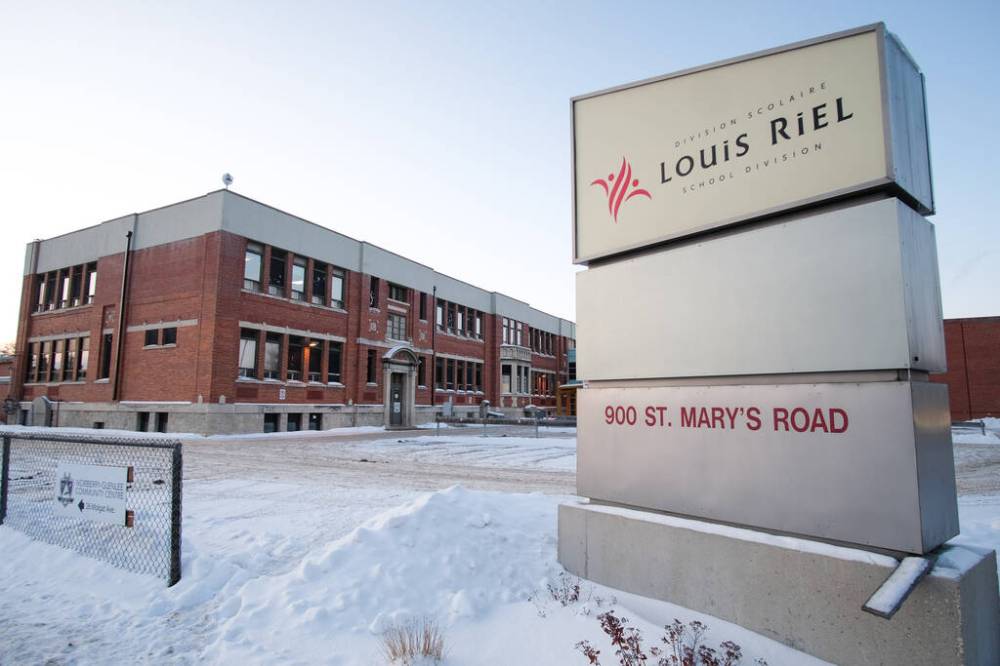
The Louis Riel School Division laid out a range of 2026-27 budget scenarios for residents during a 90-minute meeting on Wednesday.
The event was held two weeks after the division issued a bleak warning about its finances and called on community members to lobby the province to top up its funding.
Daniel Crump / Free Press Files
The Louis Riel School Division laid out a range of 2026-27 budget scenarios for residents during a 90-minute meeting on Wednesday.
“Worst case scenario is an 11.53 per cent mill rate increase for the ratepayer,” said Jamie Rudnicki, secretary-treasurer and chief financial officer of the division in southeast Winnipeg.
“We wanted to present that early to the public because we want input from the community as to how they value education in our division and their priorities and needs.”
Rudnicki said the double-digit hike would be necessary to avoid layoffs in the unlikely event that the division’s provincial funding is frozen.
It would translate into $293 in extra fees annually on an average house in the division valued at $423,300 — before the province’s flat-rate rebate is applied.
In that scenario, a 10 per cent increase would yield a $5.14 million shortfall. That would be the equivalent of cutting either 57 full-time equivalent teacher positions or 106 educational assistants.
Division leaders presented options to cover their growing expenses ahead of the government’s annual kindergarten-to-Grade 12 funding announcement.
Rudnicki’s office has drafted a $281-million budget with status-quo staffing levels across its 41 schools.
Overall, the workforce’s benefits and wage-related expenses are projected to climb $10.9 million.
In a bid to manage those costs, the division has found $3.7 million in reductions to supply and building-related line items.
Rudnicki said the proposed adjustments will decrease school supply budgets and put off new technology purchases and defer maintenance projects.
Jay McGurran, president of the Louis Riel Teachers’ Association, said he’s “deeply concerned” the current financial circumstances will lead to larger class sizes and less support for students in need.
One in five students require specialized supports.
There were 1,428 students who fit into that category in 2018-19, the last school year before the COVID-19 pandemic. That figure is now 3,669.
Area schools are grappling with the “perfect storm,” board chair Sandy Nemeth told the crowd Wednesday.
It’s a combination of growing enrolment, inflation, aging infrastructure and the fallout of both the pandemic and consecutive years of funding not keeping pace with the cost of living, she said.
Rudnicki said one of the major cost-drivers is the division’s obligation to harmonize teacher salaries with the rest of the province.
The Manitoba Teachers’ Society ratified a first-of-its-kind mega-contract with the province, replacing 37 division-specific agreements with a standardized salary scale, in August 2024.
Louis Riel administration all but drained its rainy day fund to pay employees roughly $10.3 million in backpay that fall. Its accumulated deficit sits at about $2.4 million.
As she was listening to the presentation, Melissa Martin said she was frustrated and confused as to whether her division has been spending way beyond its means.
“There’s a lot of nice-to-haves, but could we do without or scale back or hit pause on some of things until we’re in a more financially stable position?” the mother of four said.
Martin cited the 2024 adoption of universal full-day kindergarten. She also echoed concerns that were raised about spending on offsite professional development.
Superintendent Christian Michalik and six colleagues travelled overseas in November to visit Māori schools and take part in the New Zealand World Indigenous Peoples’ Conference on Education. Their expenses, ranging from travel to conference fees, totalled about $58,000.
While Rudnicki defended the trip as a reflection of the division’s commitment to truth and reconciliation, he said next year’s budget includes a reduction to the professional development fund.
Education Minister Tracy Schmidt said her office is working closely with divisions to understand all the pressures they’re facing.
“Our government has given increases to every single school division in this province and school divisions should continue to expect the same,” Schmidt said.

The NDP government restored trustees’ ability to raise local property taxes after the last election. There are no guidelines or caps in place.
Progressive Conservative finance critic Lauren Stone accused the province of removing “all the guardrails,” including the 50 per cent tax rebate program, to protect homeowners.
“The NDP really needs to start getting serious about a fair and sustainable funding model that doesn’t rely upon property taxes,” Stone said.
Louis Riel’s board of trustees voted to increase the mill rate by 7.5 per cent in 2024-25. It grew another 6.43 per cent last year.
maggie.macintosh@freepress.mb.ca
Maggie Macintosh
Education reporter
Maggie Macintosh reports on education for the Free Press. Originally from Hamilton, Ont., she first reported for the Free Press in 2017. Read more about Maggie.
Funding for the Free Press education reporter comes from the Government of Canada through the Local Journalism Initiative.
Every piece of reporting Maggie produces is reviewed by an editing team before it is posted online or published in print — part of the Free Press‘s tradition, since 1872, of producing reliable independent journalism. Read more about Free Press’s history and mandate, and learn how our newsroom operates.
Our newsroom depends on a growing audience of readers to power our journalism. If you are not a paid reader, please consider becoming a subscriber.
Our newsroom depends on its audience of readers to power our journalism. Thank you for your support.
Maggie Macintosh
Education reporter
Maggie Macintosh reports on education for the Free Press. Originally from Hamilton, Ont., she first reported for the Free Press in 2017. Read more about Maggie.
Funding for the Free Press education reporter comes from the Government of Canada through the Local Journalism Initiative.
Every piece of reporting Maggie produces is reviewed by an editing team before it is posted online or published in print — part of the Free Press‘s tradition, since 1872, of producing reliable independent journalism. Read more about Free Press’s history and mandate, and learn how our newsroom operates.
Our newsroom depends on a growing audience of readers to power our journalism. If you are not a paid reader, please consider becoming a subscriber.
Our newsroom depends on its audience of readers to power our journalism. Thank you for your support.
Related Articles
School division urges funding pressure on province







Advertisement Advertise With Us
Advertisement Advertise With Us