Analysis mixed on $900-million Chief Peguis extension
Read this article for free:
or
Already have an account? Log in here »
To continue reading, please subscribe:
Digital Subscription
One year of digital access for only $1.44 a week*
- Enjoy unlimited reading on winnipegfreepress.com
- Read the E-Edition, our digital replica newspaper
- Access News Break, our award-winning app
- Play interactive puzzles
*Billed as $5.77 plus GST every four weeks. After 52 weeks, price increases to the regular rate of $19.95 plus GST every four weeks. Offer available to new and qualified returning subscribers only. Cancel any time.
To continue reading, please subscribe:
Add Free Press access to your Brandon Sun subscription for only an additional
$1 for the first 4 weeks*
- Enjoy unlimited reading on winnipegfreepress.com
- Read the E-Edition, our digital replica newspaper
- Access News Break, our award-winning app
- Play interactive puzzles
*Your next Brandon Sun subscription payment will increase by $1.00 and you will be charged $17.95 plus GST for four weeks. After four weeks, your payment will increase to $24.95 plus GST every four weeks.
Read unlimited articles for free today:
or
Already have an account? Log in here »
Hey there, time traveller!
This article was published 29/01/2026 (265 days ago), so information in it may no longer be current.
Supporters of a $900-million proposal to extend the Chief Peguis Trail predict it would help spark the construction of 15,000 new homes and create thousands of new jobs, while raising $59 million annually in new city tax revenue.
But critics of the project that would extend Chief Peguis from Main Street to Brookside Boulevard say the money would be much better spent on other transportation priorities.
A city staff report released Thursday shares details from a cost-benefit analysis of the project, which is now expected to cost $759 million. The city would spend another $140 million on interest if it funds the construction solely through debt.
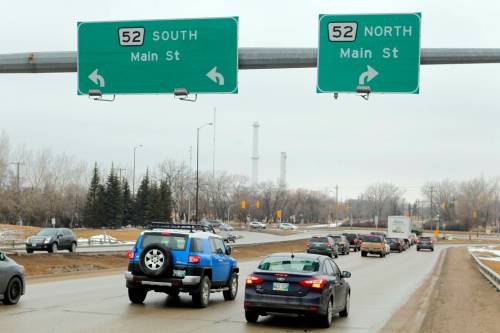
BORIS MINKEVICH / FREE PRESS FILES A recent city report shares details from a cost-benefit analysis of the proposal to extend Chief Peguis Trail, which is now expected to cost $759 million, with another $140 million in interest charges if the city funds the construction solely through debt.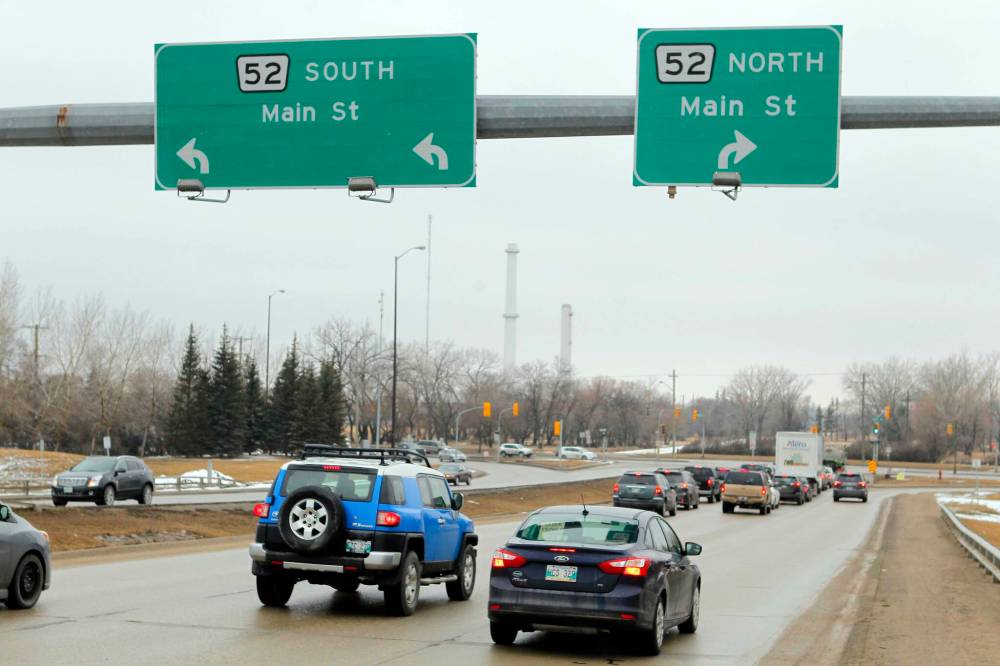
A Deloitte analysis concludes benefits of the project would exceed its costs by $42 million, down from a previous estimate of $98 million.
However, city staff say more advanced traffic modelling shows the project would reduce more congestion than first expected, leading to higher “time savings” in travel. That could raise the estimated benefits to nearly $280 million, the city says.
An interview request was not granted Thursday, so further details of the estimate were not available.
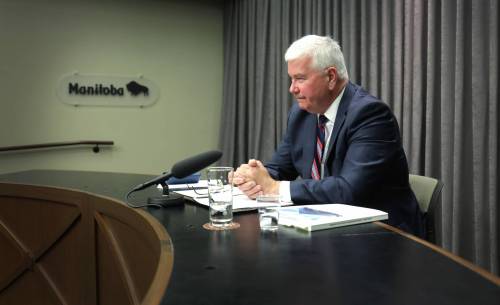
MIKAELA MACKENZIE / FREE PRESS FILES Winnipeg Mayor Scott Gillingham.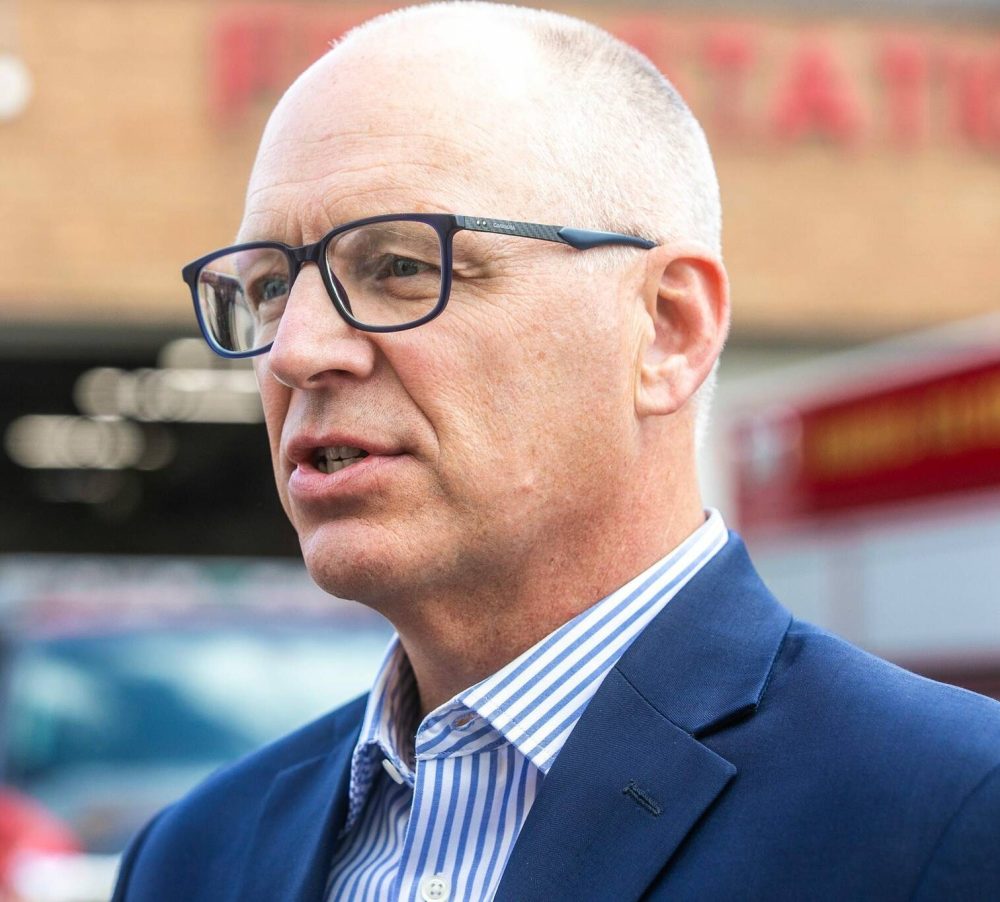
Mayor Scott Gillingham said the massive investment would pay off, no matter which number the city relies on.
“I really do believe as we continue to grow… the extension of Chief Peguis Trail is very important for the future of Winnipeg,” said Gillingham.
The mayor promised to pursue the project during his 2022 election campaign, declaring it a key trade corridor.
The benefits of extending the thoroughfare go beyond reducing commute times, to “create new homes and job opportunities in northwest Winnipeg,” the staff report states.
Specifically, the extension should help develop an area next to CentrePort Canada, paving the way to create 5,600 jobs and make more housing development possible, it says.
The municipal government can’t afford to fund the project alone, however, since the massive price would not fit within the city’s self-imposed debt limit, said Coun. Janice Lukes, chairwoman of public works.
“I really do believe as we continue to grow… the extension of Chief Peguis Trail is very important for the future of Winnipeg.”
Lukes (Waverley West) said the extension should be prioritized for potential provincial and federal funding in the future, especially if the senior governments seek new infrastructure projects to stimulate the economy.
“We can’t do it alone…. (But) in today’s day and age, we have to be prepared,” she said.
The city predicts the provincial and federal governments would collect $65 million each annually in new tax dollars when land adjacent to the project is fully developed.
However, critics say it is far too expensive and will take scarce resources away from other necessary projects.
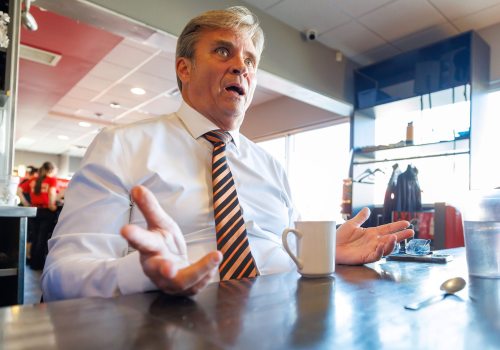
Coun. Matt Allard said the analysis shows the extension doesn’t justify its cost.
“I find the cost-benefit to be low relative to the investment. We have enough liabilities in the city… that we need to fund,” said Allard (St. Boniface).
“I don’t think we need to go and pick up a big new one.”
If the city is willing to spend $900 million, it should instead split that money between Winnipeg Transit and renewing existing roads, he said.
“All of a sudden (you would have) a transportation system that’s much better and a whole lot less potholes,” he said.
City of Winnipeg The extension would extend Chief Peguis from Main Street to Brookside Boulevard.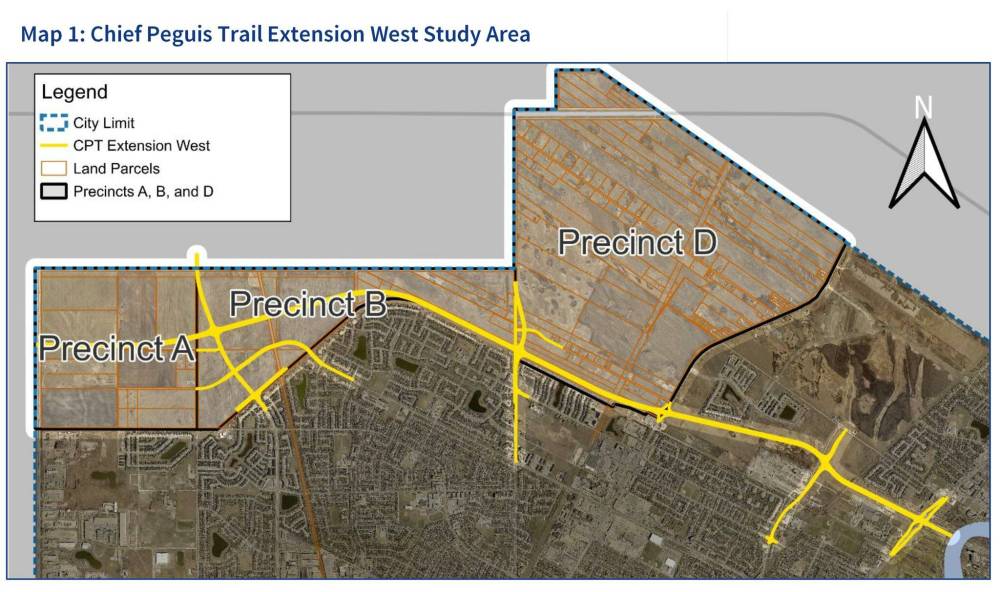
An environmental activist would also like the city to spend its money elsewhere.
“This (project) is going to just increase car dependence even further and we’re going to push that traffic into other neighbourhoods,” said Mel Marginet, a member of the Green Action Centre’s sustainable transportation team.
Marginet said the benefits of the project appear to be dwindling. She believes spending more money on Winnipeg Transit instead would help decrease Winnipeggers’ reliance on single-occupant vehicles, a goal of the city’s Transportation Master Plan.
“We’re seeing… lower and lower cost benefit analysis projections…. (And) we know it’s going to take money away from (key) transit projects,” she said.

The mayor said he’s open to considering more transit spending, but stressed the city is already making significant investments in the new primary transit network, which it launched in June.
City council is expected to consider the Chief Peguis Trail extension in its next strategic priorities action plan, with work on that expected to begin sometime after the Oct. 28 municipal election.
The cost-benefit analysis report does not recommend any immediate spending on the project.
joyanne.pursaga@freepress.mb.ca
X: @joyanne_pursaga

Joyanne is city hall reporter for the Winnipeg Free Press. A reporter since 2004, she began covering politics exclusively in 2012, writing on city hall and the Manitoba Legislature for the Winnipeg Sun before joining the Free Press in early 2020. Read more about Joyanne.
Every piece of reporting Joyanne produces is reviewed by an editing team before it is posted online or published in print — part of the Free Press‘s tradition, since 1872, of producing reliable independent journalism. Read more about Free Press’s history and mandate, and learn how our newsroom operates.
Our newsroom depends on a growing audience of readers to power our journalism. If you are not a paid reader, please consider becoming a subscriber.
Our newsroom depends on its audience of readers to power our journalism. Thank you for your support.
Related Articles
Kinew, Gillingham hope to get their hands on some of Ottawa’s promised $51B in infrastructure funds