

Manitoba has most measles cases in Canada — and it’s likely much worse, doctors say
Widespread transmission continues in Winkler, Morden

Advertisement
Read this article for free:
or
Already have an account? Log in here »
To continue reading, please subscribe:

Digital Subscription
One year of digital access for only $205*
- Enjoy unlimited reading on winnipegfreepress.com
- Read the E-Edition, our digital replica newspaper
- Access News Break, our award-winning app
- Play interactive puzzles
*First annual payment billed as $205.00 + GST for one year. This annual subscription will automatically renew at $233.00 + GST every 52 weeks (10% off the regular annual price of $259.35). Offer available to new and qualified returning subscribers only. Cancel any time.
To continue reading, please subscribe:
Add Free Press access to your Brandon Sun subscription for only an additional
$1 for the first 4 weeks*
- Enjoy unlimited reading on winnipegfreepress.com
- Read the E-Edition, our digital replica newspaper
- Access News Break, our award-winning app
- Play interactive puzzles
*Your next Brandon Sun subscription payment will increase by $1.00 and you will be charged $17.95 plus GST for four weeks. After four weeks, your payment will increase to $24.95 plus GST every four weeks.
Read unlimited articles for free today:
or
Already have an account? Log in here »
Hey there, time traveller!
This article was published 04/02/2026 (224 days ago), so information in it may no longer be current.
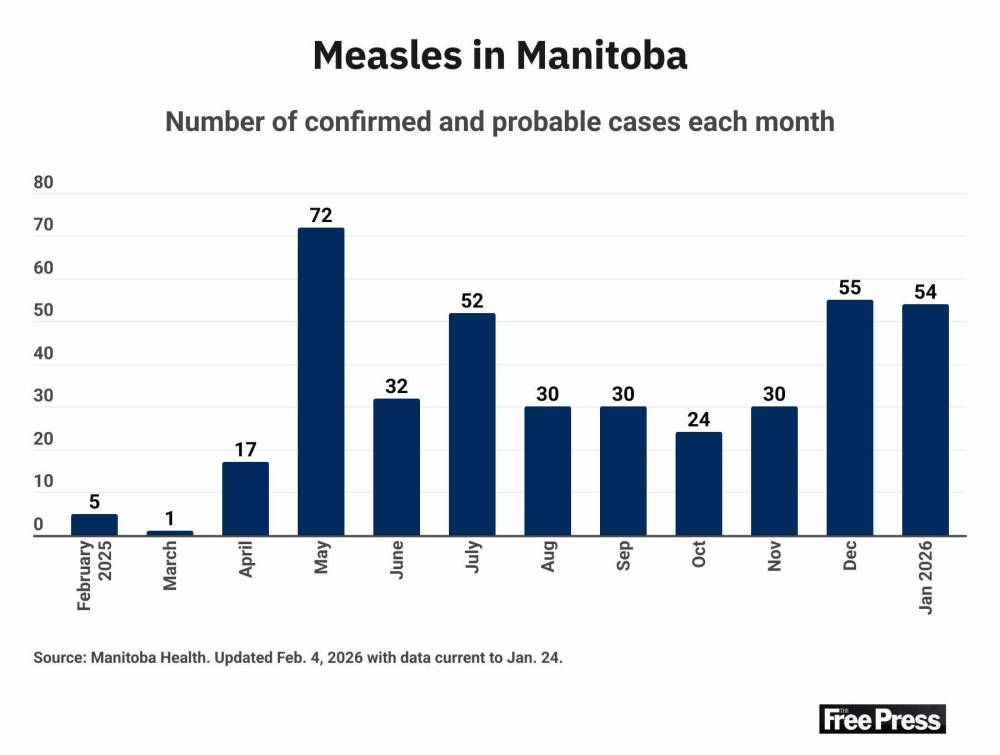
Manitoba has the country’s highest number of reported measles infections in 2026 — a year after the province’s outbreak began — while a surge brings stronger messaging from the government.
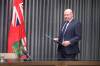
Dr. Davinder Singh, who is Manitoba’s public health lead on measles, said the province is seeing its highest monthly totals since May.
“Unfortunately, we’re seeing an increase in the number of detected or reported cases. We also know the number of cases that are diagnosed are only a relatively small fraction of the true number of cases out in the community,” he said Wednesday.

THE CANADIAN PRESS FILES
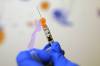
Manitoba is “upgrading” its messaging to strongly encourage parents of infants between six and 12 months to get an early measles vaccine dose.
“We can estimate that there may be about 10 times as many infections as we have that get reported to us or that get detected.”
It’s hard to predict when the outbreak will end, said Singh, who anticipates there are still quite a few people who are susceptible to measles in the Southern Health region alone.
He said there is still widespread transmission, particularly in Manitoba’s most impacted communities, which include Winkler, Morden and some of the surrounding rural municipalities.
“A lot of the people we talked to recently can’t necessarily identify specific exposure to someone with measles,” he said.
“There’s just kind of so many people that are infected with the virus that people in those areas may be exposed in any public place that they go to in the area.”
For that reason, the province is “upgrading” its messaging to strongly encourage parents of infants between six and 12 months to get an early vaccine dose for those children, Singh said.
The prevalence of cases in those communities is attributed to lower vaccine uptake. Public health officials have assured Manitobans the vaccine is safe and 97 per cent effective with two doses.
Singh said concerns about safety or efficacy, and the misheld belief that measles isn’t serious are among the most common reasons people do not want to vaccinate themselves or their children.
“We can estimate that there may be about 10 times as many infections as we have that get reported to us or that get detected.”
December holiday gatherings may have fuelled the recent increase.
“The incubation period for measles is between seven and 21 days. On average, it’s two weeks,” Singh said. “You can expect that if people were getting together, some of whom had measles, we would start to see cases two or three weeks later.”
Manitoba’s first confirmed cases of the highly contagious disease were reported Feb. 4, 2025, involving people from a household in a southern community.
They had contact with infected people while travelling in Ontario. At the time, Manitoba Health reported four exposure sites — Reinland Mennonite Church in Winkler and three areas within Health Sciences Centre in Winnipeg, where one or more patients were treated.
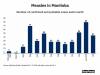
Manitoba recorded 319 confirmed and 29 probable cases in 2025. The majority were unvaccinated or under-vaccinated children who were exposed in their communities.
In 2026, the province reported 51 confirmed and three probable cases up to Jan. 24. Only 18 cases were detected between 2000 and 2024.
About 86 per cent of the cases since February 2025 involved people who were unvaccinated, the province said. Three per cent had one dose, 5.2 per cent had at least two doses, and 6.2 per cent were unknown.
The province said 16 of 22 people who were hospitalized were under the age of 10. One baby was born with congenital measles. No deaths were reported.
Manitoba expanded eligibility for the first of two vaccine doses last May to children between six months and one year old. A spokesperson said more than 2,078 children in that range have received one dose since then.
A physician in Winkler agreed that the true number of infections is about 10 times higher than official figures.
“For the patients I’ve seen with measles, and there are not many, but they know at least 10 other people who had measles but never came to seek any help because most of it, apart from the rash, they’re going to remain well,” said the doctor, who asked to remain anonymous.
The doctor encouraged people to learn more about measles, get vaccinated and follow self-isolation guidelines if infected.
“There’s quite a substantial group of people in this area who do not believe in the merits of vaccination despite everything that happened during COVID,” he said.
Some of it likely stems from misinformation pushed by some groups or organizations, he said.
Winkler Mayor Henry Siemens encouraged people to speak to a physician or health-care provider about the vaccine, whether it be for themselves or their children.
“The incubation period for measles is between seven and 21 days. On average, it’s two weeks.”
He said there is some hesitancy around the vaccine, or distrust of governments or official messaging, that isn’t isolated to the Winkler area.
“Don’t make your decisions based on what you see on social media or what you hear your friends talking about,” Siemens said. “Go out and get the information from the professionals who will be able to help you make an informed decision for yourself.”
In the most-affected communities, multiple letters with vaccine information were sent to families via schools and child-care centres.
Public health officials offered immunization clinics after exposures at schools, and spoke to religious leaders about sharing information with their congregations after exposures at places of worship, Singh said.
Manitoba reported more cases than any other province in 2026 up to Jan. 24, with Alberta not far behind with 46, according to Health Canada. Manitoba accounted for almost half of Canada’s cases during the 24-day period.
Canada has lost the measles elimination status it achieved in 1998. The country’s outbreak was traced to an exposure at a large gathering in New Brunswick in the fall of 2024.
“Patient zero” was an unvaccinated Canadian woman who lives in Thailand and travelled to Florenceville, N.B. for a family wedding, the Globe and Mail has reported.

Some guests became infected before they returned home. Some were from Mennonite communities where vaccination uptake is low, the report said.
Measles is characterized by a red, blotchy rash, but it can result in serious illness or death. The measles virus spreads through close personal contact with an infected person, or through droplets in the area when an infected person coughs or sneezes.
chris.kitching@freepress.mb.ca

Chris Kitching is a general assignment reporter at the Free Press. He began his newspaper career in 2001, with stops in Winnipeg, Toronto and London, England, along the way. After returning to Winnipeg, he joined the Free Press in 2021, and now covers a little bit of everything for the newspaper. Read more about Chris.
Every piece of reporting Chris produces is reviewed by an editing team before it is posted online or published in print — part of the Free Press‘s tradition, since 1872, of producing reliable independent journalism. Read more about Free Press’s history and mandate, and learn how our newsroom operates.
Our newsroom depends on a growing audience of readers to power our journalism. If you are not a paid reader, please consider becoming a subscriber.
Our newsroom depends on its audience of readers to power our journalism. Thank you for your support.
Chris Kitching is a general assignment reporter at the Free Press. He began his newspaper career in 2001, with stops in Winnipeg, Toronto and London, England, along the way. After returning to Winnipeg, he joined the Free Press in 2021, and now covers a little bit of everything for the newspaper. Read more about Chris.
Every piece of reporting Chris produces is reviewed by an editing team before it is posted online or published in print — part of the Free Press‘s tradition, since 1872, of producing reliable independent journalism. Read more about Free Press’s history and mandate, and learn how our newsroom operates.
Our newsroom depends on a growing audience of readers to power our journalism. If you are not a paid reader, please consider becoming a subscriber.
Our newsroom depends on its audience of readers to power our journalism. Thank you for your support.
Related Articles
Regional health organization issues alert as measles cases surge across the Americas





Advertisement Advertise With Us
Advertisement Advertise With Us