Keeping hope aflame amid darkness and terror
Read this article for free:
or
Already have an account? Log in here »
To continue reading, please subscribe:

Digital Subscription
One year of digital access for only $205*
- Enjoy unlimited reading on winnipegfreepress.com
- Read the E-Edition, our digital replica newspaper
- Access News Break, our award-winning app
- Play interactive puzzles
*First annual payment billed as $205.00 + GST for one year. This annual subscription will automatically renew at $233.00 + GST every 52 weeks (10% off the regular annual price of $259.35). Offer available to new and qualified returning subscribers only. Cancel any time.
To continue reading, please subscribe:
Add Free Press access to your Brandon Sun subscription for only an additional
$1 for the first 4 weeks*
- Enjoy unlimited reading on winnipegfreepress.com
- Read the E-Edition, our digital replica newspaper
- Access News Break, our award-winning app
- Play interactive puzzles
*Your next Brandon Sun subscription payment will increase by $1.00 and you will be charged $17.95 plus GST for four weeks. After four weeks, your payment will increase to $24.95 plus GST every four weeks.
Read unlimited articles for free today:
or
Already have an account? Log in here »
Hey there, time traveller!
This article was published 20/02/2026 (207 days ago), so information in it may no longer be current.
The old trains of Ukraine have a particular aroma. It’s strongest near the ends of each wagon, where you can slip away from the cramped cabin you share with three strangers and stare out the window, watching forests and farm fields slide by.
Once you’ve smelled it enough, that aroma nestles in a crack of your mind; you’ll never forget it.
Grease and coal. A tickle of stale cigarette smoke, from when someone sucked back a butt in the gap between the cars. A tart antiseptic scent emanating from the toilet, which flushes by dumping whatever’s inside onto the tracks below.
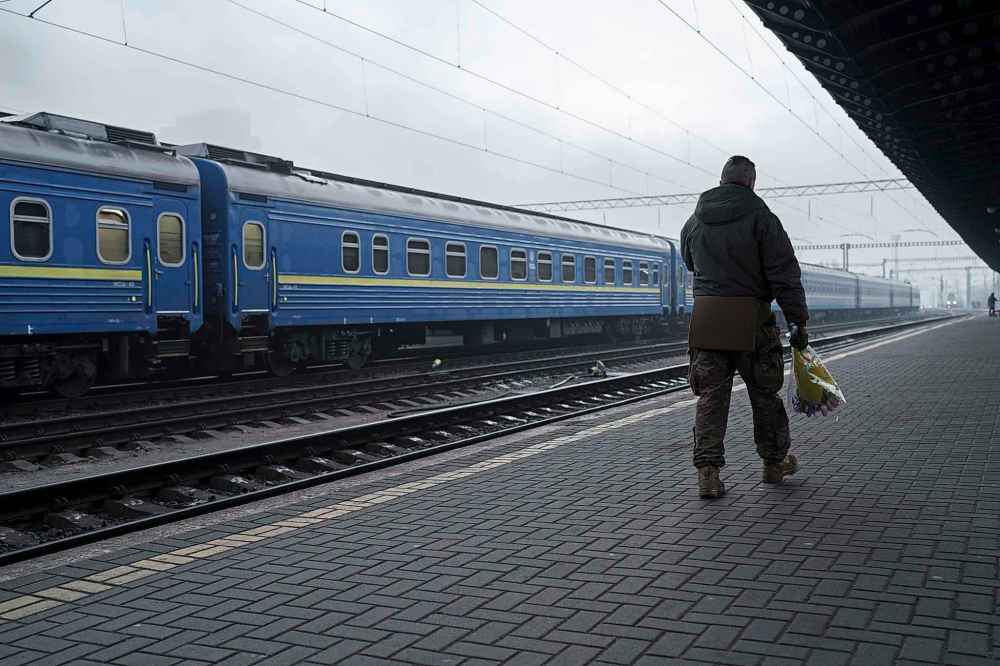
The old trains aren’t luxurious, but they are folksy and dependable, and once you’ve been away long enough, you start to miss them.
Yes, even the smell.
The last time I caught that scent was in the dying days of August. It was still warm then, and I wept as I watched the green waves of rural Ukraine speed by.
I was leaving after living there for almost two-and-a-half war-ravaged years; the old train ferried me towards Poland, where I would catch the first of four flights to take me back home.
I didn’t know when — or even if — I’d get a chance to return. Turns out, it was a lot sooner than I imagined.
This week, I found myself again riding an old Ukrainian train, returning to the country to finish a large project.
We crossed the border in pitch-darkness. I crept out of the cabin and stood in the hallway, underneath a digital sign thanking riders for not smoking, not drinking alcohol and not listening to Russian pop music. (Of those three, only the last was observed.)
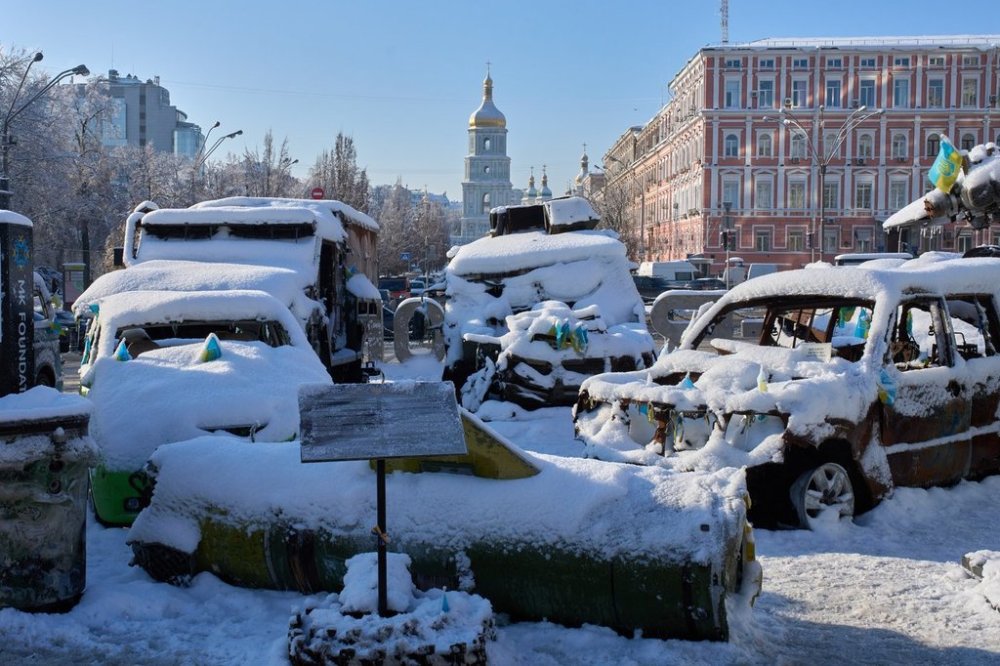
For hours, I stared out the window, breathing in that old-train scent, jet-lagged and unable to sleep. The green fields I’d left in summer now lie cloaked in white snow. The wheels clattered beneath my feet, as the train lurched towards a Kyiv that is the same, and yet profoundly different, from the one I had left.
In just the six months since I’ve been gone, Ukraine’s capital has been deeply wounded. The routine missile strikes that had intensified over the spring and summer of 2025 became nearly cataclysmic through the late fall and winter, battering the city with near-nightly barrages aimed at destroying its key civilian electrical and heating infrastructure.
Here, it’s worth understanding something. In Kyiv, unlike Canada, most apartment blocks are heated through a centralized Soviet-era system. Water is heated at massive main plants and then pumped into thousands of apartment blocks to supply heat via the radiators and hot water in the taps. City authorities decide when “heating season” begins.
That system was intended to be more efficient than heating each block on its own, and maybe it was. But what it means now is that the civilian infrastructure of the city is uniquely vulnerable — if the central heat-generating stations are destroyed, then hundreds of thousands of residents have no way to warm up.
So, destroy the heating stations with ballistic and cruise missiles is exactly what Russia did.
By January, the situation in Kyiv had become dire. Every one of its heating plants had been severely damaged, city officials said, leaving more than 3,500 buildings without heat. It’s also a cold winter, in a cold climate, with temperatures plunging to -20 C, and the escalating attacks brought little relief.
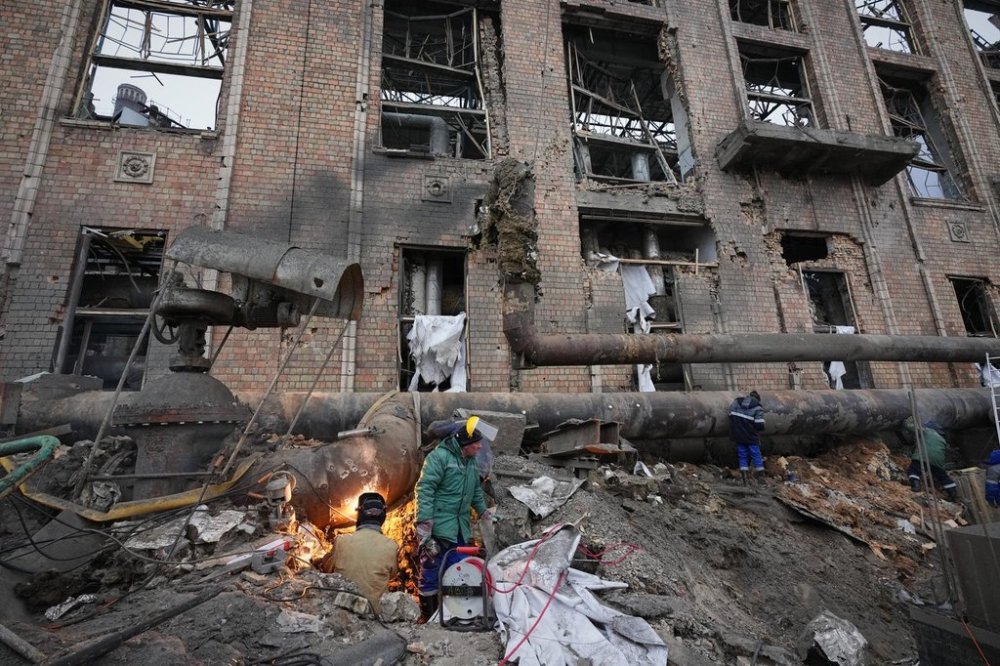
Now electricity comes in ragged spurts; recently, residents were receiving just an hour or two a day, though that has slightly improved this week. Hundreds of thousands of civilians huddle in freezing apartments, sleeping in parkas. For the elderly it is particularly dangerous; with elevators frequently unusable, many stay trapped in lightless upper-floor suites.
All of this, and for what? The thermal plants of Kyiv have little bearing on the military.
The strikes on Kyiv’s electrical and heating infrastructure are a naked act of terror and disruption against the civilian population; the only goal is to make the winter in Ukraine unbearable, even totally unlivable, for millions of ordinary people.
In a better world, such a cynical tactic would have been met with an immediate and strident new response from the global community.
But that is not the world we live in, so Russia has paid little additional price for these attacks; and as the train rolled into the grand embrace of Kyiv’s central station, I didn’t know what to expect.
I got off the train and laboured to haul my heavy suitcase up the long stairway from the platform. A stern-faced middle-aged man came up behind me and, with a grunt, grabbed my luggage and dropped it off at the top, without waiting for a thank-you. This has happened every single time I’ve arrived in the country.

It’s why Ukraine still lives, even now. It’s where Ukraine still lives. It’s in the people.
A few minutes later, I stepped outside the train station, shivering in the crisp winter air. I looked at the taxis jumbling past the station to pick up passengers; looked at a group of three soldiers smoking beside a trio of no-smoking signs; looked at the familiar broken windows of a nearby skyscraper that was damaged in a 2022 missile strike and left abandoned.
Kyiv still lives, if uncomfortably. It still lives, and even in its worst hour, it still feels like coming home.
As I waited for my cab, a notification popped up on my phone: Ukrainian officials were warning that a major missile attack is expected in the next 48 to 72 hours. The expected priority targets include a thermal plant in Kyiv.
The cab dropped me off at my small rented room right across from the Canadian embassy — as safe as anywhere in Kyiv can be, I figured. The room is beautifully renovated, and impossibly frigid. As the sun drops, the power cuts out, and the lights of the city blink off all through the heart of the capital’s downtown.
I finish these words in the dark. My fingers are already a little numb.
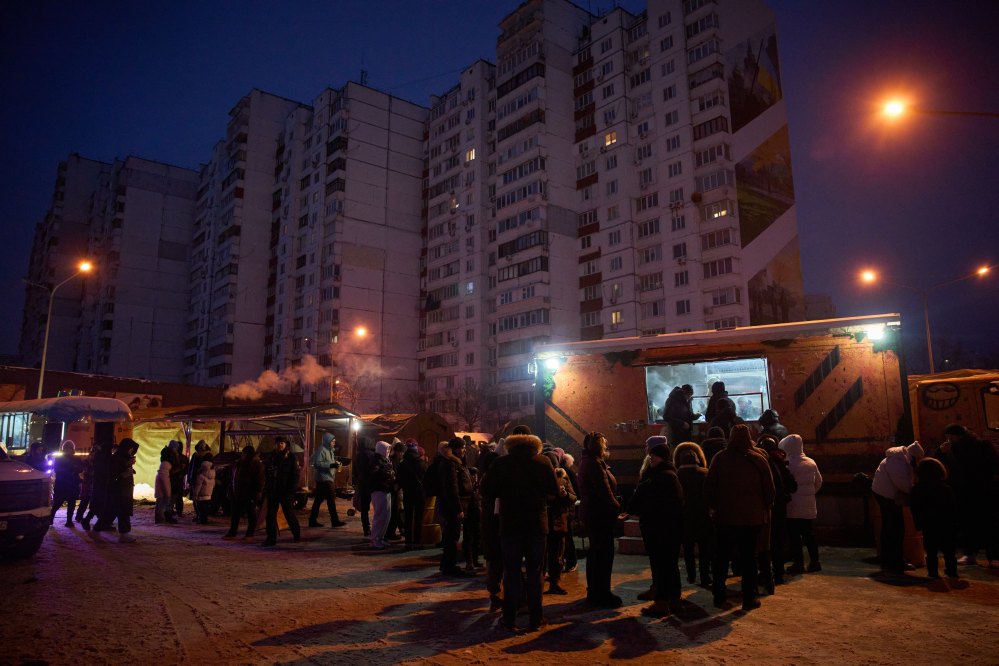
Outside my window, in the darkness, a young man and woman huddle together in the cold, and they are laughing.
melissa.martin@freepress.mb.ca


Melissa Martin
Reporter-at-large
Melissa Martin reports and opines for the Winnipeg Free Press.
Every piece of reporting Melissa produces is reviewed by an editing team before it is posted online or published in print — part of the Free Press‘s tradition, since 1872, of producing reliable independent journalism. Read more about Free Press’s history and mandate, and learn how our newsroom operates.
Our newsroom depends on a growing audience of readers to power our journalism. If you are not a paid reader, please consider becoming a subscriber.
Our newsroom depends on its audience of readers to power our journalism. Thank you for your support.
Related Articles
Life is harsh and dangerous in Russian-run parts of Ukraine, activists and former residents say