

Health concerns, affordability spur trend to drink less booze

Advertisement
Read this article for free:
or
Already have an account? Log in here »
To continue reading, please subscribe:

Digital Subscription
One year of digital access for only $205*
- Enjoy unlimited reading on winnipegfreepress.com
- Read the E-Edition, our digital replica newspaper
- Access News Break, our award-winning app
- Play interactive puzzles
*First annual payment billed as $205.00 + GST for one year. This annual subscription will automatically renew at $233.00 + GST every 52 weeks (10% off the regular annual price of $259.35). Offer available to new and qualified returning subscribers only. Cancel any time.
To continue reading, please subscribe:
Add Free Press access to your Brandon Sun subscription for only an additional
$1 for the first 4 weeks*
- Enjoy unlimited reading on winnipegfreepress.com
- Read the E-Edition, our digital replica newspaper
- Access News Break, our award-winning app
- Play interactive puzzles
*Your next Brandon Sun subscription payment will increase by $1.00 and you will be charged $17.95 plus GST for four weeks. After four weeks, your payment will increase to $24.95 plus GST every four weeks.
Read unlimited articles for free today:
or
Already have an account? Log in here »
Hey there, time traveller!
This article was published 06/03/2026 (186 days ago), so information in it may no longer be current.
When it comes to raising a glass, fewer Manitobans are choosing beer, spirits or wine.
Statistics Canada says there continues to be a decline in alcoholic beverage sales and the volume consumed in Manitoba.
The only category that has gone up — continuing the trend since 2020 — is ciders, coolers and other alcoholic refreshment beverages.
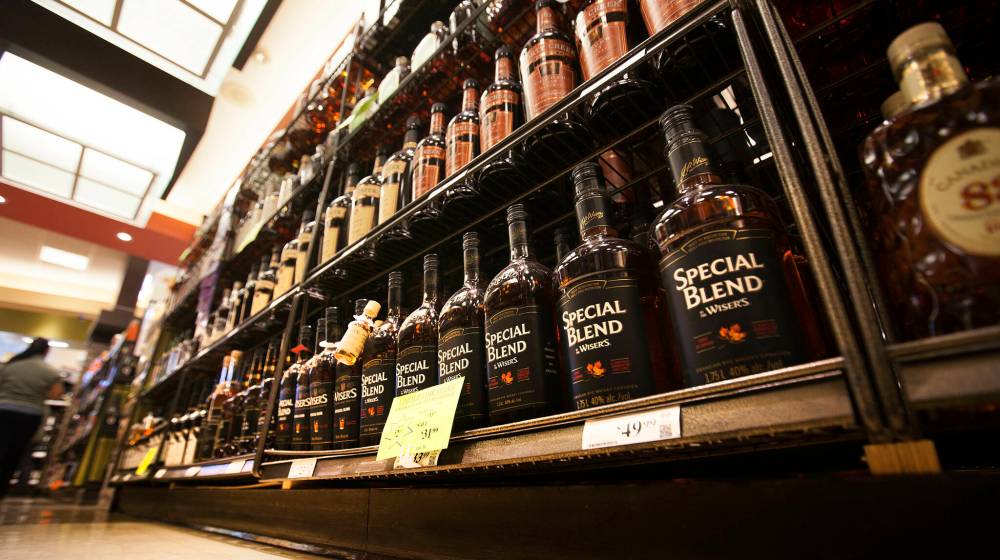
RUTH BONNEVILLE / FREE PRESS FILES
Statistics Canada says alcoholic beverage sales and the volume consumed in Manitoba is declining.
Colin Koop, co-owner of Devil May Care Brewing, which bills itself as the city’s smallest brewery by capacity, said he agrees beer consumption is down.
“We’re not down by a lot, but we are down anyway,” Koop said on Friday. “That’s not lovely.”
Koop and a partner opened the micro craft brewery in Dec. 2022 after about seven years of planning. He said there is one thing they didn’t count on.
“Over the past 15 years, there has been unbridled growth for craft beer – it was only the big guys who were going down with their percentage of the pie for sales,” he said.
“We didn’t ever count on the pie itself getting smaller.”
Robert Holmberg, executive vice-president of liquor and cannabis at Manitoba Liquor and Lotteries, said in a statement the decline in national sales of alcohol “was not a surprise to Manitoba Liquor and Lotteries.”
“We regularly monitor these trends and have been seeing the same tendencies in beverage alcohol consumption as what has been reported on from a national, North American, and international basis.”
Holmberg said alcohol sales are vulnerable to economic pressures, while many Manitobans are choosing to drink less to improve their physical and mental well-being.
“Moderation practices, combined with the increase in availability of both low and/or no alcohol products has definitely shifted overall volumes,” he said.
As well, Holmberg said while some drink less, others choose to drink “higher quality, more premium products” when they buy alcohol.
Overall, more than $714 million worth of alcoholic beverages were purchased in Manitoba from April 1, 2024 to March 31, 2025, down from $725 million in the same period a year earlier. It’s also down from $761 million during the same period in 2022-23, $765 million in 2021-22, and $783 million in 2020-21.
At the same time, the amount of alcohol sold has also dropped, from eight million litres in 2020-21 to 6.6 million litres in 2024-25.
The statistics also show for Manitoba:
—Beer sales are down from $248 million and 2.6 million litres sold in 2024-25 to $243 million and 2.4 million litres in 2024-25. In 2020-21 they were at $304 million and 3.2 million litres.
Spirits are down to just under $238 million in sales and 2.4 million litres in 2024-25 from $241 million and 2.5 million litres sold in 2023-24. In 2020-21, more than $252 million and 2.8 million litres was sold.
Wine too is increasingly left in the bottle with $130 million and one million litres sold in 2024-25, down from $135 million and 1.1 million litres sold in 2023-24. There were 1.4 million litres sold in 2020-21 bringing in $155 million in sales.
Ciders and coolers were a bright spot, with $102 million and 0.9 million litres sold in 2024-25, up from $100 million, but for the same number of litres bought.
Maryse Carriere, a Statistics Canada spokeswoman, said overall alcohol sales by volume in Manitoba were down 4.7 per cent from April 1, 2024 to March 31, 2025, compared to the same time period a year earlier.
“This is an even greater decline than at the national level, which is three per cent,” Carriere said.
She also said overall sales were down 1.5 per cent.
The Statistics Canada report said the decline is the equivalent of the average Canadian of legal drinking age going from purchasing 8.7 standard alcoholic beverages a week in 2023-24 to eight a year later.
Sijie Sun, an assistant marketing professor, and the F. Ross Johnson Fellow, at the University of Manitoba’s Asper School of Business, said declining consumption of alcohol is part of “a generational change.”
“This is not only happening in Canada. The younger generation stopped drinking more even when they have occasions when they have parties.”
Sun said during an economically difficult time, when young people wonder whether they will be able to afford a house, buying more liquor is not uppermost in their spending habits.
“They probably want to have other things instead,” he said. “Everyone wants to eat well and eat more healthy food, eat more organically… and, because of the harmful consequences of alcohol, they probably want to cut it.
“If I only spend $100, I probably prefer a meal instead of alcohol. I would rather order one more dish instead.”
Blake Lelyk, who co-bought GJ Andrews Food and Wine Shoppe on Academy Road a little more than a year ago, said he has already noticed the change in alcohol purchase patterns.

“There’s a more discerning taste now,” Lelyk said. “They aren’t going with volume, but of higher quality.”
Lelyk said many people look at purchasing a $30 to $40 bottle of wine, where in the past they might have picked up a $15 bottle.
“They might buy one good bottle instead of two,” he said.
Lelyk said the trend is so noticeable they are looking to expand their specialty wine category.
kevin.rollason@freepress.mb.ca
Kevin Rollason
Reporter
Kevin Rollason was a general assignment reporter at the Free Press.
Our newsroom depends on a growing audience of readers to power our journalism. If you are not a paid reader, please consider becoming a subscriber.
Our newsroom depends on its audience of readers to power our journalism. Thank you for your support.
Kevin Rollason
Reporter
Kevin Rollason was a general assignment reporter at the Free Press.
Our newsroom depends on a growing audience of readers to power our journalism. If you are not a paid reader, please consider becoming a subscriber.
Our newsroom depends on its audience of readers to power our journalism. Thank you for your support.
Advertisement Advertise With Us
Advertisement Advertise With Us