

Instead of just sitting around, Winnipeg teen designs seating website for teachers

Advertisement
Read this article for free:
or
Already have an account? Log in here »
To continue reading, please subscribe:
Digital Subscription
One year of digital access for only $1.44 a week*
- Enjoy unlimited reading on winnipegfreepress.com
- Read the E-Edition, our digital replica newspaper
- Access News Break, our award-winning app
- Play interactive puzzles
*Billed as $5.77 plus GST every four weeks. After 52 weeks, price increases to the regular rate of $19.95 plus GST every four weeks. Offer available to new and qualified returning subscribers only. Cancel any time.
To continue reading, please subscribe:
Add Free Press access to your Brandon Sun subscription for only an additional
$1 for the first 4 weeks*
- Enjoy unlimited reading on winnipegfreepress.com
- Read the E-Edition, our digital replica newspaper
- Access News Break, our award-winning app
- Play interactive puzzles
*Your next Brandon Sun subscription payment will increase by $1.00 and you will be charged $17.95 plus GST for four weeks. After four weeks, your payment will increase to $24.95 plus GST every four weeks.
Read unlimited articles for free today:
or
Already have an account? Log in here »
Hey there, time traveller!
This article was published 16/03/2026 (218 days ago), so information in it may no longer be current.
A tech-savvy teen has coded a new tool to help teachers map out their classroom seating plans.
James Hohner, a Grade 10 student at Collège Jeanne-Sauvé, has dedicated much of his down time to developing a website (tools4teaching.online) this winter.
Born out of his boredom and eagerness to help others, the resource aims to simplify a tedious, albeit critical, task for educators of all kinds.
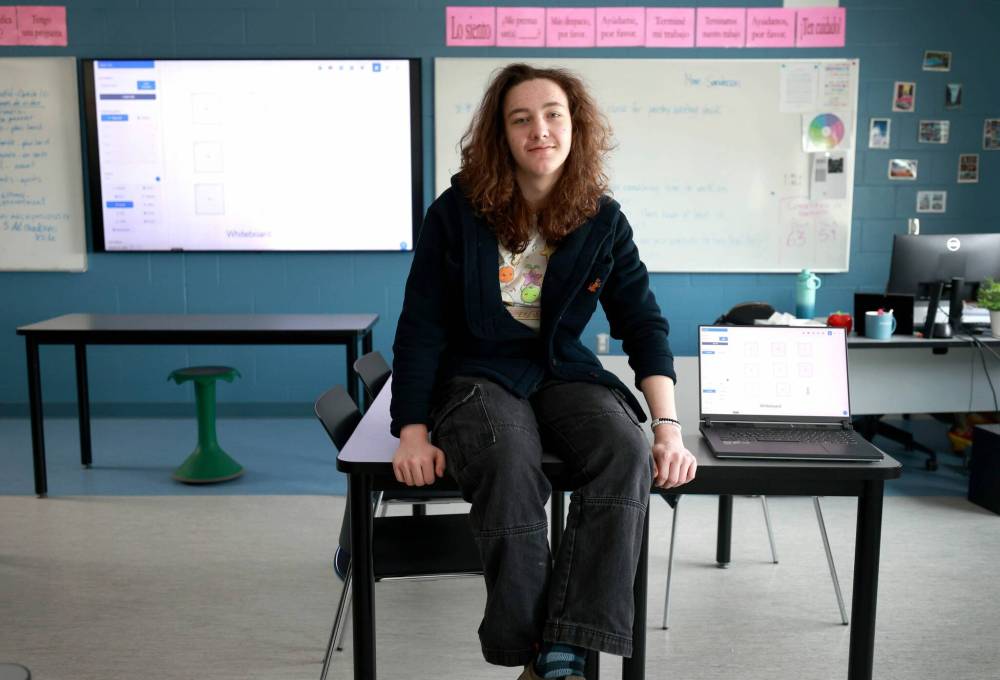
“Having a good seating plan is make or break for a lot of learning,” the 16-year-old said. “It’s like building a foundation for your house.”
His website provides a blank, user-friendly template to begin construction; it allows teachers to upload class lists, draw desks of varying shapes and sizes and add custom labels to mimic any learning space.
James has been designing it with input from teachers at his high school, including Alison Adachi — a mentor who inspired the project.
In the lead-up to the transition period between the fall and winter semesters, James was searching for a way to put his beginner coding skills to good use. At the time, Adachi was bracing for a new timetable and along with it, new classroom dynamics.
The high school teacher described figuring out where to seat students every semester as “a maddening process.”
Managing big personalities and student needs, be it requiring a front seat to see clearly or a spot near the exit to access the washroom regularly, is an underrated challenge, she said.
“It’s very time consuming and for good reason — we want to make sure everybody’s needs are met and that nobody’s uncomfortable,” said Adachi, who teaches language and technology courses inside the Grades 9-12 building in St. Vital.
Adachi usually lets her students decide where to sit for the first few days of a course and polls them on their preferences. In the past, she’s relied on sticky notes and spreadsheets to finalize her plans.
“Having a good seating plan is make or break for a lot of learning… It’s like building a foundation for your house.”
James’ website is already saving her time, she said, adding she’s “incredibly proud” of the teenage web developer.
One of her favourite features is that users can pair up students who work well together, as well as ensure those who do not get along are kept separated, she said.
Among the buttons on the platform, many of which are labelled with emojis, there are options for generating plans by alphabetical order and assigning students evenly across a room.
Users can also share their layouts with colleagues — a feature James designed for educators who share a classroom — and export them free of charge.
All of the data is stored locally in a user’s browser.
“One of my biggest concerns was privacy. I didn’t want to personally store names (or other student information),” James said.
His biggest challenge? “Making the user feel like they aren’t trying to fly an airplane while using my site.”
James took an online game-design course and he’s watched tutorials on YouTube, but he credits much of his coding expertise to shadowing his tech-savvy older sister.
A self-taught coder who is studying computer science at the University of Manitoba, she is “a big role model” to him, he said.
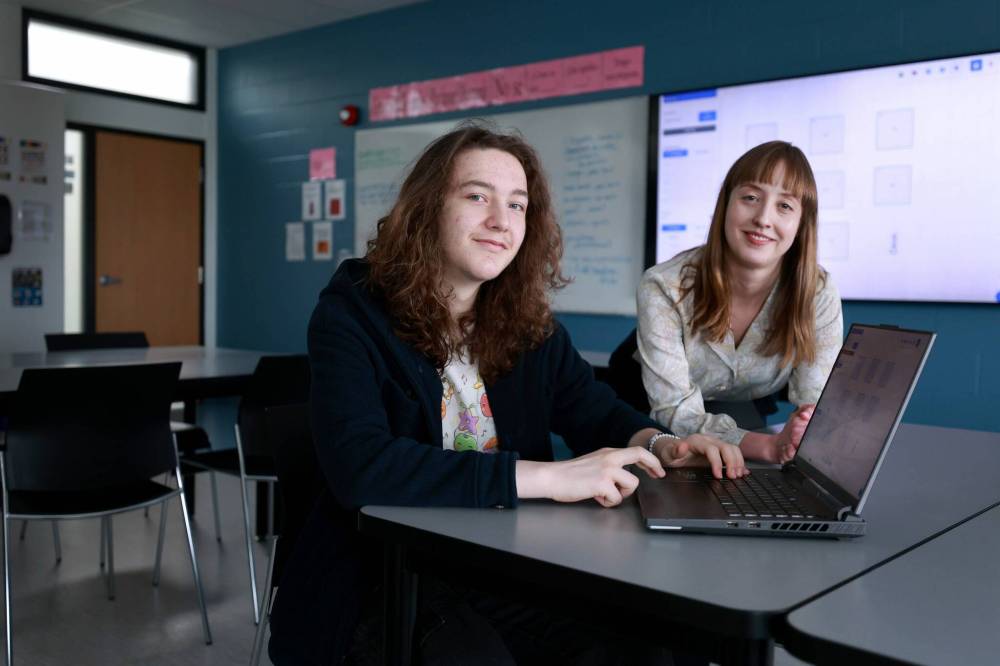
James is planning to pursue an education degree to teach computer science after he graduates from Collège Jeanne-Sauvé.
Tools4teaching.online, one of several recent coding projects, may come in handy for designing his future classrooms.
(He’s planning to record a video to include on his website to teach visitors how to use all of its different elements.)
Asked about his preference when it comes to seating plans, James said he’s keen to sit together with peers in groups.
“It encourages collaboration and you don’t feel like you’re a solo, floating island in the middle of the sea,” he said.
Inside the University of Winnipeg’s education faculty, Michael Holden spends a lot of time talking to beginner candidates about how to set up their classrooms for success.
“It encourages collaboration and you don’t feel like you’re a solo, floating island in the middle of the sea.”
“I don’t want to give them the illusion that just because you use rows or groups or whatever, that that’s going to be the silver bullet to having a good classroom management routine,” the assistant professor said.
“So much depends on the room you’re working with and the humans you’re working with.”
His advice is to be intentional about classroom configurations and adjust them for different activities to maximize their impact.
There’s widespread debate in education circles about whether teachers should sit students with peers who have similar skill levels versus mixed-ability grouping, he noted.
maggie.macintosh@freepress.mb.ca
Maggie Macintosh
Education reporter
Maggie Macintosh reports on education for the Free Press. Originally from Hamilton, Ont., she first reported for the Free Press in 2017. Read more about Maggie.
Funding for the Free Press education reporter comes from the Government of Canada through the Local Journalism Initiative.
Every piece of reporting Maggie produces is reviewed by an editing team before it is posted online or published in print — part of the Free Press‘s tradition, since 1872, of producing reliable independent journalism. Read more about Free Press’s history and mandate, and learn how our newsroom operates.
Our newsroom depends on a growing audience of readers to power our journalism. If you are not a paid reader, please consider becoming a subscriber.
Our newsroom depends on its audience of readers to power our journalism. Thank you for your support.
Maggie Macintosh
Education reporter
Maggie Macintosh reports on education for the Free Press. Originally from Hamilton, Ont., she first reported for the Free Press in 2017. Read more about Maggie.
Funding for the Free Press education reporter comes from the Government of Canada through the Local Journalism Initiative.
Every piece of reporting Maggie produces is reviewed by an editing team before it is posted online or published in print — part of the Free Press‘s tradition, since 1872, of producing reliable independent journalism. Read more about Free Press’s history and mandate, and learn how our newsroom operates.
Our newsroom depends on a growing audience of readers to power our journalism. If you are not a paid reader, please consider becoming a subscriber.
Our newsroom depends on its audience of readers to power our journalism. Thank you for your support.
Advertisement Advertise With Us
Advertisement Advertise With Us