NDP’s fork in the road Members must choose to turn left or stay the course at convention in Winnipeg this weekend
Read this article for free:
or
Already have an account? Log in here »
To continue reading, please subscribe:

Digital Subscription
One year of digital access for only $205*
- Enjoy unlimited reading on winnipegfreepress.com
- Read the E-Edition, our digital replica newspaper
- Access News Break, our award-winning app
- Play interactive puzzles
*First annual payment billed as $205.00 + GST for one year. This annual subscription will automatically renew at $233.00 + GST every 52 weeks (10% off the regular annual price of $259.35). Offer available to new and qualified returning subscribers only. Cancel any time.
To continue reading, please subscribe:
Add Free Press access to your Brandon Sun subscription for only an additional
$1 for the first 4 weeks*
- Enjoy unlimited reading on winnipegfreepress.com
- Read the E-Edition, our digital replica newspaper
- Access News Break, our award-winning app
- Play interactive puzzles
*Your next Brandon Sun subscription payment will increase by $1.00 and you will be charged $17.95 plus GST for four weeks. After four weeks, your payment will increase to $24.95 plus GST every four weeks.
Read unlimited articles for free today:
or
Already have an account? Log in here »
Hey there, time traveller!
This article was published 27/03/2026 (190 days ago), so information in it may no longer be current.
The NDP has been reduced to one of its lowest seat counts, the Tories have been smacked down after leading in the polls, and the Liberal party has been victorious yet again.
Is it April 28, 2025?
No.
In fact, it’s Oct. 25, 1993.
Yes, it seems we’ve been here before.
That’s the election in which Jean Chrétien steamed to a majority government that left both the NDP — with only nine seats and the loss of official party status in the House of Commons — and the Progressive Conservatives — who had held a majority government before the vote — down to a measly two seats, far behind in his wake.
NDP leader Audrey McLaughlin announced she was stepping down a year after the party’s dismal results and the party was looking forward to a national convention in 1995, to herald in a new leader and begin the long road back from purgatory to electoral relevance.
That was then and this is now.
Attendees at the NDP 2026 convention stand and clap during welcoming speeches at the RBC Convention Centre, Friday. 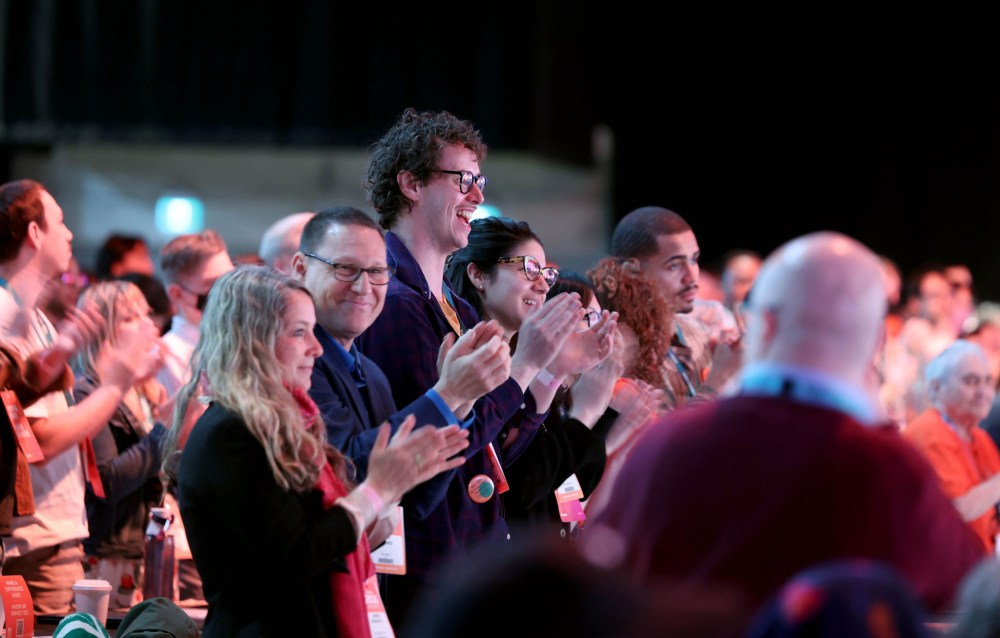
Eleven months ago, a federal election left the NDP with just seven seats, humbled the Tories with 144 seats — far fewer than they would have expected just months earlier when they were riding far ahead in the polls — and meant the Liberal party was doing a victory lap (albeit with a minority government).
Since then, three Conservative MPs have crossed the floor, and, in a shocker to the NDP, Nunavut NDP MP Lori Idlout joined them, putting the Liberals and Prime Minister Mark Carney just two seats away from a coveted majority.
With three byelections currently being held, two of them considered to be safe Liberal seats, that majority could be just weeks away.
Meantime, the NDP is in the political wilderness.
A recent Angus Reid poll prove it. It showed two-thirds of more than 1,100 past NDP voters polled don’t even know who is vying for the party’s leadership, while 21 per cent aren’t sure who would make the best leader.
Federal NDP candidate Avi Lewis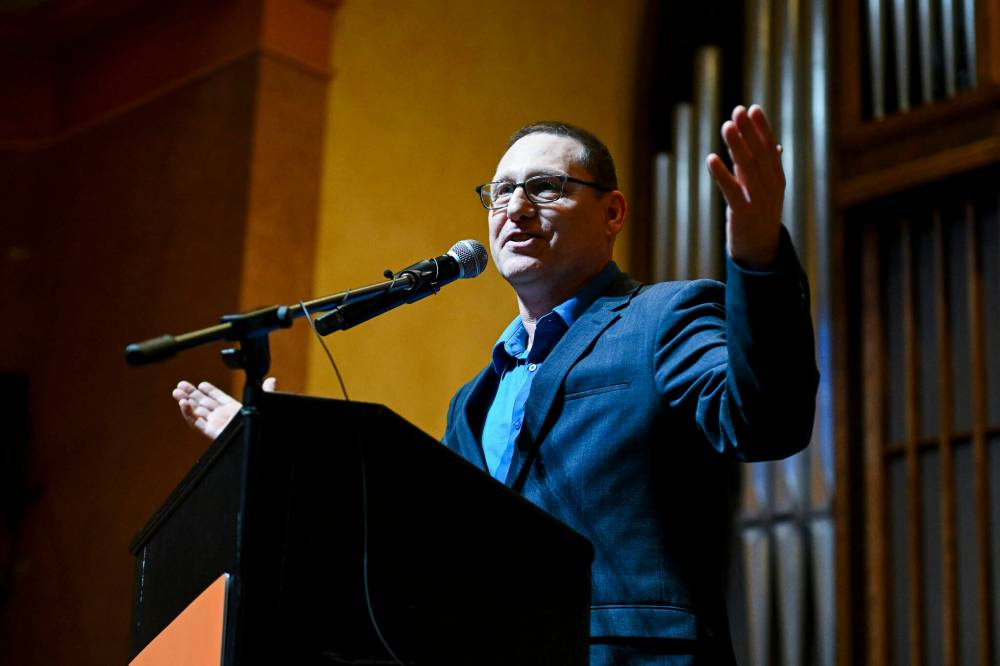
In the poll, contender Avi Lewis garnered only 13 per cent support, MP Heather McPherson nine per cent, and the rest lower than the five per cent who said “none of these.”
Lewis is viewed as the far-left choice, while McPherson is seen as the pragmatic candidate.
As 1993 showed, while the NDP are down now, they have a history of fighting their way back to relevance.
And, this weekend, at a national convention and leadership vote being held in Winnipeg, the party hopes to take its first tentative steps back from the brink of extinction.
NDP leadership candidates, from top: Rob Ashton, Tanille Johnston, Tony McQuail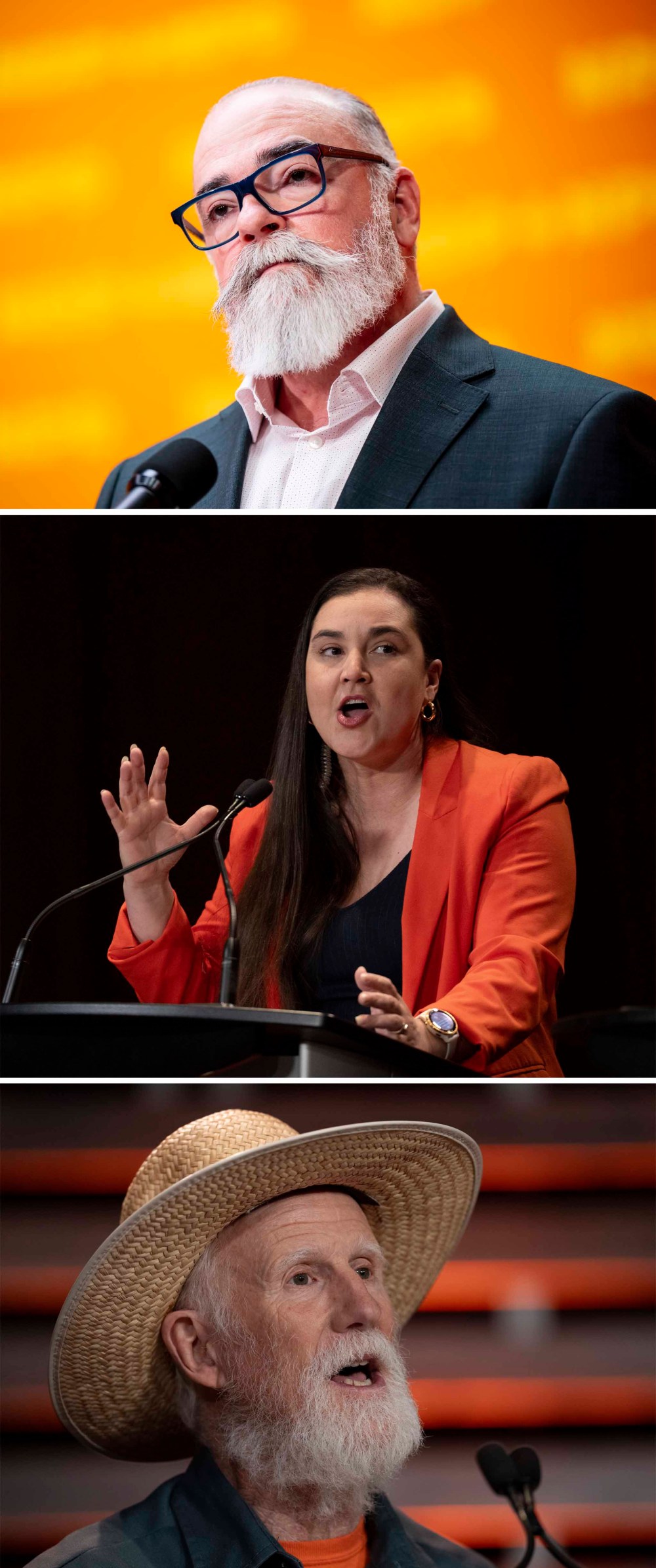
For the NDP, it’s the party’s first leadership convention since 2017 when Jagmeet Singh was elected. While the five leadership candidates – almost as many as the number of MPs the party has – will get a chance to give speeches to members on Saturday, there are no plans for Singh to address the convention.
Lewis, the son of Stephen Lewis, a former Ontario NDP leader, and grandson of former federal NDP leader David Lewis, is considered, based on campaign donations raised, the front-runner, followed by McPherson, an Edmonton MP.
The pair is followed by Rob Ashton, Tanille Johnston and Tony McQuail.
We will know by midday Sunday which one of them will take the reins of a party that has suffered a decade-long slide to the bottom.
After the heady days of electing 103 MPs in 2011, becoming the Official Opposition for the first time and the possibility of becoming government so close, things changed quickly. Leader Jack Layton died of cancer, Thomas Mulcair became leader and the party was reduced to a disappointing 44 seats in 2015, followed by 24 in 2019, 25 in 2021 and then seven seats.
Kim Milne has been to a lot of national conventions. This will be her 10th and her first in the city in which she lives.
Milne, 72, has gone to conventions in “Ottawa, Toronto, Quebec City, Halifax, Montreal twice, Vancouver, Edmonton, and another in Ottawa somewhere in there.” Her first convention was when Alexa McDonough was chosen to replace McLaughlin in 1995, but she already had been volunteering with the party for some time.
“I lived just down the street from Bill Blaikie,” she said.
“When he ran, he asked me to become a member of the NDP and I did.” Blaikie went on to be her federal MP for 29 years and she went on to represent Manitoba on the party’s federal executive, among other roles.
Longtime NDP supporter Kim Milne will be attending the leadership convention this weekend.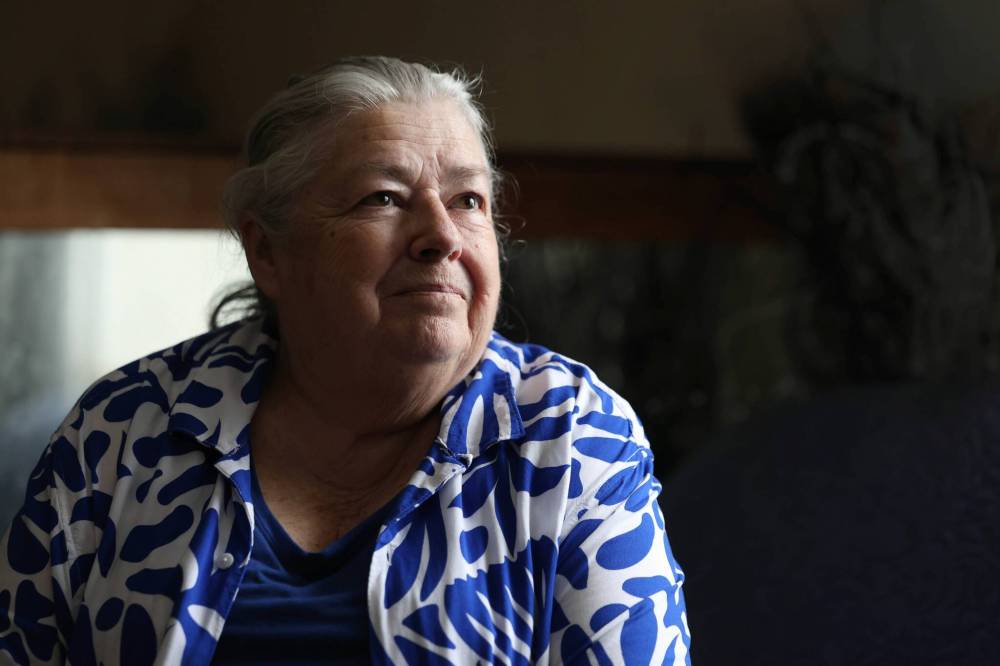
It was Blaikie who gave Milne the advice she has used as her talisman since then.
“He said you can protest all you like, but unless you have political power, nothing is going to change,” she said. “It’s after that I got a little more involved in committees and stuff.”
Milne, who wouldn’t say which candidate she is leaning toward, said “I’m hoping we end up with a leader willing to do things differently. In the last few years, I’ve really seen the party disconnect.”
She said the party needs to reach out to the grassroots, expand its tent, and make sure supporters feel relevant and appreciated instead of thinking they’ve become “convenient fundraising tools.”
“Organizing and outreach needs to be done all the time,” Milne said. “Those kinds of things, that takes work and that takes organizers, but in the last two years the party struggled a little bit.
“It’s not about come and see me every four years. The relationship part needs work.”
Former Manitoba premier, governor general and Australian high commissioner Ed Schreyer has been witness to all of the highs and lows of the federal NDP.
Schreyer was just 21 when he was elected to the Manitoba legislature as a member of the Co-operative Commonwealth Federation, which joined with the Canadian Labour Congress to form the NDP in 1961. Seven years later, after snagging a federal seat, Schreyer was in the room when the party successfully persuaded the Liberal government to enact a national health care program.
As an example of Schreyer’s longevity he said: “I may be the last one around who was elected to public office as a CCF MLA.”
“One has to really look at the larger picture over a longer period of time.”
Schreyer’s time as the Queen’s and country’s representative persuaded him to forego party politics and conventions, but this weekend he said he will return as a visitor.
Schreyer does have some advice for the party — and it’s not necessarily about fighting to get more seats.
“All I’m hoping for is an opportunity for the delegates to have discussion and debate issues they believe are important for our times and, among that, certainly the issue of equality in society — or the lack of it,” he said.
“I’m not one of those concerned the NDP is at the moment relatively small in number because I don’t regard the NDP as being a political party like a lot of political parties who have no motivation… they can have relative success at the polls and start to lose sight of what they are all about. I would just as soon they not lose sight of what they are all about even if it means in certain elections they may lose ground.
“One has to really look at the larger picture over a longer period of time.”
Leah Gazan is one of the few NDP MPs left, while Niki Ashton was one of many who lost her seat in the last election. What they have in common is they support Lewis as the next leader.
“I think (Lewis) is offering a bold, courageous vision and providing solutions that equal, like he says, the crises we face,” Gazan said.
“People are having more difficulty than ever with the very extreme affordability crisis and the only party that is addressing it is the New Democratic Party of Canada…. Right now we have a Liberal government that is governing even more to the right than the former Harper government. That leaves the NDP with a good space to rebuild.”
“To me, Avi has what it takes to rebuilding the party, ” Ashton said.
“I think he is clearly making the case the NDP needs to be the alternative that so many Canadians have looked to over the years in the past. A party that has helped shape Canada for the better by putting forward a progressive vision of who we are and what we can be.”
Ashton pointed to the federal dental plan as one of the major achievements of the NDP in recent years, although “people forgot.”
“It will require a rebuild past the leadership as well, but I am hopeful.”
Not all current and former MPs back Lewis. Former longtime Winnipeg Centre MP Pat Martin has come all the way from his current home in New Zealand to support McPherson.
NDP leadership candidate Heather McPherson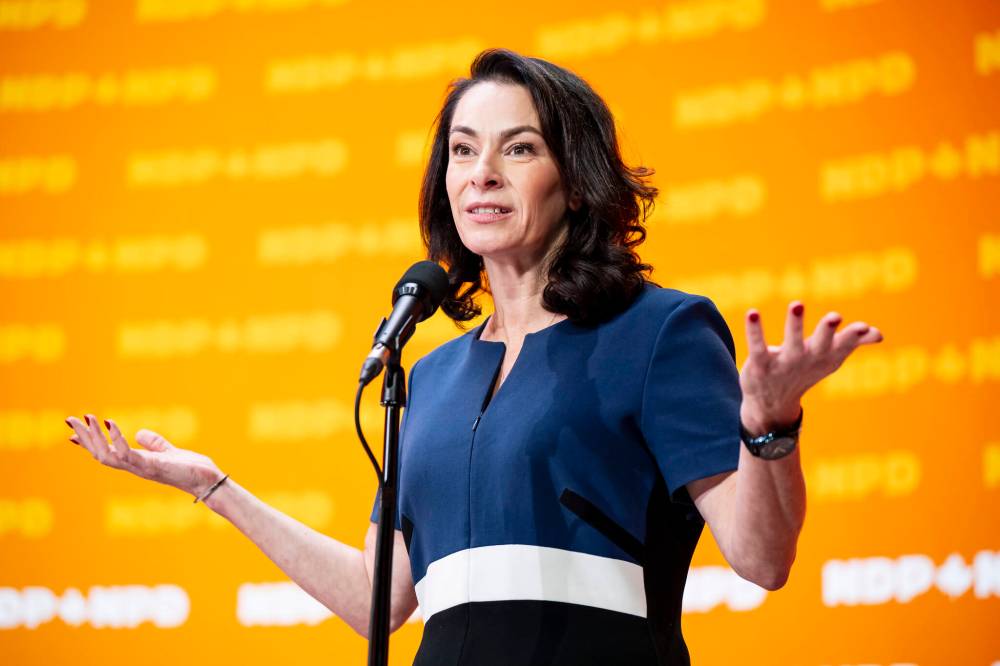
“I like her proven track record and her down-to-earth Prairie sensibilities,” Martin said. “We’re not looking for a leader of a Fabian Society debating club here, fun as that might be. We’re looking for a hard-working practical Prairie pragmatist to get back to work in Parliament and ensure the Liberals keep acting like Liberals.”
Martin said there is “an undeniable excitement and energy” in the race.
“It’d be a bad bet to count us out.”
Political pundits Christopher Adams, a University of Manitoba political studies professor, and Paul Thomas, the university’s professor emeritus of political science, concur that, if not McPherson, the new party leader doesn’t have to run for a seat in the short term.
“So what if they don’t have a seat?” Adam said. “The party doesn’t have official status anyway and the media are in the front lobby so you can be interviewed there.
“With the number of seats they have, you don’t want to lose a MP.”
But Thomas did point out that “running the caucus from the gallery in the House of Commons and coming down to scrum with the media is not always a great formula for generating headlines.”
Adams said if Lewis is elected, he would be “a real alternative — it will be a fork in the road for the party,” but he believes it must confront a bigger question.
“Can the NDP get a leader who can prevent them from being squeezed out by Carney and (Opposition Leader Pierre) Poilievre?”
“Can the NDP get a leader who can prevent them from being squeezed out by Carney and (Opposition Leader Pierre) Poilievre?”
Thomas said NDP fortunes could improve quickly once U.S. President Donald Trump is gone and trade wars are not uppermost on voters’ minds — but a lot depends on who they choose as leader.
“I think there is a real battle for the soul of the NDP,” he said. “There has been a long-standing tension within the party, which is hybrid between being an election machine committed to winning as many seats as possible and simultaneously being a social movement committed to representing some pure socialist ideas in public debates.
“If I were a party member, I would be more in the pragmatic camp of striving to remain a relevant political force. Decades ago I once told a radical New Democrat… that my motto for the party would be: “ A medicare in the hand is worth two utopias in the bush.’”
As for Milne, she has been busy setting up coffee dates with old friends she has met across the country during her decades of attending conventions.
“I like leadership races,” she said. “I think they bring all kinds of new interest and new ideas to the party. I just hope the party picks up some of those great ideas and makes the changes.”
kevin.rollason@freepress.mb.ca
Life of the parties
Winnipeg is no stranger to federal leadership conventions.
The NDP came here in 1975, ultimately choosing Ed Broadbent as leader, and again in 1989 to pass the torch to Audrey McLaughlin. The party returned in 2001, during which leader Alexa McDonough successfully fended off a challenge to her leadership from the floor.
The Progressive Conservative Party was called the Conservative Party when it hosted its first leadership convention here in 1927, and elected R.B. Bennett as its leader. They were here once again to elect a leader in 1942.
Then came the 1981 national convention, infamous for leader Joe Clark receiving only 66.9 per cent in favour of not holding a leadership review. After deciding that wasn’t enough, and sparking a leadership campaign, Clark was defeated by Brian Mulroney in 1983.
The Liberals were set to hold their 1980 leadership convention here, but, after Clark’s minority government fell, and Pierre Elliott Trudeau rescinded his resignation, it was cancelled. It did hold a national convention here in 2016.

Kevin Rollason
Reporter
Kevin Rollason was a general assignment reporter at the Free Press.
Our newsroom depends on a growing audience of readers to power our journalism. If you are not a paid reader, please consider becoming a subscriber.
Our newsroom depends on its audience of readers to power our journalism. Thank you for your support.
Related Articles
Energy policy key as NDP leadership candidates make final pitch