

U of M tuition poised to climb four per cent

Advertisement
Read this article for free:
or
Already have an account? Log in here »
To continue reading, please subscribe:
Digital Subscription
One year of digital access for only $1.44 a week*
- Enjoy unlimited reading on winnipegfreepress.com
- Read the E-Edition, our digital replica newspaper
- Access News Break, our award-winning app
- Play interactive puzzles
*Billed as $5.77 plus GST every four weeks. After 52 weeks, price increases to the regular rate of $19.95 plus GST every four weeks. Offer available to new and qualified returning subscribers only. Cancel any time.
To continue reading, please subscribe:
Add Free Press access to your Brandon Sun subscription for only an additional
$1 for the first 4 weeks*
- Enjoy unlimited reading on winnipegfreepress.com
- Read the E-Edition, our digital replica newspaper
- Access News Break, our award-winning app
- Play interactive puzzles
*Your next Brandon Sun subscription payment will increase by $1.00 and you will be charged $17.95 plus GST for four weeks. After four weeks, your payment will increase to $24.95 plus GST every four weeks.
Read unlimited articles for free today:
or
Already have an account? Log in here »
Hey there, time traveller!
This article was published 27/03/2026 (212 days ago), so information in it may no longer be current.
University of Manitoba students are facing the highest tuition hike in years.
Prabhnoor Singh, president of the University of Manitoba Students’ Union, said the province’s decision to allow post-secondary institutions to increase tuition by as much as four per cent will put a huge burden on students who already struggle to make ends meet.
“Why is this being allowed?” Singh said on Friday.
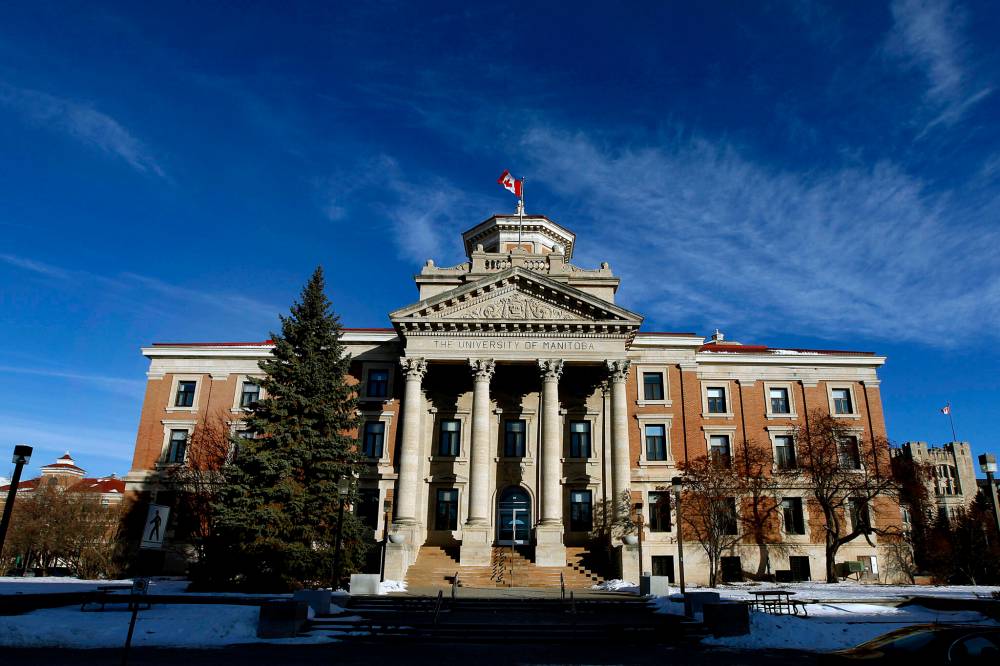
PHIL HOSSACK / FREE PRESS FILES
The Manitoba government is letting post-secondary institutions like the University of Manitoba raise tuition by the highest level in close to a decade – as much as four per cent for the upcoming 2026-27 academic year.
“It’s crazy for an NDP government to do something like this. Students are already having to make sacrifices. They are deciding between putting food on their table or buying textbooks, paying for tuition.”
Singh said universities should not be operated like businesses.
“We are running post-secondary institutions,” he said. “You should not be treating students as cash cows, as money making machines… at the end of the day what are we getting from our tuition increases? Is it better education? Better facilities on campus?
Currently, tuition at the university ranges from a low of $5,600 per year for an arts degree to a high of $27,500 for dentistry.
In between, medical students pay $13,800, law students $14,200, pharmacy students $20,700, business students $7,700, education students $6,600 and engineering students $8,300. University 1, a combination of arts and sciences courses, costs $6,000 for a year.
U of M president Michael Benarroch said the university needs the money that will be raised by the tuition hike of four per cent.
“Over the past decade, provincial funding has declined in real terms,” Benarroch said. “We appreciate the province’s additional two per cent to our operating grant and the recognition that an increase in tuition is necessary.
He said the money raised will address labour needs and gaps.
Benarroch noted that although the number of domestic students rose, it didn’t compensate for the institution losing 40 per cent of its international students.
As well, Benarroch said the university’s tuition is still 22.5 per cent below the national average.
“We understand that this increase will be an adjustment for students, but we remain committed to supporting accessibility through scholarships and bursaries.”
Tuition increases in recent years have been between 2.75 to 3.75 per cent, but it hasn’t been since 2018, when a 6.6 per cent jump was approved, that students have faced such a large increase.
Jino Distasio, the University of Winnipeg’s interim president and vice-chancellor, said it is also challenged because of the federal government’s reduction in the numbers of international students approved to study here.
“We will continue to carefully navigate this path to emerge stronger,” Distasio said.
“We are grateful for the funding increase we received in (the) 2026 provincial budget and for government partners who prioritize investment in education. Together, we will continue to build a better future for Manitobans through exceptional education, research, and community work.”
A spokesman for the university said a final decision hasn’t been made about this year’s tuition fee hike and its board of regents will announce their decision in June.
Renée Cable, the minister of advanced education and training, said the province’s budget this year included “record investments” of $886.6 million to post-secondary institutions.
“The impact of the loss of international students has had a pretty tremendous effect on, I would say, post secondaries right across the country,” Cable said.

“But we have made record investments this year and we continue to have the lowest tuition in all of Western Canada here in Manitoba. Under the previous government, it was cut after cut after cut. We are still rebuilding from that.”
Cable also pointed out the province is offering more scholarships and bursaries than in the past, as well as interest-free student loans.
“It is a 0.5 per cent increase in tuition over last year,” she said. “We will continue to offer quality, affordable post secondary that is worth the paper it is written on, frankly.
“We want Manitoba students and their families to know they can stay here and study here and build a good life here.”
kevin.rollason@freepress.mb.ca
Kevin Rollason
Reporter
Kevin Rollason was a general assignment reporter at the Free Press.
Our newsroom depends on a growing audience of readers to power our journalism. If you are not a paid reader, please consider becoming a subscriber.
Our newsroom depends on its audience of readers to power our journalism. Thank you for your support.
Kevin Rollason
Reporter
Kevin Rollason was a general assignment reporter at the Free Press.
Our newsroom depends on a growing audience of readers to power our journalism. If you are not a paid reader, please consider becoming a subscriber.
Our newsroom depends on its audience of readers to power our journalism. Thank you for your support.
Advertisement Advertise With Us
Advertisement Advertise With Us