Who’s overseeing the seers? Snowballing government and private surveillance awash in ethical shades of grey
Read this article for free:
or
Already have an account? Log in here »
To continue reading, please subscribe:

Digital Subscription
One year of digital access for only $205*
- Enjoy unlimited reading on winnipegfreepress.com
- Read the E-Edition, our digital replica newspaper
- Access News Break, our award-winning app
- Play interactive puzzles
*First annual payment billed as $205.00 + GST for one year. This annual subscription will automatically renew at $233.00 + GST every 52 weeks (10% off the regular annual price of $259.35). Offer available to new and qualified returning subscribers only. Cancel any time.
To continue reading, please subscribe:
Add Free Press access to your Brandon Sun subscription for only an additional
$1 for the first 4 weeks*
- Enjoy unlimited reading on winnipegfreepress.com
- Read the E-Edition, our digital replica newspaper
- Access News Break, our award-winning app
- Play interactive puzzles
*Your next Brandon Sun subscription payment will increase by $1.00 and you will be charged $17.95 plus GST for four weeks. After four weeks, your payment will increase to $24.95 plus GST every four weeks.
Read unlimited articles for free today:
or
Already have an account? Log in here »
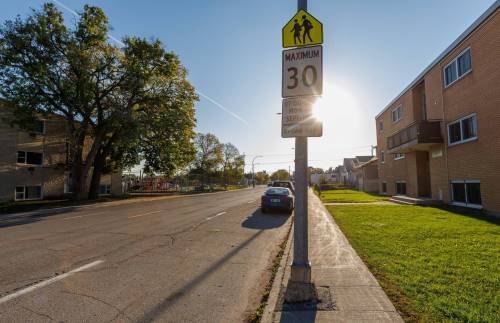
Say you’re heading downtown from the Wolseley neighbourhood on foot.
You’ll pass century-old homes, roaming cats, towering elm trees. There’s much to distract from the scores of new residential cameras tracking you. Some have AI-powered facial recognition, and many were installed after the Manitoba government’s 2024 security equipment rebate program.
If you briefly hop on the bus, six to eight unblinking eyes capture your movements thanks to upgraded onboard cameras rolled out in recent years.
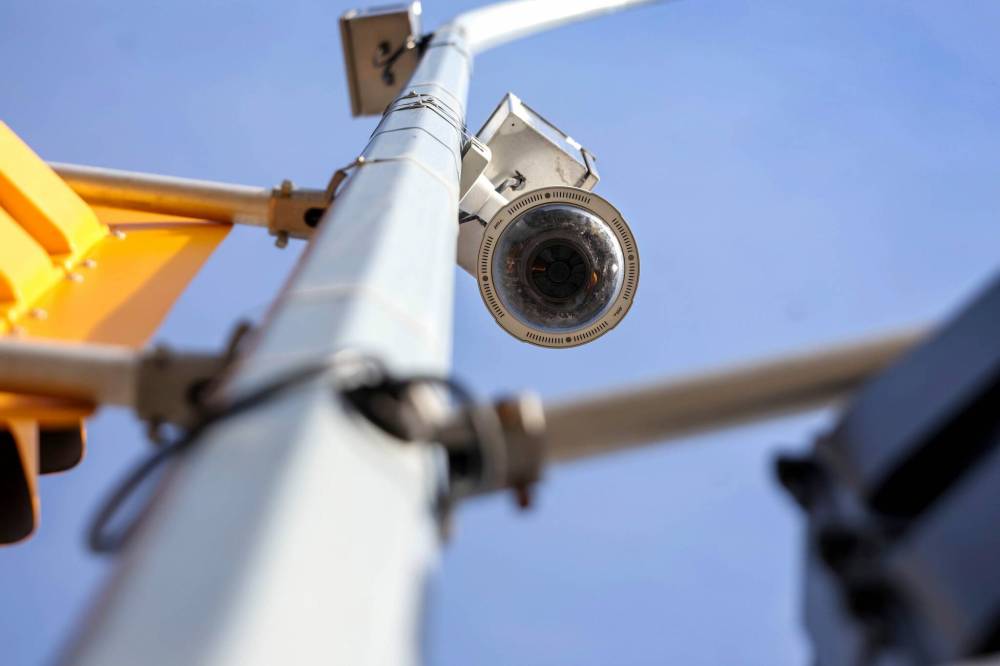
Back on foot on Portage Avenue, the surveillance thickens, but so does traffic and noise. You probably aren’t thinking about the new business security cameras, also encouraged by government rebates.
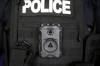
Closer to the core, cameras become harder to miss. Higher density brings more surveillance from cameras at businesses, traffic signal cameras, red-light photo enforcement and, coming soon, police wearing bodycams.
You’ll cross the fields of view of cameras run by the Downtown Community Safety Partnership, a publicly funded non-profit providing 24-7 non-emergency patrols and outreach. Its central monitoring station now lights up with feeds from 49 participating downtown businesses and organizations.
You’ll also pass under the Winnipeg Police Service’s CCTV cameras, which, located in high-crime downtown areas, increased in number from nine to 25 in 2022, with more planned for the near future. Those feeds are expected to be added to the mix at the downtown safety-monitoring station.
And then there’s that “always on” surveillance device known as your smartphone, whose GPS, Wi-Fi, Bluetooth, apps and motion sensors create both internal and external trails that can reconstruct your movements with striking precision.
That walk downtown probably feels less solitary than you thought.
Most of us have come to accept eroding privacy as an unavoidable feature of modern life.
We live in public, as the saying goes.
But the popular image of mass surveillance — the state encroaching on private life — now feels incomplete next to the technology that enables it.
Technology that relies on complex collaboration between government and private actors, as we’re seeing in Winnipeg.
All this contributes to a growing debate about what our privacy rights are, and what it even means to consent to surveillance and monitoring today. Many experts warn that relevant legal frameworks regulating surveillance are woefully out of date.
Still, why get too paranoid, especially if you’re doing nothing wrong?
Beneath the CCTV cameras on Portage Avenue, few are bothered by the eyes in the sky.
“There are a lot of criminal activities going on downtown, so some of these cameras serve as a watch for us,” says John, a child-care worker who arrived in Canada seven months ago.

“You think about the safety of children,” he adds.
Alexander, an evacuee from Pimicikamak Cree Nation, says he’s unfazed by the privacy loss.
“It’s good that they put cameras everywhere, in buses and every corner… Just in case there’s an investigation happening and the cops need to see everything,” he says. “And I believe (gangs) would stay away — there will be more safety for poor people.”
Winnipeg’s strides in beefing up surveillance may seem relatively modest. It’s been three years since then-premier Heather Stefanson promised to install an extra 75 government-operated CCTV cameras downtown, but 2022 was the last year of notable expansion. Next to Toronto and its highly layered networks — where police monitor feeds from municipal CCTV systems, condos, banks, Business Improvement Areas — Winnipeg appears to lag.
It’s also tempting to shrug off increased privacy infringement here as a necessary evil in a city with comparatively high crime rates.
After all, hasn’t the growing prevalence of surveillance already proven effective?
Think of 19-year-old River Harper, killed in 2024 after a scuffle with two other young men. Security cameras captured their comings and goings, and provided key evidence that led to manslaughter convictions for his assailants last September.
Or consider last year’s wave of mysterious arson fires and break-ins downtown. Surveillance footage helped charge security guard Jesse Robert Shawn Wheatland with 22 counts across 11 sites, including setting fire to the offices of Manitoba NDP cabinet ministers Nahanni Fontaine and Bernadette Smith.
These cases remind us of something uncontroversial: security footage can help police and prosecutors lay charges and make them stick.
On the other hand, evidence showing surveillance reliably reduces crime is weaker.
A 40-year systematic review in 2019 found CCTV produced a modest decrease in crime, while a 2020 synthesis of 30 mostly American studies found police bodycams had no clear, consistent effect on officer or citizen behaviour. Research into the effects of mobile surveillance on incidence of crime is still emerging, and seems more suggestive than conclusive.
These studies are touchstones for any serious debate about the efficacy of mass surveillance. But the debate may rage forever, not only because of competing interests and stubborn partisans, but because rapidly changing technologies constantly introduce new dimensions to the problem.
There’s a more basic question in play: to what extent have we consented, in the first place, to mass surveillance in the wide range forms it takes today?
Measuring consent isn’t straightforward. People’s daily activities can seem to signal that they agree to live, work and study under various magnifying glasses. But this status quo may not satisfy more robust definitions of consent relevant to privacy rights.
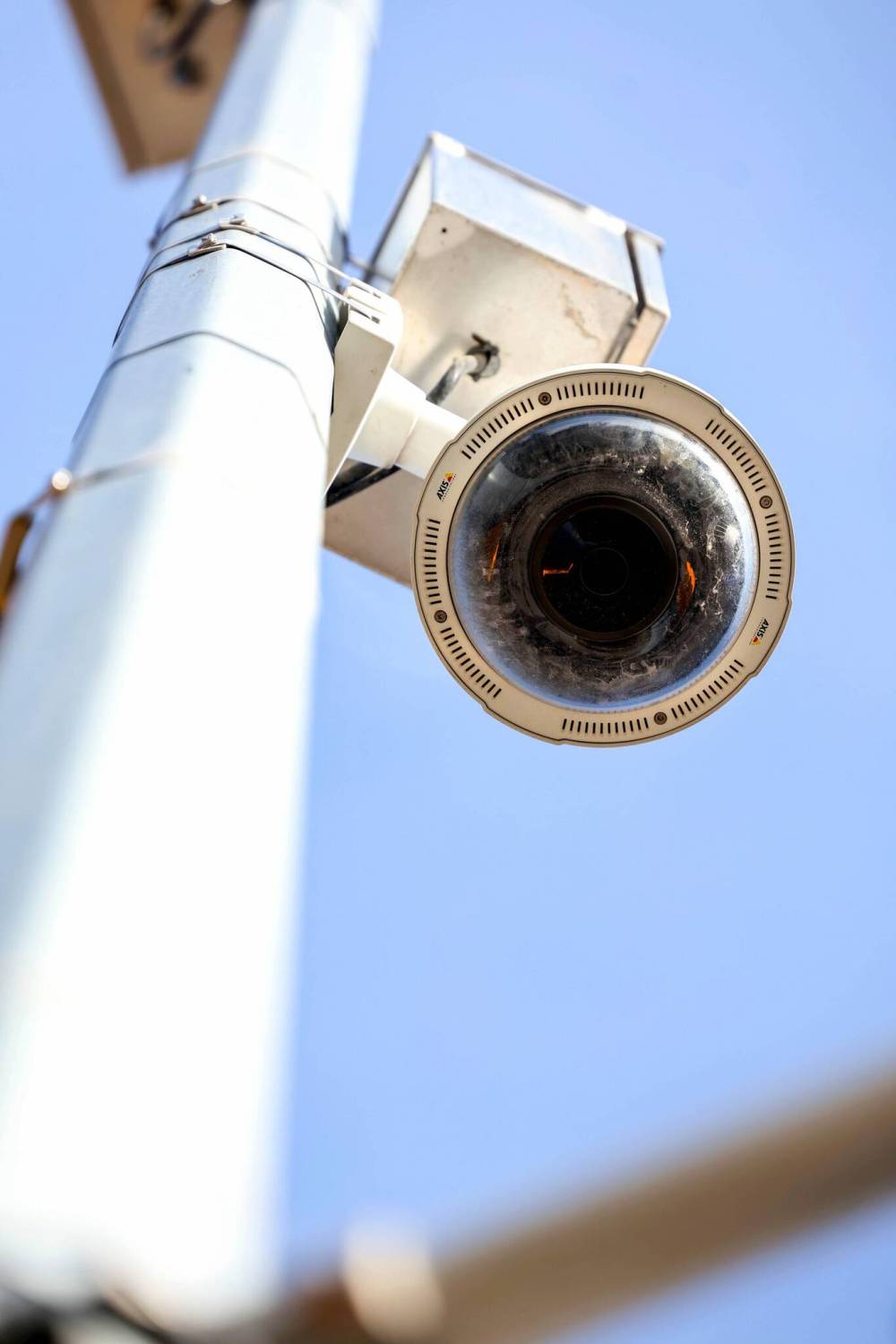
Still, evidence suggests Canadians are fairly trusting of government surveillance.
A 2024-25 research poll by the Office of the Privacy Commissioner of Canada found six in 10 Canadians (62 per cent; up from 58 per cent in 2022) believe the federal government respects their privacy rights, while eight in 10 trust law enforcement to protect their personal information.
Trust plummets with private actors: only 40 per cent believe businesses respect their privacy, fewer than half (42 per cent) trust telecoms and internet providers and just 12 per cent trust social media companies. Similarly low trust applies to smartphones, AI tools, biometrics and internet-connected devices.
This isn’t surprising. Private companies and citizens operate under looser rules about capturing and using data. And it’s this gap, according to some Canadian scholars and privacy advocates, where meaningful consent is disappearing in ways that raise tricky questions about our rights — and, potentially, about how the state is collaborating with private surveillance.
“There is a need to balance privacy rights with legitimate public safety concerns… but right now, the law is lagging behind technological change,” says University of Manitoba law professor Bruce Curran. “We desperately need to modernize our privacy legislation… It’s kind of the Wild West out there.”
State surveillance is constrained by Section 8 of the Canadian Charter of Rights and Freedoms, which protects citizens against “unreasonable search or seizure.” This sets a higher standard for surveillance than the Personal Information Protection and Electronic Documents Act (PIPEDA), Canada’s federal law governing how private entities collect data.
Think of it this way: Section 8 is a locked door beyond which the state needs legal authorization to enter, while PIPEDA is a window with blinds that can be raised or lowered at will. Companies and private actors may play Peeping Tom, capturing your data or recording your movements, but only if you’ve consented by knowingly opening the blinds.
In both cases, surveillance and data capture is assumed to be fairly episodic and localized. Police intercept communications only after acquiring a legal warrant; companies collect your data after you “sign here” during a store purchase.
But as Curran points out, technological acceleration complicates these assumptions.
Your smartphone tracks your movements from home to work, while apps and APIs (application programming interfaces) collect data on what you view and click online. Opting out isn’t straightforward and consumers often lack the knowledge to make informed choices. The end result is often a detailed picture of routines that can be aggregated and sold off to the highest bidder.
Everyone knows that by entering public spaces we give up some privacy — we can be seen by others — and Canadian law treats the “reasonable expectation of privacy” as consistent with this. But being visible isn’t necessarily the same as being identifiable. The spread of CCTV, doorbell cameras and smartphones with biometric capabilities — allowing them to recognize facial features, fingerprints, voice patterns — is changing this dynamic.
“It’s almost misleading, in a way, to talk about mass surveillance… I think what we’re really worried about is mass identification,” says Neil McArthur, director of the Centre for Professional and Applied Ethics at the University of Manitoba. “I think we’ve never had a social contract where you’re giving up your right to be identified.”
Tech companies, residents and local businesses have pretty wide latitude over what they do with collected data, including sharing it with police. In practice, this can empower law enforcement to create a detailed “post-hoc” picture of your movements, freer from Section 8 strictures.

“There hasn’t been much in the way of Section 8 rights cases on… potential partnerships between government on the one hand and private businesses on the other,” says Curran. “But probably you we will see more and more as time go goes on, because it will become more prevalent in terms of playing a role, not exclusively, but typically in the criminal context.”
For now, a federal legislation overhaul is stalled. Bill C-11 was Canada’s first big attempt to modernize private-sector privacy law by ramping up enforcement and penalties while replacing parts of PIPEDA with a beefier new Consumer Privacy Protection Act (CPPA). The bill died on the order paper in 2021.
The followup, Bill C-27, also proposed a CPPA and a tribunal for disputes and enforcement, while introducing the Artificial Intelligence and Data Act to regulate private-sector AI. It was killed when Parliament was prorogued in early 2025.
Seemingly every Winnipeg neighbourhood has one: a Facebook group where residents discuss lost cats, traffic jams and, everyone’s favourite topics, trespassing, theft and suspicious activity. Many posts include footage and stills from doorbell and residential cams.
Scrolling through the River Heights Community Watch group on Facebook, a recent post shows four kids wandering a Campbell Street back alley. One of them opens an unlocked door of a parked car.
There’s some rifling around by the first youth, then all of them scamper off without appearing to take anything — although, obnoxiously, they leave the vehicle door wide-open, potentially draining the car’s battery.
Other posts show clear thefts or break-ins; some contain only stills of hooded, more dishevelled types who look out of place in River Heights, along with descriptions of suspicious behaviour. Commentators play detective about the identities of these presumed perps and advise how to stay vigilant.
McArthur — who, in a recent analysis for The Conversation examining legal blindspots surrounding government and commercial surveillance, gave special attention to doorbell cams — is especially uncomfortable with the use of biometrics where children are concerned.
“This is technology that’s going to be used on people who are… not even adults,” he says. “I actually am encouraged… when I hear talk from people across the political spectrum, they are worried about (biometrics) to a fairly equal degree.”
In Canada, home-entry cameras such as those on the Ring Video Doorbell can recognize familiar faces — though not unknown people — by name. But Ring aims to use AI more proactively “to zero out crime in neighbourhoods,” as founder Jamie Siminoff wrote in a leaked 2025 email.
“He sees that this is a perfect integration of his cameras with the sort of groups and neighbourhood activists that (we’re) talking about,” says McArthur.
When asked about it, River Heights Community Watch members offer up little in the way of protest about facial recognition or doorbell cams.
“If AI has to be used, I’m glad it’s for good,” says Victoria Martin.
“If you aren’t doing anything wrong you can just ignore cameras as a part of life we now have to tolerate for the greater good,” says Melanie Mitchell, who runs three Airbnb properties in the city and says those “houses are covered in cameras too. Mostly to keep my guests and their vehicles safe.”

In the Wolseley Neighbours group, members also upload doorbell footage, though apparently not as frequently as the River Heights group. Member Eric Rae is more critical of burgeoning surveillance.
“The city keeps spending more and more money on the symptoms of poverty, addiction and homelessness, but doesn’t want to do anything about the cause,” he says. “Surveillance capitalism is gross.”
While residential or personal surveillance isn’t as centralized as state surveillance, the Manitoba government has ways of encouraging and incentivizing it.
Law enforcement doesn’t have automatic access to footage, though individuals and businesses can register their surveillance devices so police know where nearby cameras are located during investigations. In 2024, nearly 9,000 residents and tenants accessed the Manitoba Security Rebate Program’s $300 reimbursement for security equipment — and in late 2025, a $2,500 rebate was offered to small businesses.
University of Manitoba law professor Brandon Trask warns outsourcing surveillance to private entities may raise knotty questions about Charter rights.
He compares it to the COVID-19 pandemic, when Manitoba “essentially offloaded responsibilities that would normally be considered government responsibilities to the private sector,” having private employees scan proof-of-vaccination documents and contracting security to carry out COVID lockdown enforcement.
“I thought, ‘Are they hoping to sidestep the application of the Charter?’ Because you can’t do through the back door what you’re not allowed to do through the front door,” Trask says.
“And that, I would say, is like a basic principle here that should apply to public-private in relation to the surveillance.”
Whatever complexities surround the evolving legal framework, the Winnipeg Police Service says that in almost every investigation police inquire into the availability of surveillance.
“Our investigators are appreciative of the level of co-operation we receive from the public and businesses,” says Const. Stephen Spencer.
“(I)n an overwhelming majority of instances, the community and businesses want to assist police investigations and are prepared to share what they have,” he adds, noting the WPS lacks statistics on how often surveillance is obtained and used in investigations.
Likewise, a Manitoba RCMP spokesperson says businesses and residents are generally co-operative with requests for surveillance video, though data is not kept on how frequently it is sought.
Twentieth-century French philosopher Michel Foucault famously treated the 19th-century “panopticon” — a circular-shaped prison with a central watchtower that surveils every inmate simultaneously — as emblematic of modern society. He argued modern disciplinary power operates through an insidious gaze. We stop noticing all the subtle ways it permeates and dominates our lives in part because we’ve internalized its norms and now police ourselves.
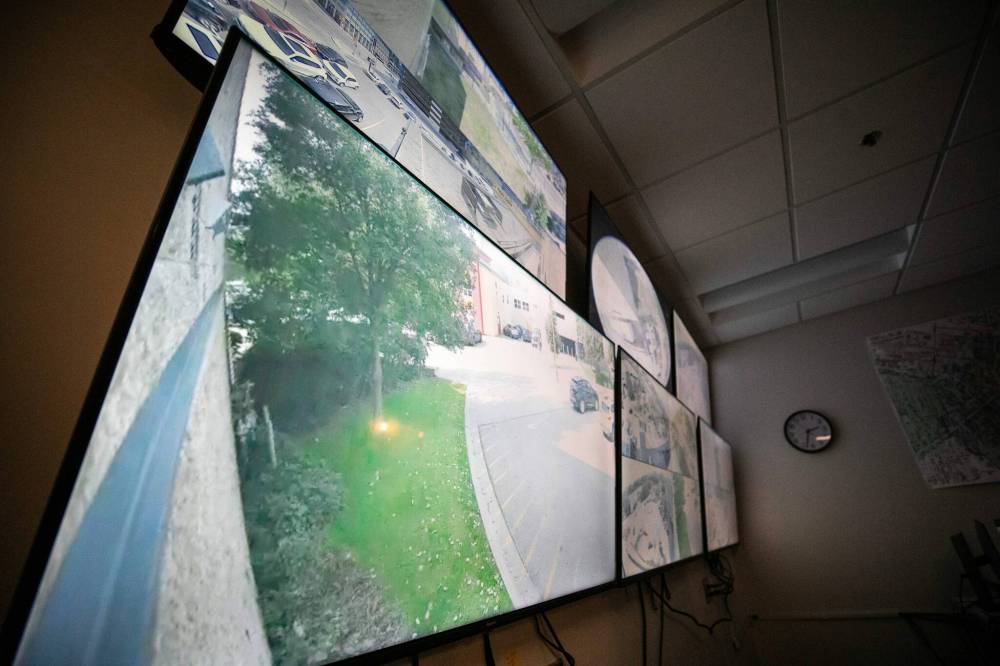
However high-minded this influential theory, the murky boundaries between private and public space, and commercial and state surveillance, give it a certain amount of fodder.
Yet modern surveillance is often less efficient than imagined — generating vast amounts of poor-quality footage, often with blind spots or technical and human errors. Most camera feeds don’t connect to a hub monitored by an institutional authority, won’t be made public and aren’t active much of the time. To describe this as panoptic seems paranoid.
Or take police bodycams — 98 per cent of front-line RCMP officers are equipped with them as of November, and Winnipeg police are piloting their own program beginning in June.
People increasingly expect police to wear them and believe officers are supposed to turn them on during most public interactions, but governing protocols are more complex. Their footage is typically controlled by police, who face stricter rules about publicizing and sharing such data.
For Christopher Schneider, a Brandon University sociology professor and co-author of a book on bodycams, the dynamics of control bring other problems.
“When police are telling the public that we are going to monitor and regulate our officers… they’re self-regulating, and there’s no direct oversight,” says Schneider, noting that while bodycams generate vast and costly databases, these are rarely used to discipline officers.
WPS Supt. George Labossière says while some front-line officers may forget to turn on their cameras in the early days of rollout, “we certainly expect their members will not deviate from the protocol.
“There’s a little time for grace. Otherwise, we have service defaults that can start off as minor service defaults to heavier penalties, if need be, where people are given a punishment. Won’t go into great detail about that, but we do take it very seriously, and it’s important we lay it out very clearly for officers.”
Labossière touts accountability and transparency when describing the program, saying it protects both the public and WPS members, however Schneider is more skeptical as to whether the benefits are in fact symmetrical.
It’s not just that police have discretion over bodycam protocols, it’s also that they can use the footage to shape public narratives, he argues.
“If say, for example, you’re involved in a police interaction, and you believe that the police have assaulted you and engaged in excessive use of force, and you want access to your body-worn camera footage… you in Canada must file a Freedom of Information request, which can be subject to lengthy delays,” Schneider says. “This provides a distinct advantage to police.”
Clayton Thomas-Müller is used to being surveilled. The Mathias Colomb Cree Nation member, who resides in Winnipeg, has spent years on the front lines of climate and Indigenous activism, often, he says, under the watchful eyes of police and private security.
“Every Indian in Canada… there’s straight-up fear — and it’s not coming from a paranoid place — about the implications of getting up and speaking their mind,” he says. “There are very real-world consequences to people.”
The ICE raids in the U.S. only heightened those fears, he says. Meanwhile, biometrics give new reasons for anxiety.

“This new era of policing and surveillance, (it’s) removing the human from data analysis,” he says. “We, literally as kids, grew up watching horror movies about why AI is dangerous. Here we are.”
Some may downplay these concerns, prioritizing order over privacy of the “unruly” when it comes to public protest, while others may insist free speech must be defended at all costs.
When push comes to shove, and people see their freedom of speech or that of their political camp under attack, it can suddenly become sacrosanct.
“Privacy scholars often argue that surveillance chills free expression, that people behave differently if they think they’re being watched,” says McArthur. “Any reasonable person… knowing that we have this network of cameras… is going to stop and think about that.”
The issue extends beyond the political left and right — and beyond the concerns of protesters directly in the public square.

Even supporters on the 2022 Freedom Convoy’s sidelines, who donated to the cause legally via GiveSendGo, faced censure and job loss after a data breach leaked their identities. The threat of “doxing” — releasing private information to intimidate, harm or silence someone — affects society today in unprecedented ways.
Privacy versus expression, private versus public space, commercial versus state power, security versus freedom — today’s milieu gives dizzying dimensions to classic tensions. The rapid expansion of new technologies forces us to think hard about the stakes.
“It’s really important that people have public debate, and that this is talked about in the national discourse, right down to here in our great city,” says Thomas-Müller.
McArthur adds: “I think there is a moment right now when, if we are able to push our lawmakers to act, I think at the very least, we could come up with some meaningful legislation.”
winnipegfreepress.com/conradsweatman

Conrad Sweatman is an arts reporter and feature writer. Before joining the Free Press full-time in 2024, he worked in the U.K. and Canadian cultural sectors, freelanced for outlets including The Walrus, VICE and Prairie Fire. Read more about Conrad.
Our newsroom depends on a growing audience of readers to power our journalism. If you are not a paid reader, please consider becoming a subscriber.
Our newsroom depends on its audience of readers to power our journalism. Thank you for your support.
Related Articles
Security cameras added to Beacon program will bolster business confidence