

Rural paramedics ‘burned out,’ union says; data shows job vacancies nearly doubled in two years

Advertisement
Read this article for free:
or
Already have an account? Log in here »
To continue reading, please subscribe:

Digital Subscription
One year of digital access for only $205*
- Enjoy unlimited reading on winnipegfreepress.com
- Read the E-Edition, our digital replica newspaper
- Access News Break, our award-winning app
- Play interactive puzzles
*First annual payment billed as $205.00 + GST for one year. This annual subscription will automatically renew at $233.00 + GST every 52 weeks (10% off the regular annual price of $259.35). Offer available to new and qualified returning subscribers only. Cancel any time.
To continue reading, please subscribe:
Add Free Press access to your Brandon Sun subscription for only an additional
$1 for the first 4 weeks*
- Enjoy unlimited reading on winnipegfreepress.com
- Read the E-Edition, our digital replica newspaper
- Access News Break, our award-winning app
- Play interactive puzzles
*Your next Brandon Sun subscription payment will increase by $1.00 and you will be charged $17.95 plus GST for four weeks. After four weeks, your payment will increase to $24.95 plus GST every four weeks.
Read unlimited articles for free today:
or
Already have an account? Log in here »
The shortage of paramedics in rural Manitoba is bad and getting worse, the union that represents them warned Thursday.
Vacancies of advanced, intermediate and primary-care paramedic positions hit 24.8 per cent in December, up from 14.5 per cent two years earlier, according to data the Manitoba Association of Health Care Professionals showed Thursday.
The union circulated a freedom of information request showing Shared Health data listing 151 vacant full-time equivalent positions in December, compared to 84 in December 2023.
JOHN WOODS / FREE PRESS FILES Vacancies of advanced, intermediate and primary-care paramedic positions in rural Manitoba hit 24.8 per cent in December.
“(Paramedics) are short-staffed. They are burned out and they are frustrated,” said Jason Linklater, the union’s president.
MAHCP, which represents approximately 7,500 allied health professionals across the province, believes the vacancy rates are even higher than the numbers show, Linklater said.
Health Minister Uzoma Asagwara disputed the trend, saying the province has hired 41 net new paramedics.
The New Democrats pledged to hire 200 paramedics within the party’s first term. The next election must be held by Oct. 5, 2027.
“The bottom line is, we’re moving in right direction,” Asagwara told reporters.
Mike Deal / FREE PRESS FILES President of the Manitoba Association of Health Care Professionals, Jason Linklater: “(Paramedics) are short-staffed. They are burned out and they are frustrated.”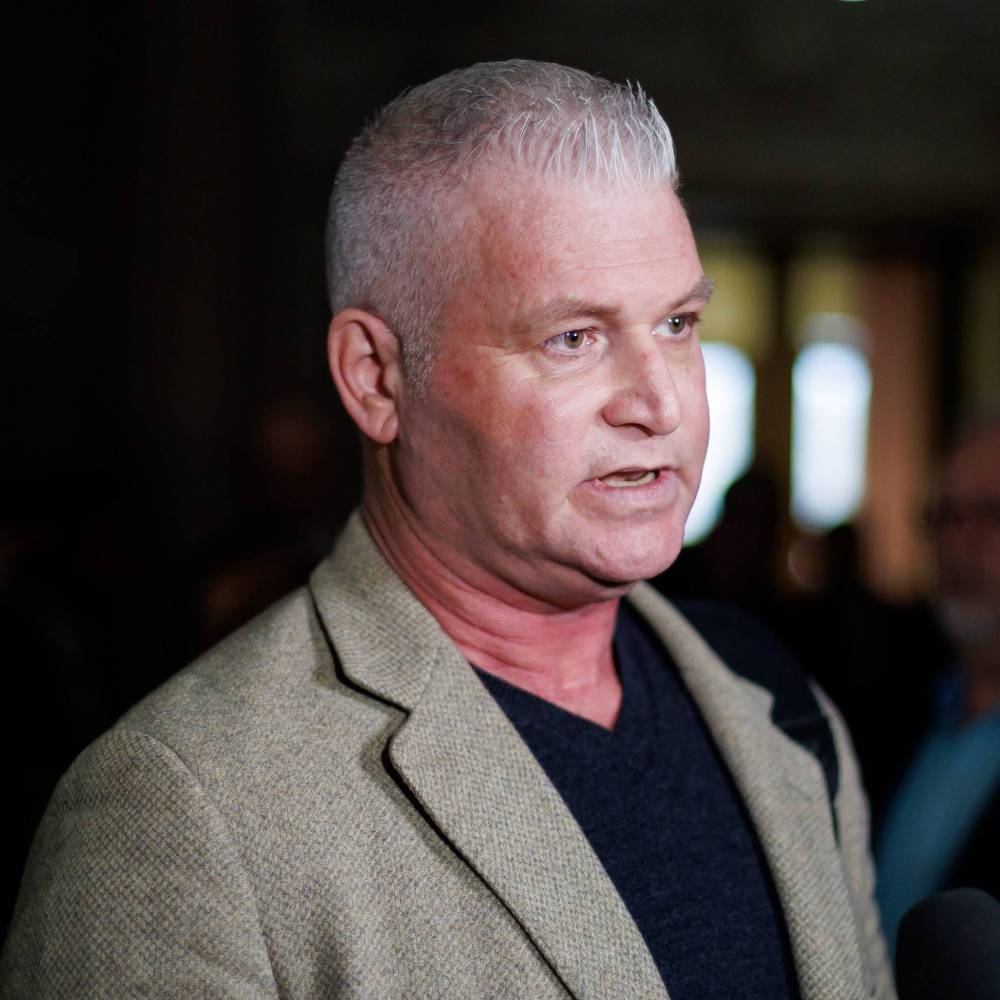
That’s not something Reeve Kelly McMechan is seeing. Residents in the RM of Deloraine Winchester sometimes bypass a 911 call, expecting an hour-long wait for an ambulance, he said.
“If they’ve had a fall and are questioning whether they’re injured or not, they don’t bother calling,” McMechan said. “They’ll have their spouse drive them in.”
The municipality, which sits just north of the U.S. border in the southwest corner of the province, has two emergency medical responders to service the population of just over 1,000, he said.
Emergency medical responders are not paramedics, but they can respond to situations when paramedics aren’t available.
Their scope is more limited; for example, they can’t do electrocardiogram tests, unlike primary-care paramedics. When the Deloraine Winchester responders are off work, there’s no one to answer calls — available crews have to drive in from Boissevain, Killarney or Souris, McMechan said.
“We just can’t get enough (people) trained to keep up with retiring paramedics,” he said.
The Association of Manitoba Municipalities proposed, last year, that the province use paid training to fill primary-care paramedic gaps. It’s something McMechan said he supports.
“We just can’t get enough (people) trained to keep up with retiring paramedics.”
On Thursday, MAHCP requested an “earn-as-you-learn” pathway for emergency medical responders to become primary-care paramedics. The program would include paid education and bursaries.
British Columbia offers bursaries in a similar program.
Asagwara said the provincial government is creating an education pipeline for emergency medical responders to become primary-care paramedics and, eventually, advanced-care paramedics. No timeline was available Thursday.
Emergency medical responders have been hired “in limited circumstances, and on a temporary basis” in some communities facing paramedic staffing shortages, deputy health minister Silvester Komlodi wrote in a letter to Linklater.
“(Shared Health) has assured us that there is no evidence indicating that the use of EMR-staffed ambulances has created safety concerns for providers or patients,” the letter, dated April 14, reads.
Leadership has enacted a “vacancy management strategy” to promote equitable service delivery across Manitoba. Historically, rural paramedics migrate to positions near cities, creating a coverage imbalance, Komlodi wrote.
The union alleged some paramedics — who’d like full-time jobs — are working casual positions in the communities they want to be in because there aren’t job openings, even though more staff is needed.

Government is pushing reluctant paramedics towards northern and western regions, according to Wayne Chacun, the union’s director for regions spanning Prairie Mountain and Southern health authorities.
“They want to be closer to family,” Chacun said. “What we then end up seeing is people truly leaving the system. They quit out of frustration.”
Shared Health proactively posts open positions in all provincial zones, a spokesperson said. There were 83 open paramedic jobs online Thursday.
Asagwara announced a “community tool kit” for municipalities to use to attract health-care professionals Thursday.
It includes tips for communities to make themselves desirable to workers, such as having available housing and child care. Municipalities can promote themselves through social media, Asagwara said.
Opposition Leader Obby Khan blasted the New Democrats for the tool kit.
“This almost sounds… like another study,” Khan said. “The province has it all — they know what the numbers are. They know that we need more paramedics in this province.”
MAHCP also called for more direct-entry primary-care paramedic education seats and targeted bursaries.
“The province has it all – they know what the numbers are. They know that we need more paramedics in this province.”
At least 50 to 100 more seats, accessible in rural Manitoba, are needed to encourage students to work in those areas, said Chacun, a former paramedic.
The provincial government announced 14 direct-entry seats at Red River College Polytechnic last November, alongside 16 for University College of the North in Thompson.
There are roughly 100 primary-care paramedic education seats in the province, Chacun said.
Manitoba has added clinical service leader positions, a community paramedic program and advanced-care paramedic scopes. It’s prioritizing student recruitment in provincial paramedic schools. Wage parity with the Winnipeg Fire Paramedic Service — negotiated in 2025 with MAHCP — has helped in recruitment, a Shared Health spokesperson wrote in a statement.
Last November, the province said there was a net gain of 231 paramedics between October 2023 and September 2025. It walked back the statement the next day, saying just 18 had been hired.
Linklater said the change has caused him to doubt the province’s numbers.
gabrielle.piche@winnipegfreepress.com
Gabrielle Piché reports on business for the Free Press. She interned at the Free Press and worked for its sister outlet, Canstar Community News, before entering the business beat in 2021. Read more about Gabrielle.
Every piece of reporting Gabrielle produces is reviewed by an editing team before it is posted online or published in print — part of the Free Press‘s tradition, since 1872, of producing reliable independent journalism. Read more about Free Press’s history and mandate, and learn how our newsroom operates.
Our newsroom depends on a growing audience of readers to power our journalism. If you are not a paid reader, please consider becoming a subscriber.
Our newsroom depends on its audience of readers to power our journalism. Thank you for your support.
Gabrielle Piché reports on business for the Free Press. She interned at the Free Press and worked for its sister outlet, Canstar Community News, before entering the business beat in 2021. Read more about Gabrielle.
Every piece of reporting Gabrielle produces is reviewed by an editing team before it is posted online or published in print — part of the Free Press‘s tradition, since 1872, of producing reliable independent journalism. Read more about Free Press’s history and mandate, and learn how our newsroom operates.
Our newsroom depends on a growing audience of readers to power our journalism. If you are not a paid reader, please consider becoming a subscriber.
Our newsroom depends on its audience of readers to power our journalism. Thank you for your support.
Related Articles
Budget doesn’t address rural paramedic staffing issue: union



Advertisement Advertise With Us
Advertisement Advertise With Us