Vacant property owners overwhelmingly ignoring city fines imposed after fires
Read this article for free:
or
Already have an account? Log in here »
To continue reading, please subscribe:

Digital Subscription
One year of digital access for only $205*
- Enjoy unlimited reading on winnipegfreepress.com
- Read the E-Edition, our digital replica newspaper
- Access News Break, our award-winning app
- Play interactive puzzles
*First annual payment billed as $205.00 + GST for one year. This annual subscription will automatically renew at $233.00 + GST every 52 weeks (10% off the regular annual price of $259.35). Offer available to new and qualified returning subscribers only. Cancel any time.
To continue reading, please subscribe:
Add Free Press access to your Brandon Sun subscription for only an additional
$1 for the first 4 weeks*
- Enjoy unlimited reading on winnipegfreepress.com
- Read the E-Edition, our digital replica newspaper
- Access News Break, our award-winning app
- Play interactive puzzles
*Your next Brandon Sun subscription payment will increase by $1.00 and you will be charged $17.95 plus GST for four weeks. After four weeks, your payment will increase to $24.95 plus GST every four weeks.
Read unlimited articles for free today:
or
Already have an account? Log in here »
The city’s effort to crack down on vacant property fires by charging owners has fallen short, with new data showing it has recovered just a fraction of the more than $3.5 million imposed in fines since 2023.
Data provided by the Winnipeg Fire Paramedic Service Tuesday shows it is tracking 150 outstanding fines levelled at vacant property owners over the past three years, including this year to date.
However, it has received full or partial payments from only 14 incidents in that time, recovering just over $232,000 — a figure equivalent to six per cent of the fees.

The numbers suggest the city has little recourse against vacant property owners who refuse to pay up, said United Firefighters of Winnipeg treasurer Adam Smithson.
“The numbers clearly show that the current enforcement process is not working,” Smithson said.
“It’s going to need multiple levels of government, possibly, that are required to step in here. But, someone has to do something here because it’s not getting any better.”
The city called upon the province in October 2024 to amend legislation so fire protection service fees could be charged to the owner’s property tax bill, similar to unpaid water and waste fees.
No such changes have been introduced, meaning if an owner does not pay, the city’s options are largely limited to collections or legal action — which can be slower, more expensive and less reliable, said Coun. Evan Duncan, who chairs the property and development committee.
MIKAELA MACKENZIE / FREE PRESS FILES Coun. Evan Duncan said the city's options are limited in collecting fines.
“I’m not opposed to chasing them through the courts, to be honest, I think it’s a good signal to send. But, it sure would be helpful if the province would acknowledge our request and allow us to do this,” said Duncan (Charleswood-Tuxedo-Westwood).
“At the end of the day, if we want to be taken seriously, we have to have the tools in place to nail these guys. There’s a bunch of bad actors out there that need to be held accountable… if they can’t pay their tax bills, we’ll take over that property for them.”
Under the city’s current enforcement system, property owners can be fined $10,250 for the first fire response, $20,500 for the second, $30,750 for the third and $51,250 for subsequent responses.
Previously, the WFPS would charge owners for the full cost to fight fires on their properties, but the strategy failed to reduce the number of blazes.
In total, the fire service has issued 202 vacant fire invoices since 2023, but 52 of them were either waived or voided.
“I feel if it’s only 14 people paying out of 150, it doesn’t make much sense.”
Property owners can request a waiver the first time they are fined for fire protection services. Those requests are then reviewed by a committee, which renders a decision. Voided incidents are those in which an invoice was created, but it was later determined the fire did not meet the criteria to result in a fine, a WFPS spokesperson said.
Former city councillor and lawyer John Prystanski has represented multiple clients who have contested fines imposed on them following fires inside vacant properties.
In most cases, his clients were successful in their attempts to see the charges waived or voided. But in some instances, they have been left on the hook.
“I pay every month and I’ve never missed anything, so it’s really frustrating (that others are not paying),” said Maria Suzuki, who was fined approximately $100,000 after a series of 2023 fires inside a vacant home on Elgin Avenue she was renovating.
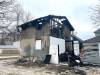
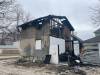
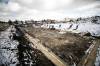
The property eventually suffered so much damage that it was subject to an emergency demolition.
Maria Suzuki’s property eventually suffered so much damage after multiple fires it was subject to an emergency demolition. 
Suzuki is one of the few property owners who has actually complied with the resulting fines. She made a lump sum payment of about $40,000 and is now on a two-year payment plan that costs her $2,800 every month.
She expects to make her final payment next May, and is looking forward to putting this nightmare behind her.
“This really caused me a lot of stress, obviously,” she said. “It doesn’t feel fair, but it is each and every one’s choice (to pay their fines), so I want to make the right choice. But, I feel if it’s only 14 people paying out of 150, it doesn’t make much sense.”
Prystanski, who represents Suzuki, said her situation exemplifies how the current enforcement process is unbalanced.
“Obviously, it’s not effective,” he said. “We’re going to have a situation sort of like the hamster’s wheel. We’re running and trying to catch up to something that we’re never going to get to.”

Prystanski said Suzuki was an attentive and responsible property owner who fell victim to repeated break-ins and suspected arson through no fault of her own.
He argued the city must have a more robust process to assess individual cases to determine whether fines are warranted. That way, people like Suzuki do not become discouraged from investing in neighbourhoods where there is a desperate need for housing.
“When we put the responsibility solely on the property owner, and not the deviants, then we have an imbalance and we’re never going to solve this problem,” he said.
Suzuki said she is unlikely to buy and renovate another home in the inner city, fearing she could once again see it destroyed by flames.
tyler.searle@freepress.mb.ca

Tyler Searle is a multimedia producer who writes for the Free Press’s city desk. A graduate of Red River College Polytechnic’s creative communications program, he wrote for the Stonewall Teulon Tribune, Selkirk Record and Express Weekly News before joining the paper in 2022. Read more about Tyler.
Every piece of reporting Tyler produces is reviewed by an editing team before it is posted online or published in print — part of the Free Press‘s tradition, since 1872, of producing reliable independent journalism. Read more about Free Press’s history and mandate, and learn how our newsroom operates.
Our newsroom depends on a growing audience of readers to power our journalism. If you are not a paid reader, please consider becoming a subscriber.
Our newsroom depends on its audience of readers to power our journalism. Thank you for your support.
Related Articles
Province has to untie Winnipeg’s hands in fight against vacant, boarded-up properties